


2025 has been a year of quantum computing advances, finds Satyen K. Bordoloi as he profiles the companies and nations trying to figure out whether Schrodinger’s cat is alive, or not.
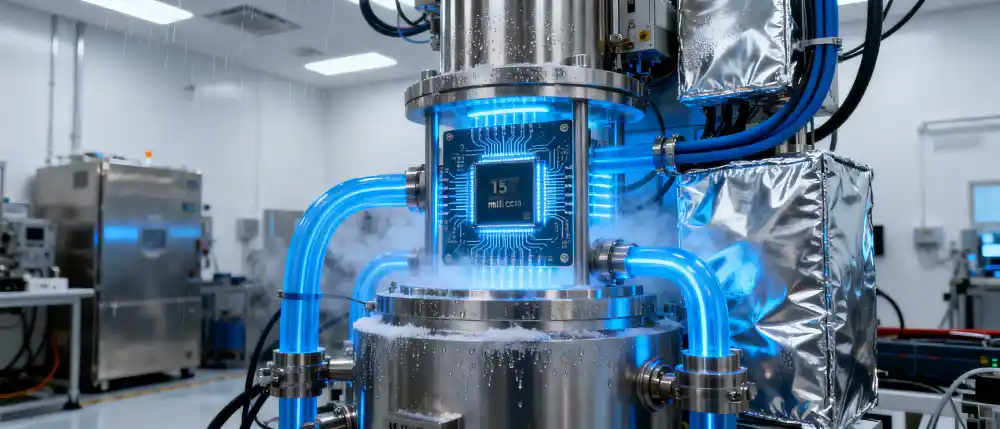
Somewhere in a New York lab, a supercooled chip shivers at a frosty 15 millikelvin – cooler than the void between galaxies. At a Parisian startup, a theoretical cat – dead and alive at the same time – is being pitted against the universe’s love of chaos. It is the end of 2025, and the scramble for quantum supremacy has evolved from a niche academic pursuit into a high-stakes, multi-billion-dollar global poker game not unlike those that have led others to fear an AI bubble. And this table is filled with players who, at best, are geniuses and visionaries, and, at worst, extremely effective salespeople.
So, as 2025 ends, I tried to dig deep, cut through the quantum fog, and put aside all “superposition” and “entanglement” jargon for a moment. Because the excitement in the field is about who can first build a box so powerful it could guess all your passwords before water heats in your geyser, or that could come up with a lifesaving drug over a lazy weekend, or run global shipping lanes that save billions. This race is part Cold War-style national strategy, part breakneck Silicon Valley innovation, mixed with a sprinkle of academic rivalry to raise Einstein’s eyebrows.

How Many Qubits Does A Firm Need
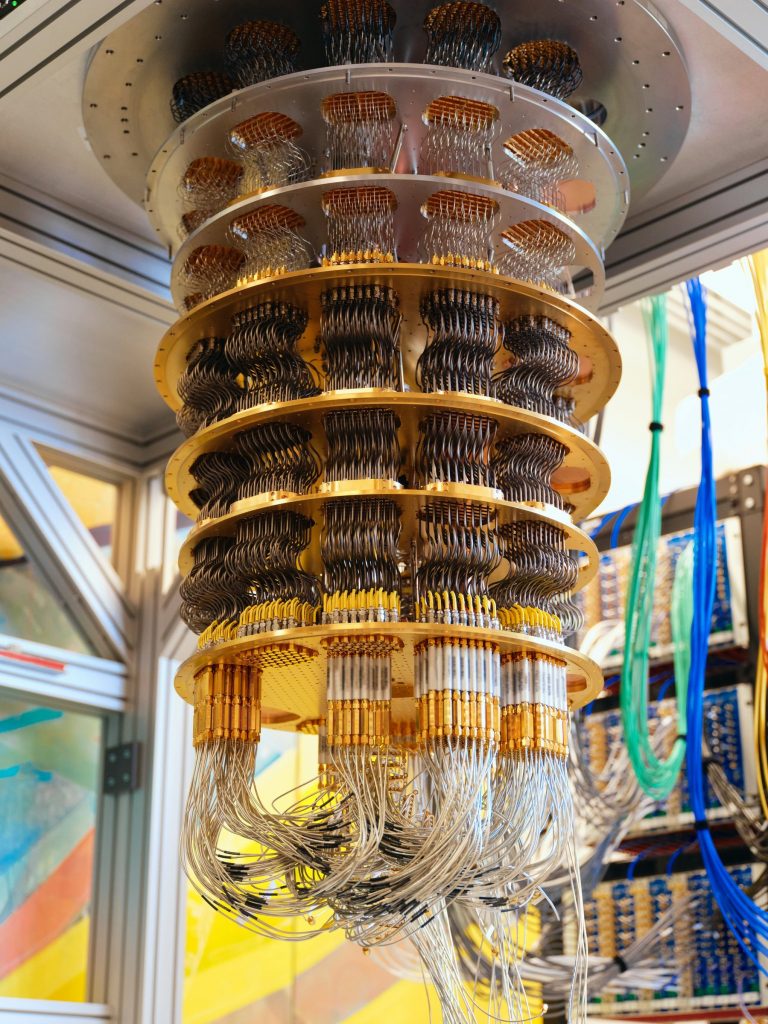
That’s the question Tolstoy would have asked IBM and Google because at the top of the quantum pyramid sits IBM, kingpin of the quantum universe, with its “Quantum System Two” running in a New York data centre and a public roadmap that reads like a sci-fi novel. IBM, learning lessons from its past, when it missed quite a few tech revolutions, isn’t content to play Schrodinger’s cat. No. This time around, it is writing the rulebook. Its 1,121-qubit Condor chip may sound impressive, but the real magic lies in its modular Kookaburra system, a 4,158-qubit behemoth scheduled for when this article is being written, i.e. end-2025, but isn’t out yet. Its key drive is to address that one issue that haunts every quantum computing system: errors. IBM’s long-term vision? A 100,000-qubit machine by 2033.
Google sits on the following table, and famously declared “quantum supremacy” in 2019 – a claim that sparked more debate than Indian election results these days. But by the end of 2024, as I had reported, Google wasn’t just talking the talk; it was walking the walk. It’s Willow chip with 105 qubits, completed a computation in less than five minutes that would take a classical supercomputer 10 septillion years. That is not a typo; Google did this with a new “fault tolerance” and is ready to bet everything on it.
Then there’s IonQ, the new-cat on the quantum block that went public via SPAC in 2021 and has since delivered almost 3,700% revenue growth. At 99.99 per cent gate fidelity – the highest ever recorded – it’s giving bigger players sleepless nights. Its acquisition of Oxford Ionics this year for more than a billion dollars wasn’t simply a purchase; it was a statement that the era of qubit quality rather than quantity is at hand.
In the meantime, Quantinuum – the artful combination of Honeywell and Cambridge Quantum – is quietly breaking records in Quantum Volume (a more comprehensive metric of power than merely the number of qubits). Its H2 system achieved a Quantum Volume of 2²³, a figure that seems like someone sneezed on a calculator but is actually a tribute to the engineering geniuses that run the company.
I now come to the wild cards. PsiQuantum raised nearly a billion dollars from Australia and Illinois, aiming for a million-qubit machine not in a decade but this decade. Meanwhile, Alice & Bob is a French startup with what they call cat qubits, which, if their theory holds, reduce the error-correction overhead by a factor of 10. Their €100 million war chest in early 2025 is a strong indication that someone believes they’re onto something.
The Nation-States with Billions on the Table
With the kind of support and infrastructure that quantum computing requires, at least the current crop, no company can survive without the backing of nation-states. And among all the countries of the world, the United States is all-in. Under the National Quantum Initiative and CHIPS framework, U.S. quantum funding spans multiple agencies into the billions cumulatively. Meanwhile, the Department of Energy has renewed its five QIS centres with $625M. The policy posture is classic Silicon Valley–Washington hybrid: finance the science, partner with industry, and slap export controls on the technology before China gets a look.
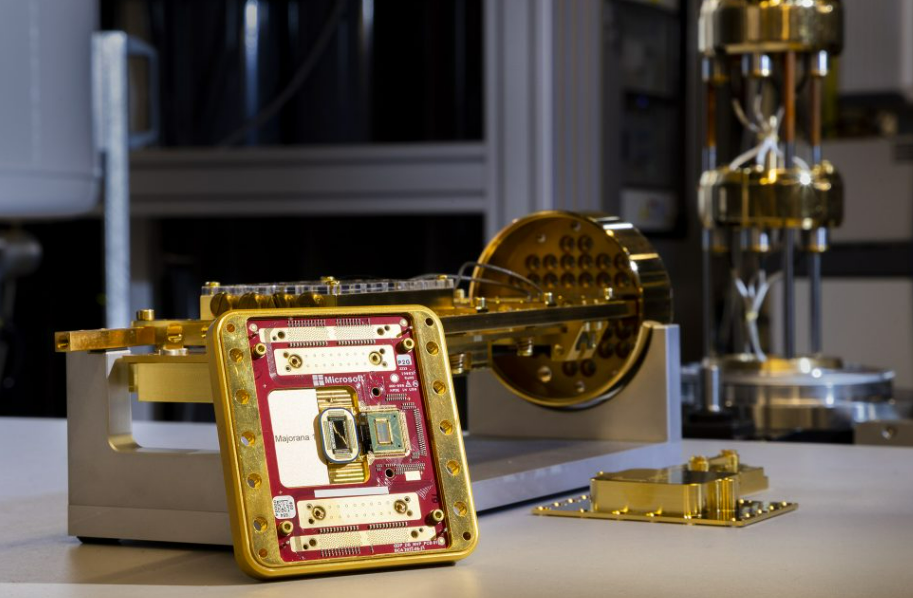
Speaking of China, it’s playing an entirely different game. It has invested an estimated $15+ billion in quantum since 2016 – most of it public investment – and has constructed a 37-hectare National Laboratory for Quantum Information Sciences and launched the Micius satellite to beam quantum-encrypted messages from space. China’s playbook is centralised, state-led, and obsessed with sovereignty. For them, they’re not just building a quantum computer, but a quantum wall for the nation.
Now Europe can be called the brainy player at the table, flush with ideas but short on chips. Given its insight into the world of quantum publications and its provision of components for quantum machines, it has yet to spawn even one unicorn. The EU’s 2025 Quantum Strategy is a courageous attempt to bring together its scattered resources, and the EuroQCI project seeks to build a continent-wide quantum-secure network by 2030. National champions such as France’s Alice & Bob or Germany’s QUTAC consortium are encouraging developments, but they’re still trailing the U.S. and China in terms of scale.
Just outside the US is the United Kingdom, which, through its National Quantum Strategy (2023–2033), sets a decade-long vision to make the nation a “quantum‑enabled economy.” In 2025, the government announced a £2 billion Compute Roadmap to embed quantum systems into national digital infrastructure and advance sovereign AI policy. Alongside this, they also announced a £670 million investment in quantum computing, including a ten‑year settlement for the National Quantum Computing Centre (NQCC).

Australia, meanwhile, is betting everything on PsiQuantum, investing $620 million to develop a fault-tolerant device in Brisbane. Canada, where D-Wave and Xanadu are headquartered, has its own national strategy. Even Saudi Arabia has invested $6.4 billion in advanced tech R&D, betting that quantum will be a cornerstone of its post-oil economy.
And India? Well, we have the National Quantum Mission (NQM), approved in 2023 and running through 2030–31 with a budget of ₹6,003.65 crore to focus on building intermediate‑scale quantum computers with 50–1000 qubits, developing secure quantum communication networks, and supporting satellite‑based quantum key distribution. The impetus is right, but as we saw with our National AI mission, it’s great on paper, but falters on the ground.
Beyond the Hype: From Qubits to Quarters:
The global industry has wisely moved beyond the “qubit count” arms race. A thousand noisy, error-prone qubits are as valuable for quantum computing as a tennis ball. So, the new scale is usefulness: is this machine able to produce real work, more quickly, at less cost, than a classical computer?

And the answer is increasingly yes. In early 2025, scientists applied a quantum-hybrid approach to identify drug candidates for the KRAS cancer protein, a target once considered “undruggable.” The molecules were then validated in the lab. That was not a simulation; it was a finding.
In the world of finance, Intesa Sanpaolo is applying IBM’s quantum tools to try to detect fraudulent transactions. Ford Otosan aims to halve its vehicle scheduling time using a quantum annealer. The Port of Los Angeles, as well as others such as Rotterdam and Hamburg, has a quantum-engine-optimised crane system in the hopes of saving millions of dollars a year. These aren’t futuristic promises; they’re 2025 ROI statements.
Meanwhile, Quantum‑as‑a‑Service is fuelling pragmatic enthusiasm. Platforms like AWS Braket and Azure Quantum let developers tap IonQ, Rigetti, QuEra, and more – democratising access and spawning a new breed of quantum developers who treat the arcane science as a business tool.
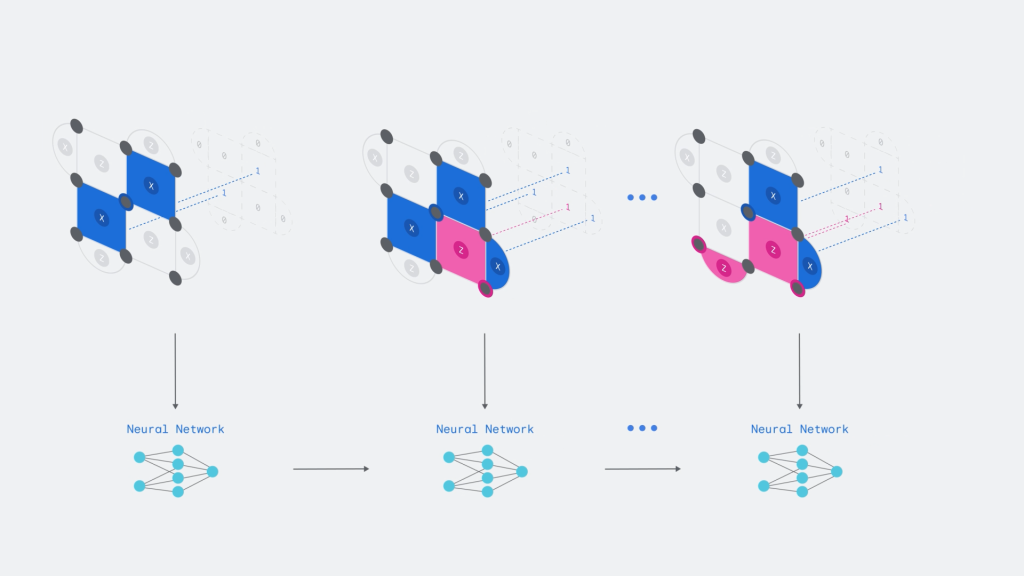
The Talent Shortage
For all its promise, the ‘quantum’ industry has a glaring Achilles’ heel: people. The global supply of quantum workers is less than half of what is needed, and most quantum job postings go unfilled. It’s not just a recruiting problem; it’s a choke point that could grind the entire revolution to a halt.
The solution? A massive, coordinated response in education. The U.S. National Science Foundation is expanding its quantum traineeships, the EU is investing in its Quantum Skills Academy, and companies like IBM are providing free access to its Qiskit textbook, which over 450,000 learners have already used. But it’s a race against time. You can have the best hardware in the world, but without the minds to program it, a quantum computer is just a costly paperweight.

So, who’s winning the big quantum poker game in 2025? The U.S. holds a strong hand with its combination of private innovation and public funding. China is the disciplined counter-player, placing a big bet on a long-term, state-led approach. Europe is the brainy underdog with deep know-how but limited commercialisation. And the startups? Well, they’re the wild cards, who could either fold or take the pot.
But here’s the twist: this is not a zero-sum game. As we have seen in the field of artificial intelligence, the ultimate winner will not be a single company or country, but humanity at large. The challenges that quantum computers can tackle – climate change, disease, global logistics – are too significant for a single organisation. The real triumph will be when this arcane science escapes the laboratory and begins to transform our world, one qubit at a time.
Until then, the game is on, the stakes are astronomical, and this is just the beginning for the players. Place your bets. But place them wisely.
In case you missed:
- OpenAI, Google, Microsoft: Why are AI Giants Suddenly Giving India Free AI Subscriptions?
- Coopetition: Why’s NVIDIA Building AI Models to Compete With Customers It Sells Chips To?
- GoI afraid of using foreign GenAI in absence of Indian ones? Here’s how they still can
- Makers of Toilets & Ajinomoto: The Unlikely Companies Getting Rich Off the AI Boom
- “Faster, Higher, Stronger” to “Smarter, Hardier, More Useful”: Why China’s Hosting Robot Olympics
- Gemini & Copilot accessing your content: A great data grab in the name of AI assist?
- South Korea Made Generative AI a Citizen’s Right: Should the Rest of the World Follow?
- The Weight of the World: Why the Open vs. Closed AI War Is Really About Who Controls the Future
- Companies Fired Staff for AI. Now AI Costs More Than Staff. Together It’s Still Half the Story
- Indian AI’s Power Problem: We Woke Up Late to AI, We’re Still Half-Asleep