


One man moved heaven and earth and AI to cure his dog’s cancer, but far from a one-in-a-million miracle, this could become a trend, opines Satyen K. Bordoloi
A human’s love for their dog is the stuff of folklore. In Paatal Lok, a gruesome killer, moved by his target’s love of dogs, refuses to kill him. John Wick – the billion-plus dollar film franchise – is essentially the story of an assassin avenging his dog. Paul Conyngham – a Sydney-based tech entrepreneur and data scientist – did better than John Wick. Like Savitri and Orpheus, who wrested their loved ones from the jaws of Death through devotion and music, Paul saved his dog from cancer using devotion and artificial intelligence. And what he did could change both medicine and artificial intelligence.
When we see in films that the hero refuses to accept fate and does everything, either to get the money for the operation or to race against time to cure their beloved, we watch with tears in our eyes, knowing that in real life, diagnoses are final and miracles don’t happen. But Paul Conyngham begged to differ and turned a screenwriter’s fantasy into reality, using artificial intelligence.
The Dog Who Saved Him
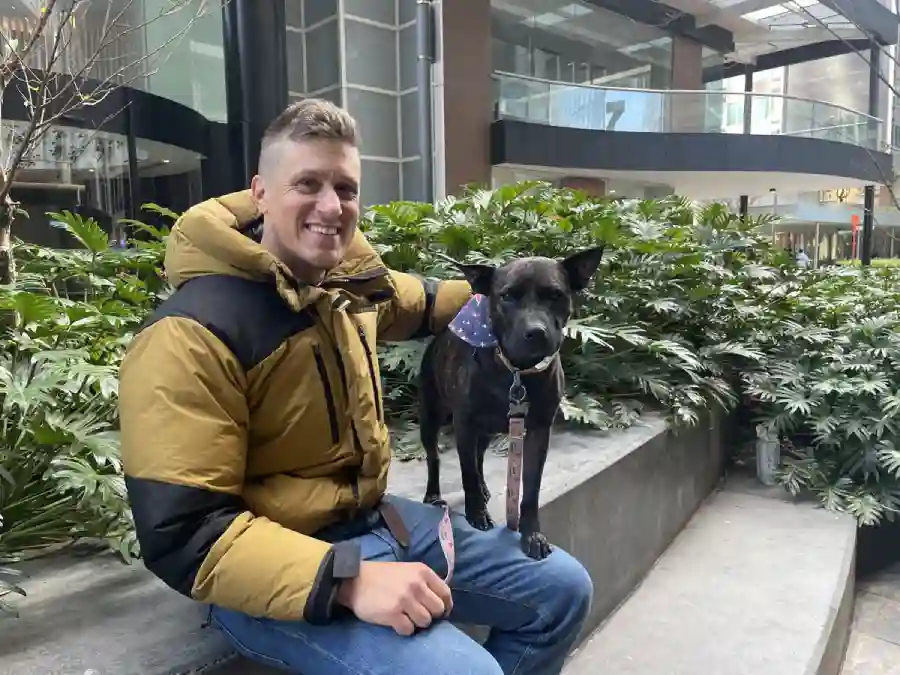
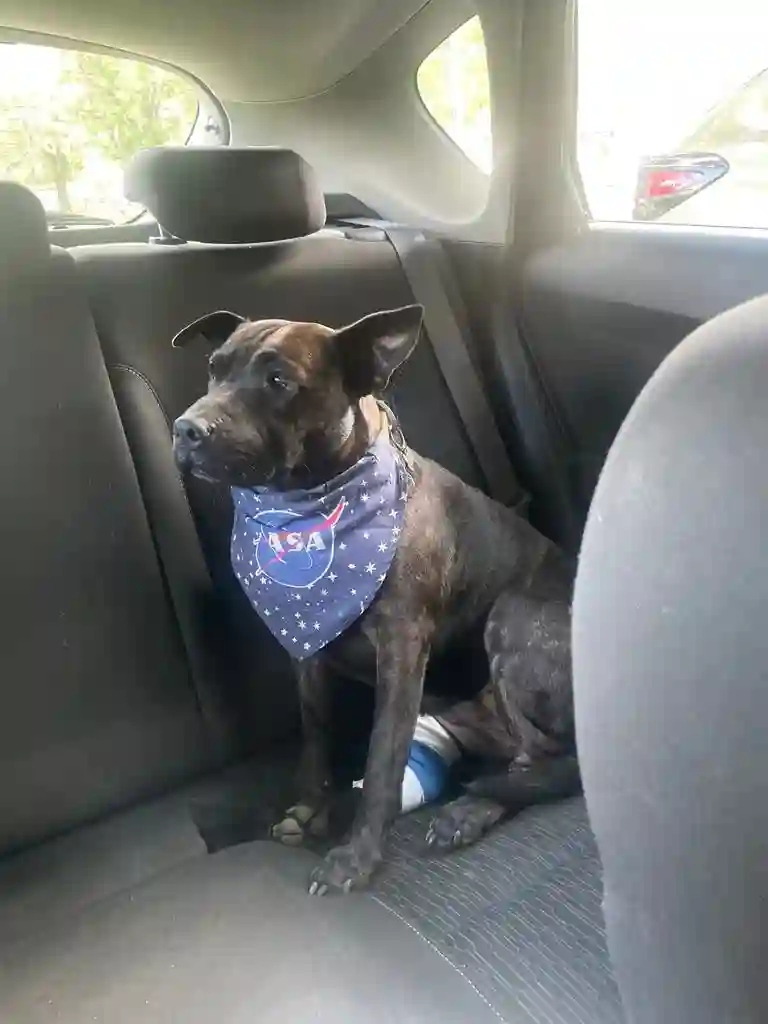
To understand why Paul did what he did, we must trace back in time to understand what Rosie means to him. To Paul, she isn’t just an 8-year-old Staffordshire Shar Pei rescue with a wrinkled face and kind eyes. She had been his anchor through storms no one else knew about, one who saved him every day, simply by existing and loving him back.
Hence, when a wrong diagnosis about a lump in her leg turned out to be terminal mast cell cancer in 2024, his world collapsed. After going through the five stages of grief, he found the strength to enter the sixth stage: Solvence. Thanks to Gemini for coining this term and defining it as: “The state of transitioning from emotional acceptance of a loss to the active, technical intervention of its cause; the refusal to accept a ‘terminal’ sentence as a final data point.”
Rosie had been given just months to live. Paul rushed to “Solvence” it.
The Absolute Insanity of Hope
To the outside world, it perhaps looked like the desperate flailing of a man unable to let go. Because Paul’s plan wasn’t just audacious, it was insane. He had no background in biology or medicine and had never set foot in a lab or read a single scientific paper on oncology. What he knew, what he had spent seventeen years working with, was machine learning and data. And I’d hazard to say that this helped him understand that the world, our modern world, was structured around data and information.
If cancer were a data point in his dog’s life, I’m sure he thought that there must be information out there that could eliminate that point. And he set out in search of that via something that barely 2 years ago didn’t even exist: advanced artificial intelligence capable of conversation, reasoning, teaching, and guiding.
He started chatting with ChatGPT, asking it to tutor him, to explain cancer immunology, break down complex medical terminology into language he could understand, and ask what cutting-edge treatments existed that conventional veterinary medicine wasn’t offering. What the AI suggested was strange but not illogical. It said that if he could sequence Rosie’s tumour DNA, they might be able to identify unique mutations that could be targeted by immunotherapy.
It told him about neoantigens, the specific proteins on cancer cells that could flag them for destruction by the immune system. It explained mRNA technology, the same platform that had produced COVID-19 vaccines, and suggested that, at least theoretically, a personalised vaccine could be designed to train Rosie’s body to attack her own cancer.
No veterinarian had ever done this for a dog. No human had ever done this without a team of PhDs and a pharmaceutical company behind them. But Paul kept asking, and the AI kept answering, and slowly, impossibly, he began forming an audacious plan.
The Recipe for a Miracle
Sequencing Rosie’s tumour cost $3000. And he sat at his home office, Rosie sleeping at his feet, going through the massive genomic data containing the complete genetic code of her cancer and began the impossible work of trying to figure it out.
Using his coding skills and guided step-by-step by ChatGPT, he analysed the data, found patterns, and identified the mutations that made Rosie’s cancer unique. He then turned to AlphaFold, Google DeepMind’s revolutionary AI that can predict the three-dimensional structure of proteins based solely on their genetic sequence, the same technology that had found the protein structure of all the proteins on the planet and won its creators a Nobel Prize.
What he found was a target
A specific neoantigen on the surface of her cancer cells that, if flagged, might trigger a powerful immune response. He designed an mRNA sequence – essentially a genetic instruction manual – that would teach Rosie’s body to recognise and attack that target. A professor later described this moment as extraordinary: Paul, a man with no medical training, had essentially “written the recipe” for a cancer vaccine, becoming the first non-scientist in the world to design and deliver such a fully personalised cancer vaccine.
But a recipe is not a meal. He needed someone to cook it.
The Village That Made It Possible
Paul reached out to researchers at the University of New South Wales, expecting to be dismissed as a crank. Instead, he found scientists willing to listen. Like 1Martin Smith, a computational biologist, who performed the sequencing, Professor Pall Thordarson at the UNSW RNA Institute looked at Paul’s AI-generated mRNA design and realised, with growing astonishment, that it was viable. Professor Rachel Allavena, an expert in animal immunotherapy at the University of Queensland, helped navigate the complex ethics approval process and agreed to administer the vaccine.
In December 2025, Rosie received her first injection. Weeks later, the tumours began to shrink dramatically. Some estimates suggest a reduction of fifty to seventy-five per cent. The lethargic dog who could barely walk to the park was now jumping fences to chase rabbits. “I think it’s added considerable life and healthspan to Rosie,” Paul said quietly, understating what can only be described as a miracle.
The Revolution We Haven’t Noticed Yet
To understand what this story really means, we must step back to look at the technology that made it possible. In 2020, DeepMind’s AlphaFold solved a problem that had baffled scientists: the protein folding problem or how a chain of amino acids folds into a three-dimensional shape that determines its function. Finding this for every single protein on the planet would take decades, in reality, centuries with traditional methods. AlphaFold discovered over 200 million protein sequences on the planet in two years.
The scientific community recognised this as a Nobel-worthy breakthrough, but the public, well, let’s just say there was no fanfare for something that was biology’s equivalent of splitting the atom. With this discovery, designing drugs and vaccines has become less guesswork and more about engineering. This, and other advances in medical sciences of the last three decades, have given rise to a new domain – personalised medicine (or precision medicine) which tailors medical treatment to an individual’s unique genetic, molecular, and behavioural characteristics, rather than a “one-size-fits-all” approach that we have now.
Paul Conyngham was among the first ordinary people to harness this power, to use the power of AlphaFold not as a scientist in a lab coat, but a man desperate to save his best friend. And it worked.
The Coming Democratisation of Medicine
So does this mean anyone can now become a doctor? Should we all start designing our own treatments? No. Not yet. And perhaps not ever without safeguards.
What Paul did required a unique combination of skills: seventeen years of data science experience, access to sequencing technology, and the ability to collaborate with professional researchers who could translate his designs into reality. It also required a regulatory framework with ethics approvals and veterinary oversight designed to protect Rosie from harm. Paul was not practising medicine alone in his garage. He was collaborating between AI and experts, using the technology to bridge gaps in his own understanding.
Yet, there is still a question that this story forces us to ask
What happens when AI gets better, when the next version of ChatGPT or Gemini or DeepSeek can not only explain immunology but also run virtual experiments, predict outcomes with near-certainty, and guide a user through every step of a complex medical procedure? What happens when AI companions become so integrated into our lives that they know our medical history, our genetic predispositions, and the unique biology of our loved ones as intimately as we do?
The future that Paul Conyngham’s example shows is one in which the boundary between expert and layperson almost disappears. And this is not because expertise becomes worthless, but because AI takes humanity’s accumulated knowledge and makes it accessible to anyone with a question and the determination to find an answer.
Love as the Ultimate Motivator
Yet the most beautiful aspect of this story is what motivated it. Paul did not set out to revolutionise medicine or do it for fame or recognition. He simply loved a black, wrinkled rescue dog who, in ways only dogs can, had once saved him. And that love refused to accept the word “no.”
In every film, the hero moves heaven and earth for love. We watch, we cry, we return to our ordinary lives believing such heroism belongs to fiction. But Paul Conyngham has not dropped from the imagination of a screenwriter. He is a man in Sydney who, on an ordinary afternoon, watched his dog chase a rabbit across a park and knew, with absolute certainty, that love had won.
Rosie is not declared cured. Some tumours remain, and Paul is already working with his team on a second, booster vaccine. But she is alive. She is happy. She is here for Paul, and for the world to see.
And that is the marvel AI made possible. Not just the science, or the technology, but prove that when human love and artificial intelligence join forces, miracles become reality, fiction become facts. And the future that these points to is one for the sixth stage of grief: Solvence.
In case you missed:
- 2025 – Year of Gene Therapy: Curing Lymphoma & Wiskott-Aldrich Syndrome, & Using AI
- Your Phone is About to Get a Brain Transplant: How Google’s Tiny, Silent Model Changes Everything
- From Spider-cam to Infinite-cam: How AI is Revolutionising Sports Broadcasting
- What The First Fully AI Film To Enter A Major Festival Says About AI Filmmaking’s Future
- The Great AI Correction of 2026: Why the ‘Bubble’ Popping Could be the Sound of Growing Pains
- Reviving Old Research With AI: How It Can Transform The World
- The Ghost in the Crypto Machine – Unmasking Bitcoin Creator Satoshi Nakamoto
- Research finds AI ‘scheming’ is increasing; Is it, and will it destroy the world?
- The B2B AI Revolution: How Enterprise AI Startups Make Money While Consumer AI Grabs Headlines
- Pope Leo’s surprising AI awareness, and what it says about our world