


There are over 50 lawsuits in the US Federal Court about how AI companies are using copyrighted data to train their systems…
Well, to be fair, this was always bound to happen…
Artificial Intelligence needs to be trained so that it can learn to be intelligent. And for that, it needs to consume large amounts of varied data. AI companies have been using online data to develop their large language models, image generators and other generative tools. The problem here is that a lot of that data happens to be copyrighted or trademarked. Which has landed them in some big soup because as of right now, there are over 50 pending lawsuits against AI companies filed by intellectual property owners in the US Federal Court.
As per law firm Debevoise & Plimpton, courts are “finally beginning to confront the substantive merits of plaintiffs’ infringement claims and defendants’ fair use defenses.” Major media publishers like Condé Nast, The Atlantic and The Guardian have teamed up to take collective action against an AI developer, who is allegedly involved in the unauthorized reproduction and distribution of copyrighted works.
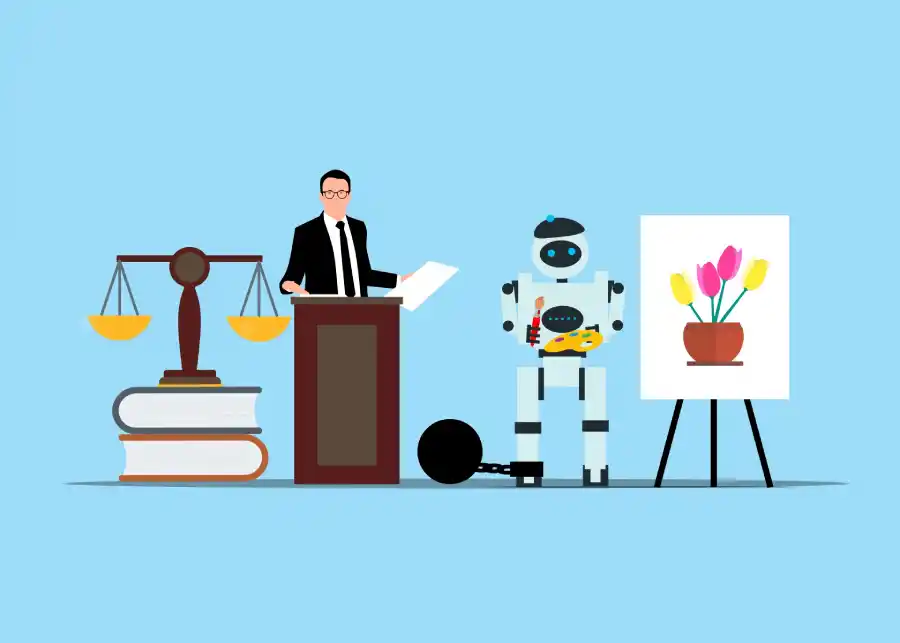
What is Fair Use when it comes to AI?
At the heart of all these arguments is the US doctrine about ‘fair use’. It is a legal exception that allows the limited use of copyrighted material without permission under certain conditions. AI developers have been using fair use as a critical defense when it comes to the use of training data which includes copyrighted books, articles or images available on the internet.
There have been victories for both sides. One ruling favoured Meta regarding a decision that the usage of certain books to train language models did not qualify as infringement. But on the other hand, AI company Anthropic had to pay USD 1.5 billion to some authors for using their copyrighted material for training.
But despite these rulings, the exact boundaries of fair use continue to be unclear and the belief is that the next set of lawsuits will be stricter against the defences of the AI companies.

Authorship, Ownership & Deepfakes
These aforementioned litigations focus on the ethics and permissions around LLMs training from existing content but the deeper question is about the authorship and ownership of AI-generated content.
Prof VK Ahuja explores this topic at length in the ILI Law Review where he talks about the fundamental difference between the two sides. Copyright traditionally means human creativity and involvement. But if a work is created by a machine, many legal regimes, including India, do not attribute authorship to anyone but a natural person. Which raises questions regarding ownership of AI generated content and whether such content should even be copyrighted.
Prof Ahuja also talks about the case of deepfakes, where likeness of real people is artificially generated by AI. There is a major question regarding the copyright of such content where permissions and human involvement are absent or ambiguous.
Global Regulatory Pressure
The lawsuits are not limited to USA alone. In the UK and across Europe, questions are being raised about how intellectual property law applies to AI. Everyone is reevaluating whether existing fair dealing and copyrighting exceptions are sufficient.
A government panel has been setup in India to review existing copyright laws involving AI. This comes in light of allegations that global AI companies were using local news content without proper permissions.
The World Intellectual Property Organisation’s (WIPO) is currently in the process of coming up with a model for AI authorship and IP protection that maintains incentives for human creativity while also recognising the reality of machine-generated content.

The Last Word
As AI gets more and more involved in creative, commercial and research processes, litigative and legislative reforms are necessary to protect content ownership. Copyright contracts are being rewritten and data usage policies are being tightened. While AI companies are refining how they use existing data, policymakers are tightening their laws of fair usage and copyrights.
Very soon, a legal frontier will develop that clearly draws the line where fair usage stops and where it qualifies as copyright infringement.
In case you missed:
- AI Chaos: Why OpenAI, Google and Microsoft Keep Shifting Strategies
- How the US-China Tech Rivalry is Affecting India’s Future
- Apple Intelligence to increase Global Reach with Multilingual Support
- Microsoft’s 2025 Work Trend Index reveals the rise of Frontier Firms
- Grok’s ‘Spicy’ Feature lets you Generate Sexually Explicit Images
- From Curiosity to Utility: Inside 1.5 million ChatGPT Conversations
- You can Now Create a Video From a Single Image!
- WhatsApp introduces Advanced Chat Privacy for Increased Security
- OpenAI is now Focussing on Superintelligence!
- How Google’s VaultGemma Pushes the Boundaries of Safe AI