
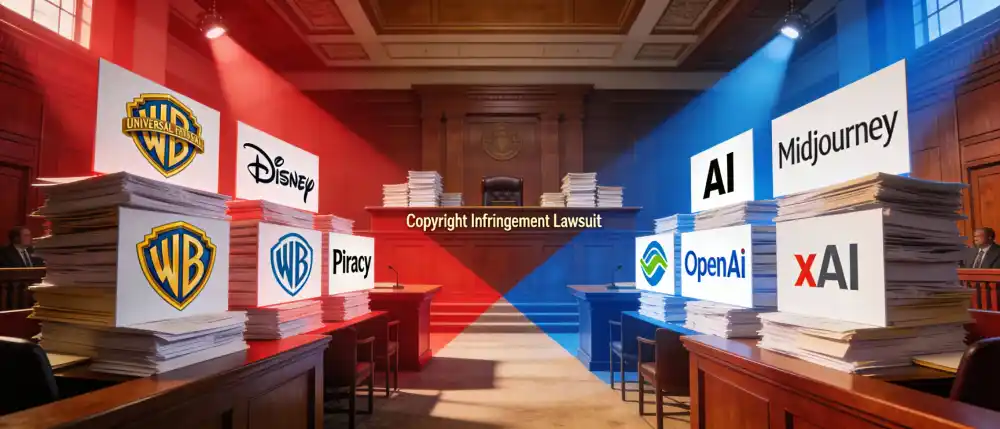

In a stunning reversal, the studio that sued AI companies for piracy is now paying them billions; does that mean that the age of human-led storytelling is over, asks Satyen K. Bordoloi.
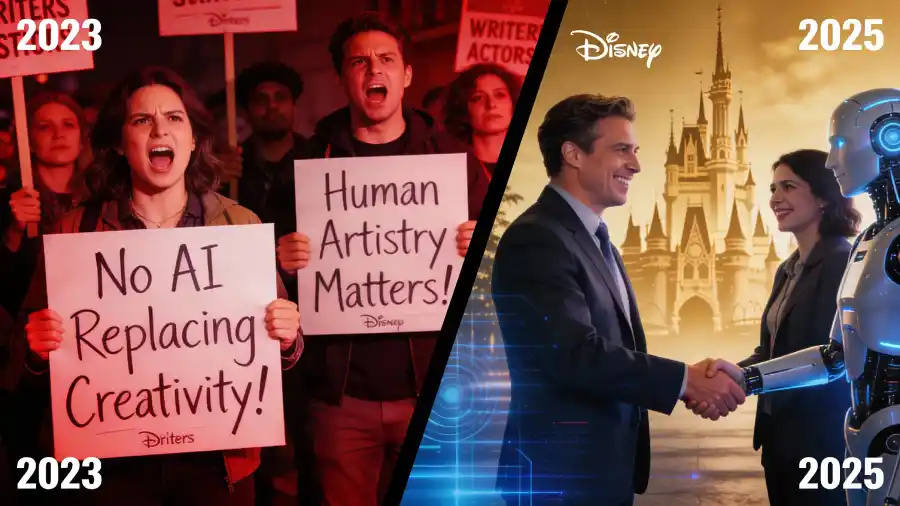
In mid-2023, Hollywood took up arms against AI, with both the writers and actors striking against the tech, and producers seriously considering their objections. But in 2025, multiple deals between Hollywood studios and AI companies have rocked the global filmmaking capital.
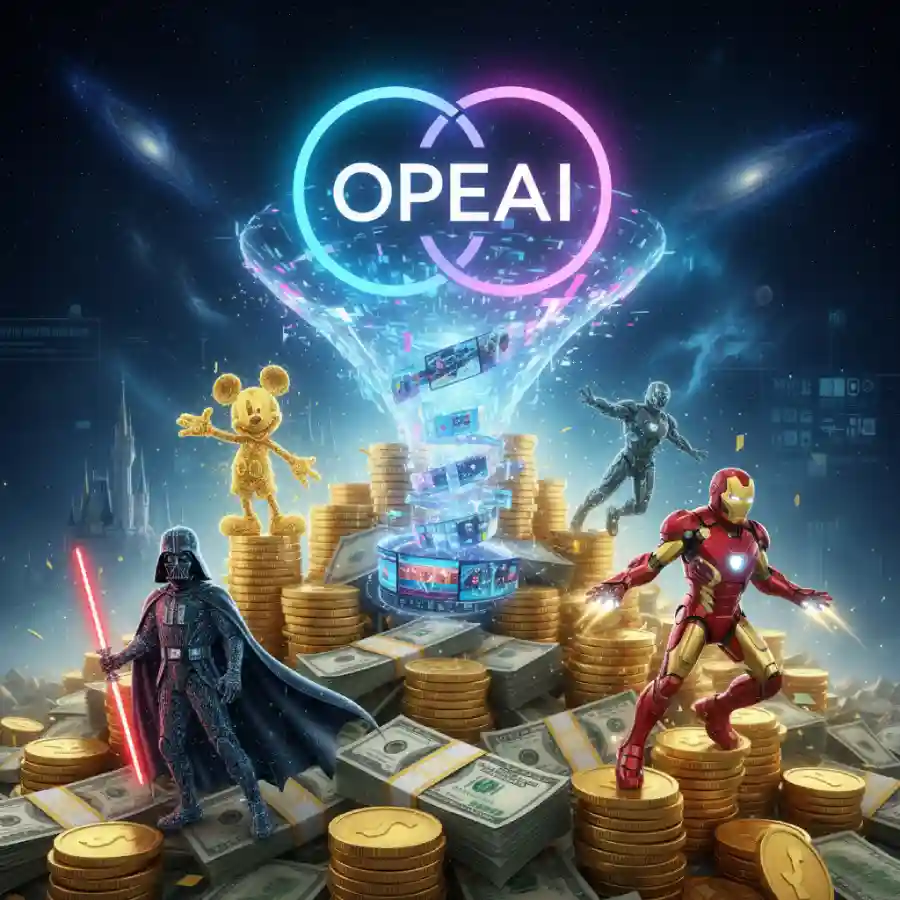
The biggest of them was when the Walt Disney Company, with one of the most substantial holdings of intellectual property, revealed that it was not just embracing artificial intelligence but also investing $1 billion in its leading architect, OpenAI. This landmark deal, a three-year licensing partnership, grants OpenAI’s Sora video generator access to over 200 iconic characters from Disney, Marvel, Pixar, and Star Wars, with plans to feature fan-created shorts on Disney+ itself.
It is as if the existential debates of the 2023 writers’ and actors’ strike never happened, and Hollywood has capitulated – lock, AI stock, and LLM barrel – to AI. It is the strongest signal that AI, once viewed as a threat to creative livelihoods, is now being embraced as a central tool in the future of storytelling.
The Anatomy of a Landmark Deal
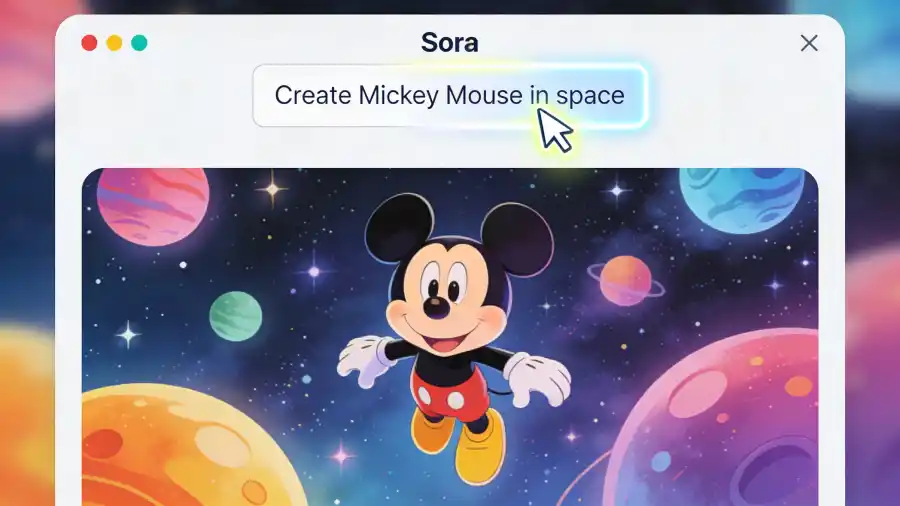
Financially, the Disney-OpenAI deal is a massive vote of confidence in OpenAI’s video platform, as Disney’s equity investment positions it as a key stakeholder in OpenAI’s future. Operationally, the deal is no less profound. Sora will serve as a conduit for fan creativity, allowing subscribers to generate short videos starring Mickey Mouse, Darth Vader, or Iron Man with simple text prompts.
Selected outputs will be eligible for broadcast on Disney+. This means the streaming service will become a hybrid platform for both professional and user-generated content, including AI-generated content, which other platforms have been reluctant to host.
Internally, Disney wants to use OpenAI’s technology to streamline its film production, seeking cheaper, more efficient options in a notoriously expensive business. As CEO Bob Iger stated, the collaboration aims to “thoughtfully and responsibly extend the reach of our storytelling through generative AI, while respecting and protecting creators and their works”. Both companies say the rhetoric of responsible innovation is backed by guardrails that promise to prevent characters from being depicted in inappropriate ways or situations.
However, this also unintendedly answers a monumental ethical question that has haunted AI development: the use of copyrighted material for training. By cutting a deal, Disney has effectively granted a form of retroactive forgiveness, thereby legitimising OpenAI’s models in a way that countless lawsuits have failed to achieve.
The Context of Conflict
The Disney-OpenAI deal cannot be understood in isolation. In the months leading up to the deal, Hollywood studios had adopted an aggressive posture toward litigation against AI companies they accused of systematic piracy. Just months earlier, Disney and Universal Pictures jointly sued the AI image generator Midjourney, calling its technology a “bottomless pit of plagiarism” for producing copies of characters like Elsa, Darth Vader, and the Minions.
They alleged Midjourney had profited massively from their intellectual property without permission.
The conflict escalated with the launch of OpenAI’s Sora 2, which enabled users to insert likenesses of real people and copyrighted characters into AI-generated videos. The fury across Hollywood was immediate. Studios, talent agencies, and unions, including SAG-AFTRA, united in condemnation, arguing that an “opt-out” model for copyright protection turned established law on its head.
Incidentally, Disney, Universal, and Warner Bros. Discovery had also previously sued AI firms MiniMax and Midjourney, creating a growing forest of ongoing litigation against AI companies across the arts, including books, images, and videos.
Take the lawsuit filed by author John Carreyrou and other writers – again in December 2025 – against OpenAI, Google, xAI, Meta, and others, alleging the pirating of copyrighted books to train chatbots. This case is part of a wave of copyright cases, including a landmark $1.5 billion settlement by Anthropic with a class of authors in August 2025.
The Disney deal, therefore, seems like a strategic manoeuvre: rather than joining a protracted legal fight as a plaintiff, Disney has chosen to become a partner, securing both a financial stake and a controlled, sanctioned avenue for its IP in the AI ecosystem.
Is Partnerships Over Litigation The New Hollywood Playbook: Disney’s move, despite being the most headline-grabbing because of the money and potential involved, is but part of a broader Hollywood trend seeking to co-opt rather than combat AI technology. Another example is the partnership between Lionsgate and AI video startup Runway, announced in September 2024. This “first-of-its-kind” deal involved training a custom AI model on Lionsgate’s vast 20,000-title library to augment pre- and post-production work for filmmakers.
These partnerships point to a new kind of playbook. To AI companies, this gives them access to a priceless commodity: legal access to high-quality, branded training data. For studios, this is an opportunity to harness the disruptive power of AI while remaining in control. They do this by channelling user creativity into official platforms and streamlining internal workflows. They could unlock entirely new revenue streams from their legacy libraries while also producing content for themselves at much lower rates using new, evolving AI pipelines.
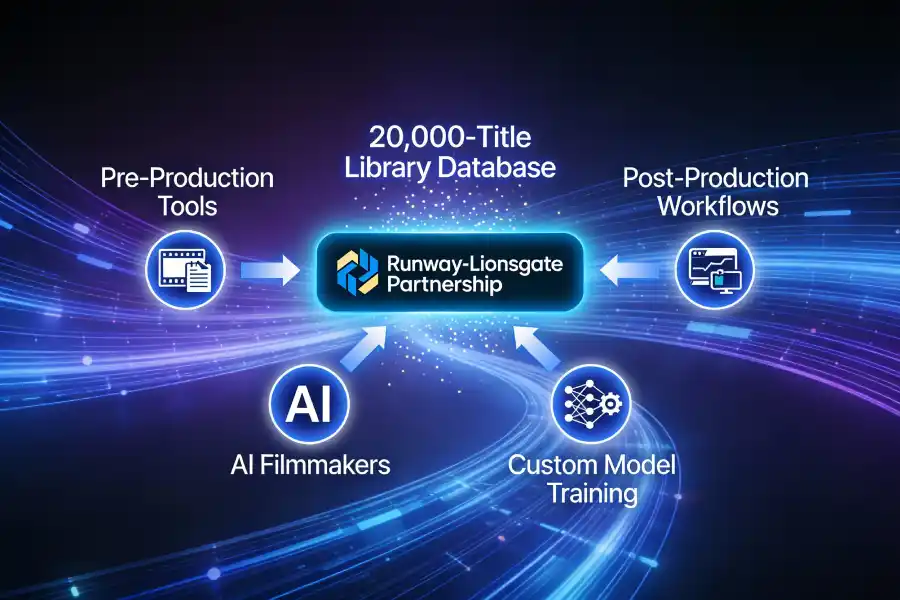
The alternative, as the ongoing lawsuits suggest, is an endless cycle of legal uncertainty and adversarial relationships. The Runway-Lionsgate and OpenAI-Disney deals indicate that the industry has begun to smell the inevitability of it all: AI is not going to be ousted from this world. So why not join for a mutually beneficial relationship, instead of fighting?
Reshaping the Content Creation Landscape
This is also a giant leap for content creation, fundamentally altering how videos are made and shared. Disney’s vision of Disney+ as a place where Sora-generated fan videos will reside points to a future in which the line between consumer and creator blurs. We could see the platform evolving into a walled garden akin to YouTube, but one in which the creative tools are included in the subscription, with Disney’s iconic characters pre-approved for use.
Who is to say YouTube itself will not bundle similar creation access for Google’s legacy software, like Nano Banana and Veo 3? Perhaps a tie-up with another Hollywood studio.
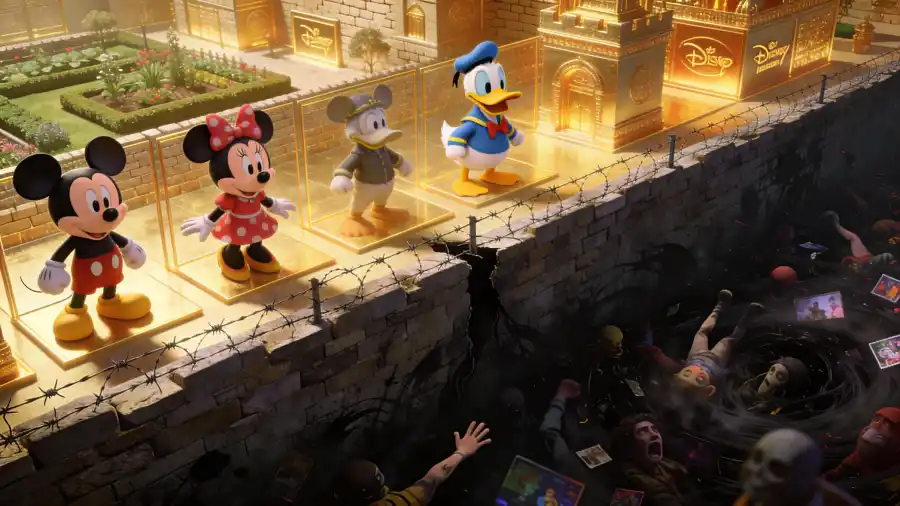
This democratisation of access to tools, one must remember, comes with a kind of centralisation of power. While anyone can use open-source models to create unauthorised content, the official, high-fidelity versions of beloved characters will be exclusive only to licensed partnerships. This creates a two-tier system: a sanctioned, “legitimate” creative sphere operated by IP holders and their AI partners, and a vast, unregulated shadow economy of AI-generated content.
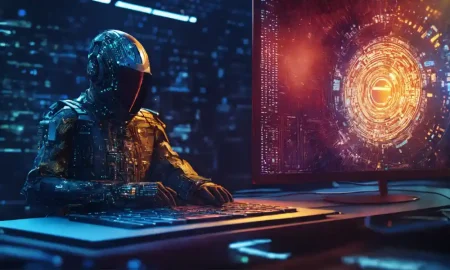
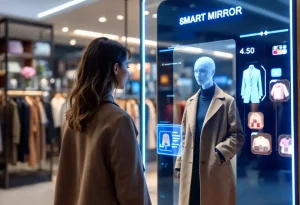
The guardrails Disney and OpenAI promise may prevent overt misuse on their own platform. Still, they will do little to stop the generation of unauthorised content elsewhere, as the images generated using AI to illustrate this article itself show.
Furthermore, this model accelerates what experts have called the “deprofessionalization” of content creation. If short-form, AI-generated content that requires little human labour can attract audience engagement and generate daily revenue for those who create it, the economic argument for expensive, long-form, human-driven productions weakens further, especially in a high-cost-of-production world.
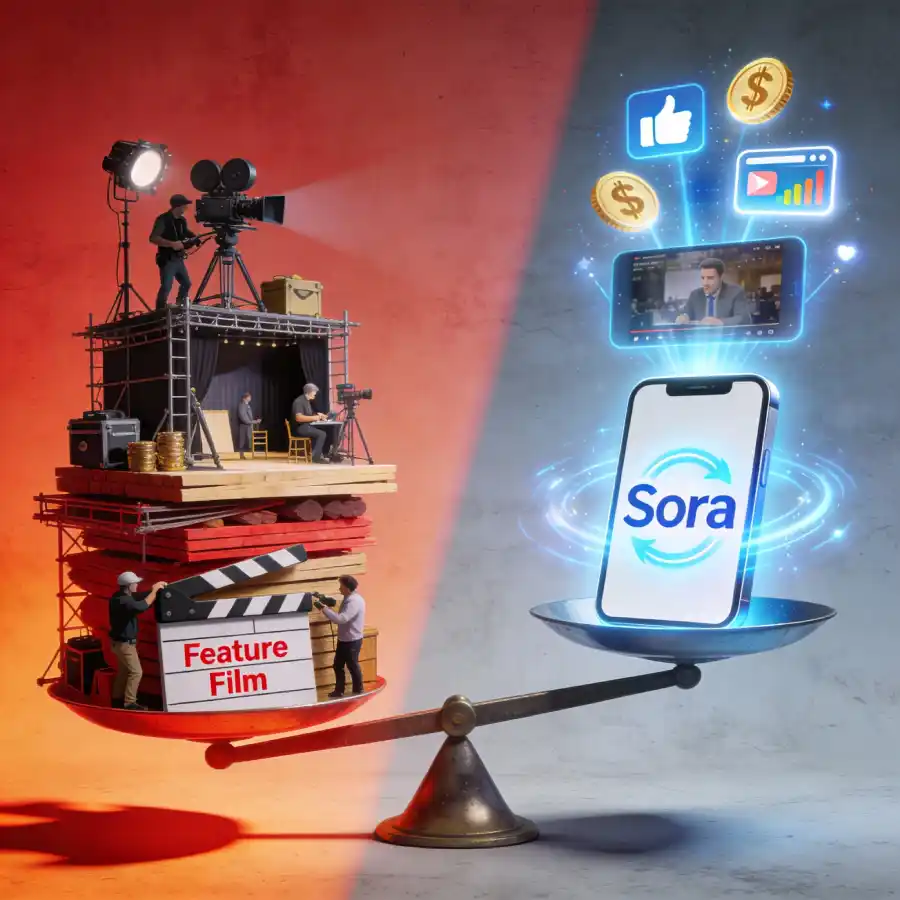
The deal legitimises the infinite recombination of existing IP. It turns them into a primary form of entertainment, potentially crowding out the original storytelling for which a studio like Disney is known.
The Disney-OpenAI deal might seem like a watershed moment, but its ultimate meaning is still to be decided. It is a calculated bet by Bob Iger that sees Disney co-opt the twin threats of generative AI and user-generated content platforms to transform them into engines not just of growth and engagement but potential revenue. It is such a definitive legitimisation of AI’s role in Hollywood that the 2023 strikes now feel like a distant footnote in history.
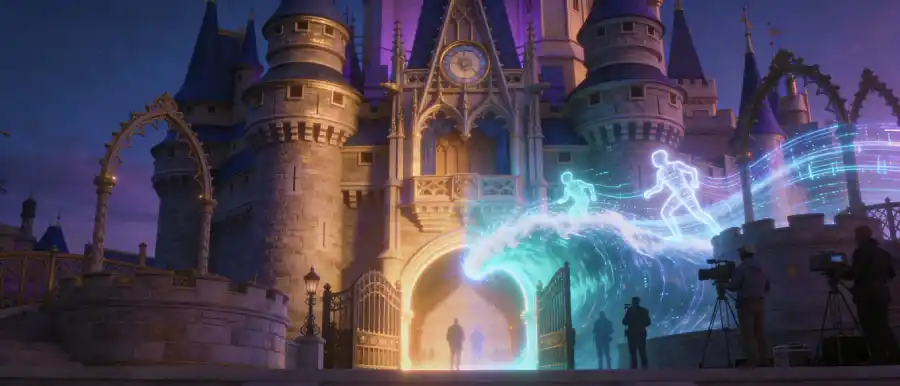
Yet profound ethical questions, especially regarding the use of copyrighted content in AI training, remain. Questions also remain whether it will truly free Disney IP or merely build a stronger wall around their content. And importantly, can an industry built on human creativity sustainably thrive if it increasingly relies on machines for creation?
The deal does not mean that human-led cinema ends. However, it does irrevocably change its context. The battle isn’t so much about whether AI will be used in entertainment as about how, by whom, and to what end. In choosing partnership over perpetual litigation, Disney has not just bought itself a shiny, new tool but has placed a billion-dollar bet on a hybrid future where its timeless stories are no longer just something we watch, but ones we are officially invited to remix, reinterpret, and regenerate as we see fit. The magic kingdom has opened its gates to the machines, and now, there is no going back.
In case you missed:
- Greatest irony of the AI age: Humans being increasingly hired to clean AI slop
- OpenAI, Google, Microsoft: Why are AI Giants Suddenly Giving India Free AI Subscriptions?
- In Meta’s Automated Ad Creation Plan, A Fully Transformed Ad World
- Free Speech or Free-for-All? How Grok Taught Elon Musk That Absolute Power Corrupts Absolutely
- Anthropic Accuses Chinese AI of “Stealing”, Internet Points Finger Back At Them
- The B2B AI Revolution: How Enterprise AI Startups Make Money While Consumer AI Grabs Headlines
- One Year of No-camera Filmmaking: How AI Rewrote Rules of Cinema Forever
- The Great AI Browser War: When AI Decided to Crash the Surfing Party
- The AI Prophecies: How Page, Musk, Bezos, Pichai, Huang Predicted 2025 – But Didn’t See It Like AI Is Today
- Rogue AI on the Loose: Can Auditing Uncover Hidden Agendas on Time?