





Within days of release, Clawdbot became a sensation, delivering both the promise of productivity and a security nightmare, while giving a glimpse of our agent-run future writes Satyen K. Bordoloi
This seems like it could become a January AI tradition for the world: a new AI tool launches, spreads faster than a pandemic, and grabs our collective imaginations. Last January, DeepSeek’s efficiency sent US stock markets plunging into a nose-dive. This year, that honour has fallen to an agentic AI system that many are calling the best personal assistant so far.
It can do everything from booking your flight and your Uber, to fighting with your insurance and even, perhaps, accidentally emptying your bank account; all before you have made your morning cup of tea. This is the chaotic, productive, thrilling, yet slightly terrifying world of OpenClaw, the AI agent that has taken the world by storm, one that is as much a tool as it is a new bipolar roommate that has access to all your passwords.

Clawdbot (formerly Moltbot and later OpenClaw) is not just another chatbot. It is an open‑source, self‑hosted personal AI agent that lives on your machine or server, is plugged directly into your messaging apps, email, calendar, filesystem, browser, and even your smart home and instead of chatting with it on a browser tab, you DM it on WhatsApp or Telegram to quietly do real work in the background on your digital devices. To someone who went into a coma before the advent of generative AI in early 2022, this would seem like blackmagic.
Yet, to those who can understand what’s inside the hood, you’ll see that Clawdbot is simply an agent runtime that sits between large language models like Claude, GPT‑4, DeepSeek or local models via Ollama, and all your tools. It can run shell commands, browse the web, read and write files, send emails, and manage deployments, all while remembering what it did yesterday and reminding you of what you need to do a week later that you had told it to do a month ago.

From Weekend Hack to Global Obsession
Like many origin stories, Clawdbot’s origin is humble, starting out as a weekend project by Austrian developer Peter Steinberger in late 2025. All he was trying to do was find a simple relay to chat with AI via WhatsApp instead of opening a separate app. However, within weeks, his project had mutated into a full-blown 24/7 agent. And when he put it out on GitHub, expecting little, the opposite happened.
First 9,000 stars in just 24 hours, then around 60,000 by mid-January 2026, even as Mac minis and cheap VPSes reportedly sold out because people rushed to spin up dedicated “AI butlers” on separate, dedicated systems instead of giving it access to the ones they were using themselves.
Social media soon filled up with screenshots of Clawdbot’s successes: cleared inboxes, websites built from a phone, weeks of meetings planned and booked, etc. Tech influencers breathlessly called it the most powerful fully autonomous 24/7 agent they had ever seen, naming it “the tool we’ve all been waiting for,” even as others called this a genuine “new ChatGPT moment.”
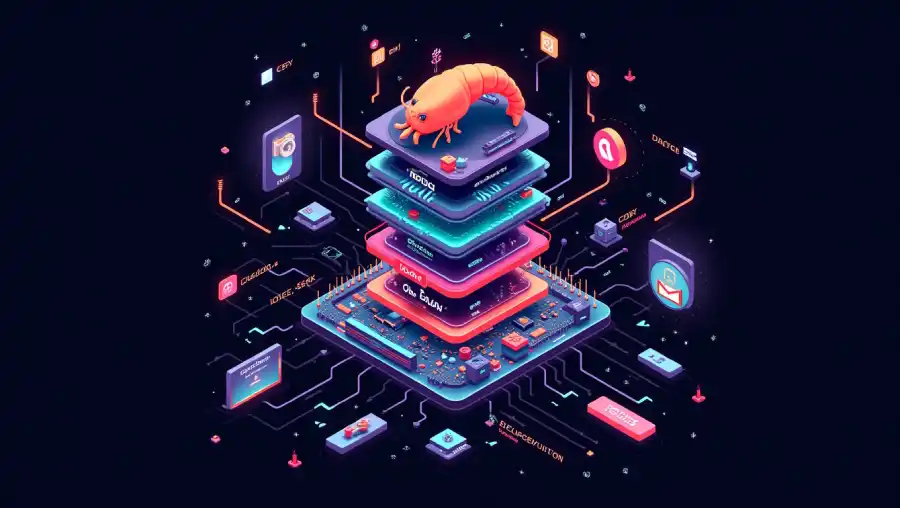
WHY CLAWDBOT IS EVERYWHERE
What makes Clawdbot feel markedly different from ChatGPT-style tools can be understood via one word: delegation. Unlike with a traditional chatbot, you don’t ask it to draft a single email. Instead, you tell it to “keep my inbox under control,” “grow my Twitter account,” or “keep the staging server healthy,” and it plans, executes, and iterates to fulfil your every need.
The qualities the agent demonstrates are exactly what you expect from your employees or your interns. It is proactive, persistent and recursive. It briefs you, reminds you and sends you uptime alerts about finishing tasks. It does not need a break and literally runs 24×7. When it hits a wall, it searches for solutions within its own vector memory, tries again, and even involves other sub-agents under certain setups.
The result is a system that developers are calling a shift from “command and control” to “collaboration”, where you give a high-level goal, the agent breaks it down, negotiates with other agents, and runs the entire workflow like a colleague who never gets bored or exhausted.

A ROSE BY ANY NAME
The Clawbot myth has everything you can want in the best origin story. In about 72 hours, it went from a developer eye-pop to a raging forest fire and then walked out as a rebranded phoenix. Right after a release weekend, when it went viral, security researchers discovered over a thousand exposed servers and carried out perfect proof-of-concept prompt-injection attacks. Icarus, it seemed, was melting under the heat of the sun.
Anthropic was the first to reportedly raise concerns over the similarity of the name “ClawdBot” to their AI system “Claude,” prompting headlines to scream “Clawdbot Doesn’t Exist Anymore” as Peter Steinberger renamed it Moltbot, now prompting the community to crack a joke on its logo: “same lobster soul, new shell”. On the sidelines, crypto scammers pounced on the abandoned “Clawdbot” name on GitHub org to launch fake tokens as confused users watched.
Today, in most serious coverage about the system, it appears as OpenClaw, but the lineage remains the the same: Clawdbot to Moltbot to OpenClaw: an increasingly ambitious open‑source agent runtime that now attracts attention everywhere: from Silicon Valley to China where major players like Alibaba, Tencent and ByteDance are experimenting with it to make it the spine of more autonomous super‑apps they are developing on their platforms, while US developers, and companies – I’m sure – are busy doing something similar.

What It Actually Does When It’s Not Causing Drama
Strip away the hype, and Clawdbot/OpenClaw still does something very real: it turns your digital life into an API. You can connect it to WhatsApp, Telegram, Slack, Discord, Signal, iMessage, Matrix and more, and atop it put in some skills from a marketplace (“ClawdHub”) or write your own program to run on its shell.
Typical skills that have already been developed by an enthusiastic user base include: email triage, calendar wrangling, Kanban syncing, spreadsheet analysis, code reviews, deployment management, home automation control, and browser workflows such as checking in for flights or filling out forms. The Lobster workflow shell lets you chain these skills into typed, composable pipelines, so that the agent can run whole multi-step automations in one go rather than bouncing back and forth with the LLM.
For a filmmaker‑journalist type like yours truly, that mean I can simply command it: “Watch this shared folder, transcribe this audio interview, rough‑cut an outline from the screenplay I recently finished, email me a morning summary, and DM me if any clip mentions ‘Nalasopara’ or ‘witness protection’ and scour Google for any new mentions of my name on the web.
The magic isn’t that the model got smarter. It’s that the harness around the model finally connects to everything you care about: think of it like an octopus with a thousand heads, connecting to APIs of an infinite array of things in the digital space to give you a digital experience few systems ever have in the world so far.

The Competitors in the Agent Arms Race
As it often happens, once one does it, everyone wants in on it too. After Clawbot blew up, others came into the fray. On the open-source side, Nanobot (tiny codebase), NanoClaw (security‑first with container isolation), memU (with long-term memory), and serverless variants like Moltworker that run the same ideas on Cloudflare Workers.
Beyond these are
AutoGPT and CrewAI, which are popular frameworks for autonomous agents; Agor, which targets developers who want structured orchestration rather than an all-in-one runtime; and LangChain, which continues to power many agent systems under the hood. Managed platforms like Serenities AI, Zapier, Make, n8n and Activepieces pitch themselves as Clawdbot vibes minus the PTST caused by sysadmin and wrap AI agents in visual builders, databases, guardrails, and sane defaults.
Big Tech has joined in with OpenAI’s “Operator” mode, Google’s Gemini agent projects, Microsoft Copilot as an OS‑level coworker, Amazon’s Nova Act, IBM’s WatsonX Orchestrate. Each of them tries hard to sell enterprises an army of agents, aka digital workers, that can click around interfaces, update records, and handle tickets. Clawdbot/OpenClaw seems like the scrappy little punk band with rough security but an insane energy that ensures a cult following.

So Why Is Everyone Freaking Out?: The short answer
Clawdbot is exceedingly good at doing what you tell it, and equally disastrous at doing what you didn’t really tell it to do. Because it can browse and run shell commands, access all your files, and hit internal endpoints, it becomes dangerous: security firms have found hundreds to thousands of Clawdbot instances with open ports, no authorisation, and, at times, full system access. Aa bail mujhe maar: the Hindi phrase meaning – come bull hit me, this is how Clawdbot seems to some researchers.
Add to that the chaos of the rebrand, with crypto and other scammers hijacking the old names and handles to launch fake tokens and rug pulls that are causing harm and financial losses to a ton of people across the world.
Beyond all of these, though, is the simple thing
It works really well and was mostly built by one guy over the weekend. This, hence, changes everything. Instead of typing a question and getting an answer, this lets you go to sleep and wake to your work done. For developers, the agent runtime becomes the star with the agent loop of memory, identity and self-improvement, which means the agent lives where the actual work happens: on chat, terminals and digital systems and not just a window or a chat tab.
Businesses have been quick to adopt and embed these agents to handle everything: from shopping, payments and customer support, with humans touching just half the transactions, perhaps less as the systems develop further. On the other hand, the merging of tools like Emergent with Moltbot means you get “two-minute agents” baked into your SaaS, generating APIs, databases and business logic around a persistent agent that can act inside your product itself.
Yet, beyond it all, the real change it brings in how we think about our work. Once you have an autonomous system like this quietly do your most mundane tasks and also some of your most complicated work, it will become impossible to go back to pure manual work. This means that the era of the digital AI assistants, which I have been talking about for about six years, is already here.
It is Jarvis ahoy for all of us, and not just for Tony Stark, and those who miss the boat will watch the rest sail away. Are we ready for such a world? Only time, and the next viral AI moment – perhaps next January, will tell.
In case you missed:
- Zero Clicks. Maximum Theft: The AI Nightmare Stealing Your Future
- AI Browser or Trojan Horse: A Deep-Dive Into the New Browser Wars
- Meet Manus AI: Your New Digital Butler (don’t ask it to make coffee yet)
- Your Phone is About to Get a Brain Transplant: How Google’s Tiny, Silent Model Changes Everything
- Anthropomorphisation of AI: Why Can’t We Stop Believing AI Will End the World?
- AI vs AI: New Cybersecurity Battlefield Where No Humans Are in the Loop
- Gemini & Copilot accessing your content: A great data grab in the name of AI assist?
- Great quantum poker: Who’s bluffing, and who is holding the aces?
- The B2B AI Revolution: How Enterprise AI Startups Make Money While Consumer AI Grabs Headlines
- The Verification Apocalypse: How Google’s Nano Banana is Rendering Our Identity Systems Obsolete