


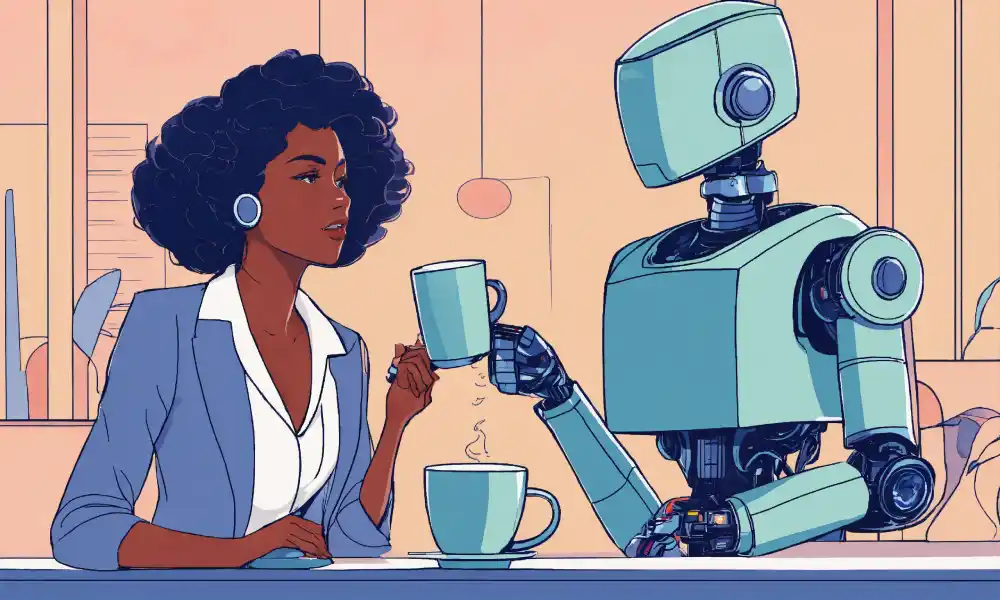

They are the mothers of our species, but in not being allowed to be mothers of AI, will have an adverse effect on the world, writes Satyen K. Bordoloi
AI is just a computer with intelligence: it’s not supposed to discriminate as humans do. Yet, over a decade ago, when Amazon engineers developed an experimental AI tool for recruiting, the system penalised resumes that had words like “women’s” (such as “women’s chess club captain” or “women’s basketball team”), downgraded graduates of two all-women’s colleges, and consistently favoured male candidates.
Despite attempts to correct this bias, Amazon eventually abandoned the project after concluding that the system could not be trusted to deliver fair outcomes. Facebook ads in 2019 did something similar: it showed high-paying job ads more frequently to men than women. Google’s algorithm for ad delivery had done exactly the same four years prior.
Amid the hundreds of panel discussions on AI at Bharat Mandapam at the India AI Impact Summit in New Delhi, this one was lost in the melee. Christine Arab, the Regional Director for Asia Pacific at UN Women, stood up to highlight a crisis that is not a distant away, but already unfolding around us and shaping, rather disfiguring, our future. She said: “When women are missing from design tables, the test labs, the term sheets,” she declared, “bias doesn’t emerge by accident. It becomes the default”.
Some of us might be inclined to dismiss this “design gap” as a problem of human resources or corporate diversity initiatives. The truth is, it is a systemic failure that can have a profound impact on our civilisation. Artificial Intelligence is now part of every bit of our lives – from healthcare diagnostics to financial lending to daily living. Yet, the people building these tools are almost all male; “tech-bros” is a popular term in Silicon Valley.
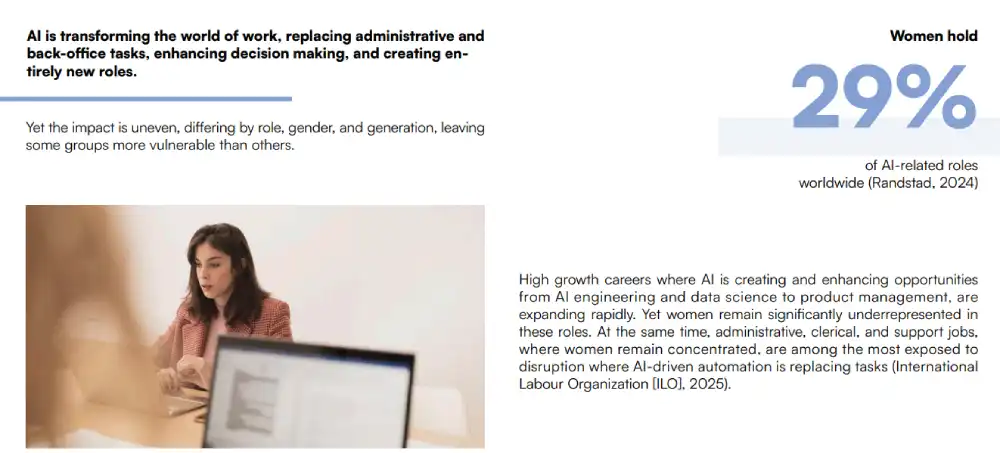
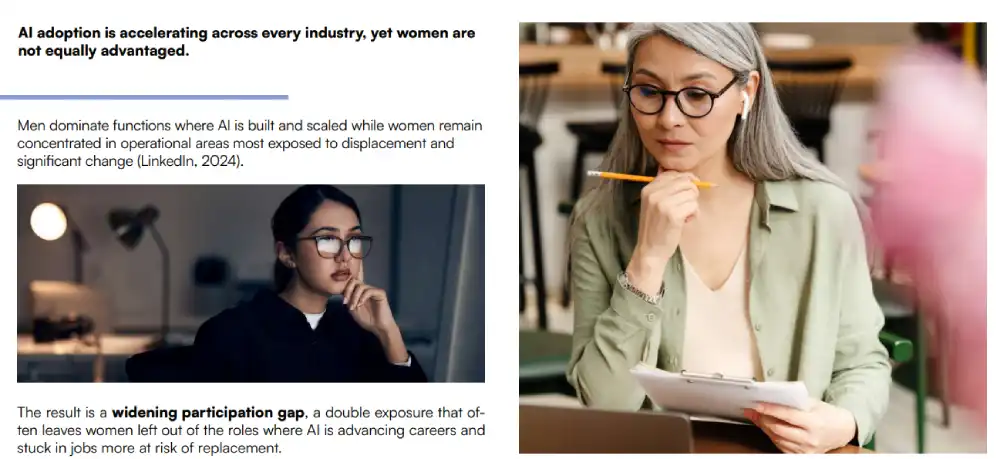
The statistics presented by UN Women lay this bare: globally, women make up just 30 per cent of AI professionals, while holding a mere 16 per cent of AI research roles. As the world finds itself in the middle of a world driven entirely by AI, this imbalance threatens to create technology that serves only half the population.
The Gilded Ceiling of AI
The numbers reveal a level of inequality that begins long before a career in technology, and that tightens at every subsequent stage. The 30 per cent representation in the professional AI workforce is but a global average, which conveniently masks the scarcity of women in technical domains where actual coding and LLM model-building occur.
The drop to just 16 per cent in research roles is truly alarming, as this is where the fundamental algorithms are designed, problems are defined, and the parameters of machine learning are set once and for all.
This disparity is as old as AI, and according to pioneering computer scientist Professor Wendy Hall, it is getting worse. Speaking at the same summit, Hall, a professor at the University of Southampton, described the atmosphere in the AI sector as “amazingly awful.” She characterised the industry as an “‘alpha male’ world” that actively pushes women out.
“It’s totally male-dominated, and they just don’t get the fact that this means that 50 percent of the population is effectively not included in the conversations,” Hall told AFP, obvious from the fact that only one of the 13 tech CEO’s who stood next to PM Modi was a woman.
The problem is part of a vicious cycle
Fewer women study computer science at university. Even those who do, face an unwelcoming culture of hostility. And what happens if women manage to fight them all to eventually lead a startup? Hall noted that women-led startups struggle to secure investment compared to their male counterparts, and as they advance, many simply “get fed up” and leave. This exodus leaves few role models for the next generation of women and ensures that leadership tables, or stages as in the India AI Impact Summit, remain overwhelmingly male.
When the Default is Bias
The result of this “design gap” manifests in products that fail, and sometimes actively harm, women. Christine Arab highlighted this in sectors critical to women, including health, financial inclusion, and personal safety. A 2024 UNESCO study, cited during the summit discussions, provided evidence. In it researchers found that LLMs like ChatGPT regularly associate women with domestic roles far more often than men. Conversely, men were statistically more likely to be associated with prestigious words such as “salary,” “career,” and “executive”.
AI learns these biases from the vast dataset of human-generated text and images available on the internet that are rife with historical and societal stereotypes. As Professor Hall succinctly put it, “We’re a biased world, so the training is done on biased data”. And without a diverse group of researchers and engineers to identify, question, and correct them during training and development, the AI simply learns and amplifies them.
The risks go beyond biases and into safety and privacy. Several countries have recently moved to ban Elon Musk’s Grok AI tool after it generated sexualised deepfakes of real people, mostly women and even children. This is the extreme end of a spectrum, which includes bias in credit-scoring algorithms that deny loans to women and medical diagnostic tools that fail to recognise symptoms in female patients, as they were trained mostly on male data.
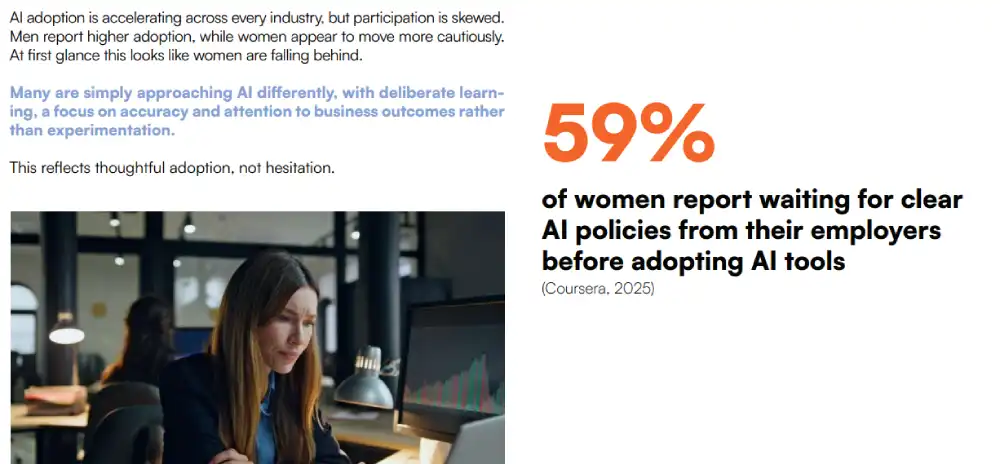
The Economic Disruption: This underrepresentation of women in AI development rides atop the very fact that, as most tasks and jobs get taken over by AI, women’s livelihoods are at risk. A joint analysis by UN Women and LinkedIn titled Women and Future Jobs found that across Asia and the Pacific, a staggering 80 per cent of women are employed in job categories classified as “augmented or disrupted” by AI, like those in clerical work, administration, and customer service, sectors that traditionally employed large numbers of women.
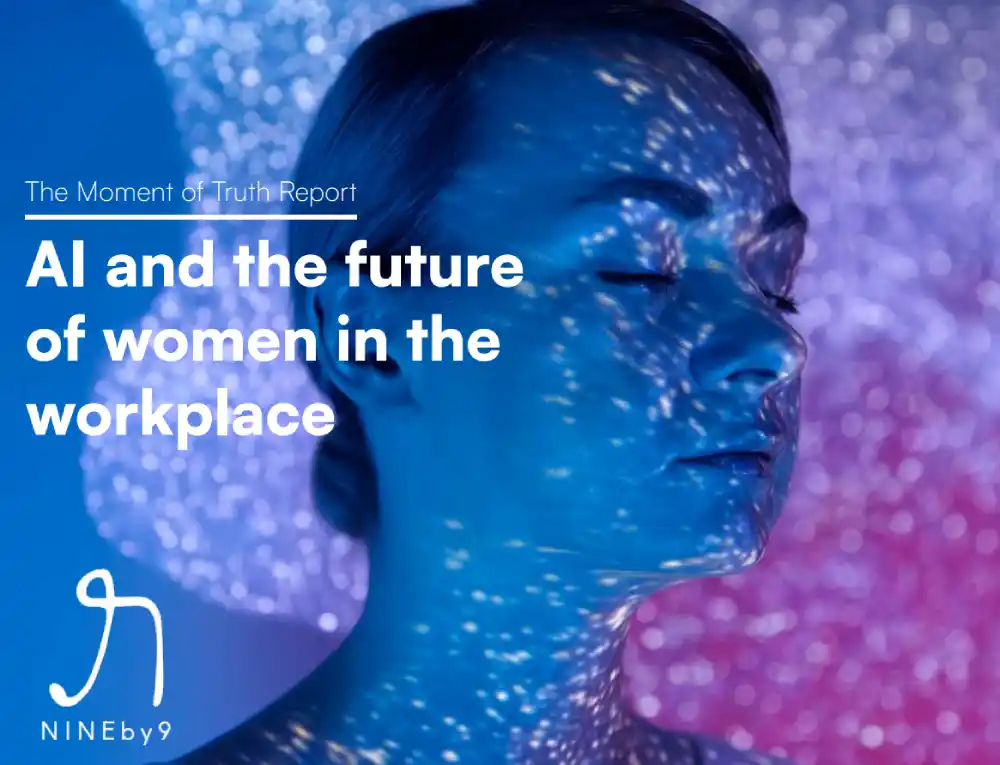
Thus, on one side, women are being pushed out of work by automation, and on the other, they’re being locked out of building the new economy that is replacing it. A report from Singapore-based advocacy group NINEby9 titled “AI and the future of women in the workplace” echoed UN Women, discovering that women hold less than a third of AI-related roles globally, even as demand for these skills skyrockets.
The risk is worse for younger women. The NINEby9 report warns that as entry-level administrative jobs disappear, Gen Z women will lose the “safety net of basic skills development that builds confidence, networks and capability,” making it even harder to progress into mid-level and leadership positions in the future.
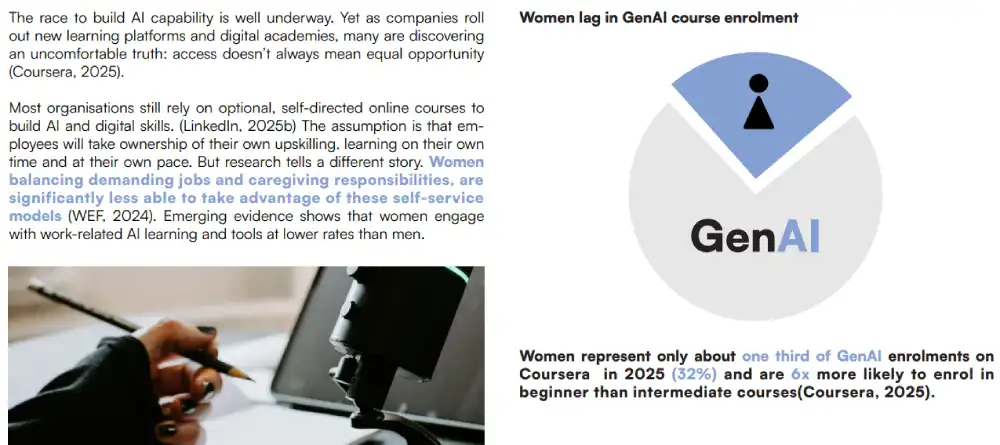
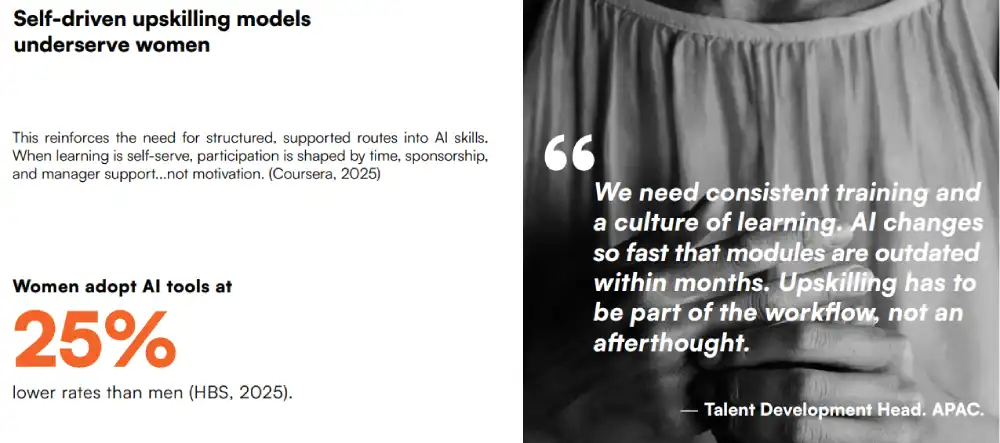
The adoption of AI itself shows a gendered divide. NINEby9 report found that 59 per cent of women wait for clear policies from their employers before using AI tools, a cautious approach in contrast to their male colleagues, who “celebrate visible AI wins and quick deployment”. As Soo Mei May, Head of AI Global Solutions at Dell Technologies, observed, “By the time women start figuring out what courses to take and what skills to learn, the men are already there”.
A Glimmer of Hope
Despite the bleak global picture, the message from the summit was not one of complete despair. Christine Arab specifically praised India for taking visible steps to address the gender divide, stating that the country “stands among the very few globally who are taking this seriously”. While acknowledging that no country has yet solved the problem, she called India’s efforts to integrate gender considerations into its AI strategy significant and worth watching.
Professor Hall, despite her decades of witnessing slow progress, also found inspiration in New Delhi, specifically among the next generation and particularly women, noting how young women at the conference were “all abuzz with the opportunities”.
The UN Women itself presented solutions to move from a default setting of bias to one of inclusion. Their AI Casebook on Gender and Agriculture showcases 26 scalable AI solutions designed to improve crop planning and financial resilience for female farmers, highlighting that when women are considered in the design process, technology can be a powerful tool for empowerment.
However, scaling such solutions requires systemic change, as Christine Arab urged governments, investors, and researchers to fund and prioritise inclusive design, to actively work to retain female talent by nurturing cultures where they can thrive. It also requires, as Christine Fellowes of NINEby9 noted, bringing HR and technology teams together to ensure that as companies pursue efficiency gains from AI, they also invest in the human capital of their female workforce.
AI is not a neutral force. It is a mirror that simply reflects the values and priorities of its creators. If women remain a minority in AI labs and research roles, the technology will continue to reflect a narrow, male-centric view of the world. Christine Arab said something powerful: “AI must be written by all of society, not just by the select few”. And that should be the motto of AI development because the alternative to a world where bias is the default is a future that all of us simply cannot afford.
In case you missed:
- The Robots Are Coming; China’s Metal Militia is Leaving the World in the Dust
- Not Fastest, but Frugalest: Why Indian EVs Are Suddenly World-Class
- A Citrini research blows the AI-doomsday bugle, crashes the market, but is packed with glaring omissions & distractions
- First Students, Now Teachers: How AI Sparked a “Cheating” Crisis & How to Fix It
- AI Will Create Double The Jobs It Takes. The Catch: It’ll Take Time
- A man almost cured his dog’s cancer with AI: Could you do the same for your loved ones?
- After Years of Job Slashes, Companies Use AI to Boost People, Not Replace Them
- Lost Job to AI? The Real Enemy Isn’t The Bot – It’s Your Boss. Here’s Proof
- South Korea Made Generative AI a Citizen’s Right: Should the Rest of the World Follow?
- Free Speech or Free-for-All? How Grok Taught Elon Musk That Absolute Power Corrupts Absolutely