


While many resisted AI in Hollywood, some were building AI pipelines that are set to change everything about how films are made, finds Satyen K. Bordoloi as he breaks down the new workflow of this new way of making cinema.
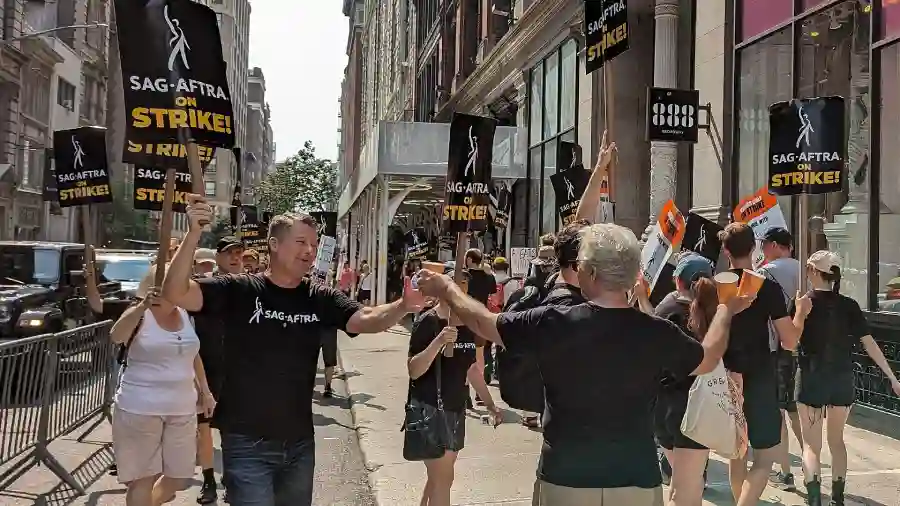
In the summer of 2023, Hollywood ground to a halt. First, the screenwriters walked out in May, then the actors made their own picket lines in July, making it the biggest strike in Hollywood history. One of the crucial points both the writers and actors were fighting against is the use of AI in filmmaking. After 118 days, an agreement was reached on December 5, 2023, which established rules around using digital replicas and asked for explicit consent and fair compensation when an actor’s likeness was used using AI, and a tacit understanding that AI use in Hollywood won’t go full steam ahead.
What most didn’t know, or at least didn’t talk about openly, was that right around this time, many were trying to figure out a pipeline in which AI could be used in film production. While those like the Tom Hanks starrer Here in 2024 did use AI in an ingenious way, what everyone – even in Bollywood – was waiting for was a true-blue, big-budget Hollywood film to adopt AI in a big way and change filmmaking forever.
That first bloodied film through the wall of mass resistance is a one called Bitcoin, or Killing Satoshi as it was called earlier.
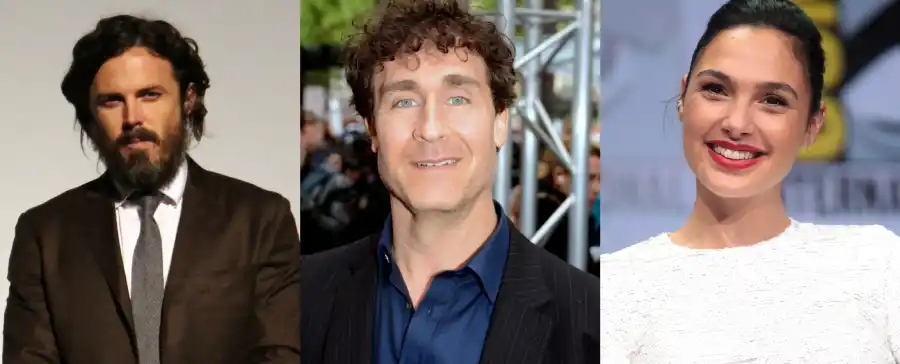
Doug Liman – the man behind such hits as the Bourne Identity, Mr. and Mrs. Smith, and Edge of Tomorrow is directing this $70 million Hollywood film in a featureless grey box in West London with AI generating every location. Some are calling this the future of filmmaking, while others are terming it the end of Hollywood. Both could be right.
Interestingly, the film is a thriller about the first cryptocurrency that both changed the financial industry while also giving it a new alternative. The plot is about a journalist investigating claims about a man who is the real Satoshi Nakamoto (the secretive inventor of Bitcoin, about whom I recently wrote), being pursued by powerful organisations with an intent to kill him.
Casey Affleck stars as the real Nakamoto, Pete Davidson plays a blockchain investor, and Gal Gadot is the journalist, with the screenplay written by award-winning screenwriter Nick Schenk, who also wrote Gran Torino.
A stellar Hollywood pedigree, if there ever was one. Yet, none of that is what anyone is talking about.

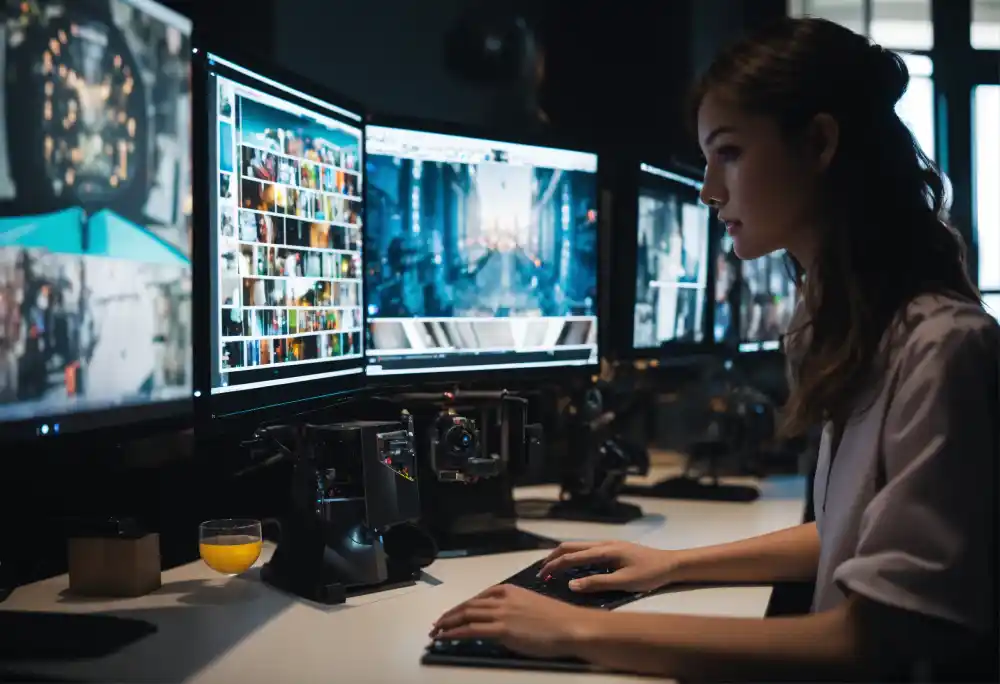
Instead, what is being discussed endlessly is where and how the film is being made. The “where” is a former car showroom in West London that was converted into a small studio with offices and a soundstage they have termed the “grey box” – a room wrapped in grey screen (not green or blue), with consistent, neutral lighting. And it is the “how” that is most interesting. The film was shot in just 20 days on this soundstage with only the actors, their costumes, a few props and minimal set builds like stairs and platforms to help replicate movement like climbing a hill, captured by the camera. Everything else – the location, exterior shots, even the light falling on the actor’s face – will be generated by AI in post-production.
Obviously, a film that needs so much AI work needs an AI company to produce it. Acme AI & FX was the house whose producers explained that with 200 distinct locations, from Antarctica to Antigua to Las Vegas, producing it the conventional way would have cost them over $300 million. Right now, at $70 million, it’s got the budget of a mid-level studio drama.
So where are the cinematographer, the production designer, and the other crew? They are there, but how they work has changed. Since this had never been done before, they had to figure out a new way. They’re calling it the “grey stage” process. First, production designer Oliver Scholl – Liman’s frequent collaborator on Edge of Tomorrow and Spider-Man: Homecoming, began designing the sets last October, using a mostly traditional process: renderings, 3D models, hand drawings. Those reference images were fed to the AI to create the final sets.
Cinematographer Henry Braham, of Superman and Guardians of the Galaxy Vol. 3 fame, lit every scene using AI software based on those pre-generated virtual environments. On top of this, the construction team built proxy set pieces – stairs, platforms, and physical markers taped on the floor – so actors could actually move through the space by understanding where a wall, a window or a staircase would be eventually. Actor performances were captured in the traditional way without any AI interference. And the backgrounds and lighting would be added during post-production.
And what was it like working on it? In press interviews, Casey Affleck has described the experience as being close to acting on stage, rather than in films, with the focus entirely on their performances during shooting.
Naturally, when the film, and especially the pipeline for it, was first announced in February of this year, there was hue and cry. So, the team invited journalists to show them what was being replaced and what wasn’t. In the old way, up to 10,000 cast and crew – mostly in VFX, would have been involved, with about 2000 in the actual production.
For this film, though, the production employed 107 cast members and just 154 crew, and 55 AI artists doing the post-production. If you know filmmaking, you can see that entire departments just disappeared. The whole lighting department has been replaced with AI animators in post-production. Also disappeared are those who construct sets, almost the entire assistant direction team, junior artists, etc. These are real people with important skills that are no longer required in this new way of production.
This is soon to become a trend, rather than a one-off. Steven Soderbergh is reportedly planning to use AI for an upcoming film about the Spanish-American War. Every production house is quietly experimenting with similar workflows right now, and even traditional VFX behemoths like DNEG are pivoting heavily towards AI. Acme AI & FX have themselves said that they already have 10 projects and 2 TV series at various stages of development using the same workflow.
The producers, however, are giving the job-loss saga a different spin. Their argument is that with costs going up, filmmaking has become unsustainable. A stand-alone $300 million globe-trotting thriller is not one that will get made. Even Marvel and Disney are rooting for franchisees. But with costs going down thanks to these pipelines, more films will be made, which means more people will be employed on them.
Then there are new roles that are emerging, like AI producers, digital environment designers, animation producers, hardware managers, etc. And these are people who have to understand both filmmaking and the computing tools that are reshaping how it is done.
The production of this film reminded me of the minimalist style of Dogme 95 films that director Lars Von Trier came up with in the late 1990s. One of its most famous films is Dogville, starring Nicole Kidman, which has nothing but an empty stage with markers on the floor for actors and some props. The Dogme 95 movement was against the big budgets and snobbishness of commercial cinema. Ironically, using AI to make filmmaking cheaper might do the same that the proponents of that movement fought against.
The potential of such technologies, however, goes beyond just making filmmaking cheap. You can have older films relit. A noir film with mood lighting could get the kind of lighting that Indian TV serials have, which lights up everything. Who knows, some of these films might actually look good with this treatment.

Colouring old black and white films is easily done with AI. But reimagining old classics and rewriting and remaking them with AI can become a new fan fiction genre. Take Yasujirō Ozu, who famously never moved his camera, choosing to choreograph the movements of actors instead. You could now remake the same film – say Tokyo Story – with the same characters and dialogues, except now the camera could move like you’d want it to.
Imagine what this means for small-budget or even no-budget filmmakers. We can make what we want to without worrying about much else. Digital photography, where you could see what you’re shooting on the screen, made everyone better at photography instantly. Such tools and production lines could do the same for filmmaking, where many of the skills needed for filmmaking would be laid out by AI. And with costs spiralling down for AI tools, in a few months you’ll be able to make a film that looks like it belongs in the Marvel universe with just a good screenplay, some great actors and a large, empty room, with most of the skilled people like set designers, make-up artists, cinematographers, etc. required in pre-production and post-production and not necessarily on set. This means most of the production money will go into AI pipelines and workflows.
This brings us back to those picket lines in 2023. The writers and actors who stood outside those studio gates were right to be afraid, to demand consent provisions, compensation frameworks and protections against their likeness being endlessly replicated. Though they got concessions, what has eventually turned out is that they could not stop the technology forever.
Yet, that line drawn on sand in 2023 has not disappeared. It has simply been moved inland by the tide – and the tide, as anyone who has watched the last three years unfold can tell you, shows no sign of going out.
In case you missed:
- What The First Fully AI Film To Enter A Major Festival Says About AI Filmmaking’s Future
- Disney’s $1B OpenAI Bet: Did Hollywood Just Surrender to AI?
- The Ghost in the Crypto Machine – Unmasking Bitcoin Creator Satoshi Nakamoto
- From Spider-cam to Infinite-cam: How AI is Revolutionising Sports Broadcasting
- Companies Fired Staff for AI. Now AI Costs More Than Staff. Together It’s Still Half the Story
- Makers of Toilets & Ajinomoto: The Unlikely Companies Getting Rich Off the AI Boom
- Talk to the Hand: Why the Robot Revolution Lies In Its Fingers
- The Great AI Correction of 2026: Why the ‘Bubble’ Popping Could be the Sound of Growing Pains
- Manufacturing Consent In The Age of AI: Simple Bots Play
- After Years of Job Slashes, Companies Use AI to Boost People, Not Replace Them



.jpg)