



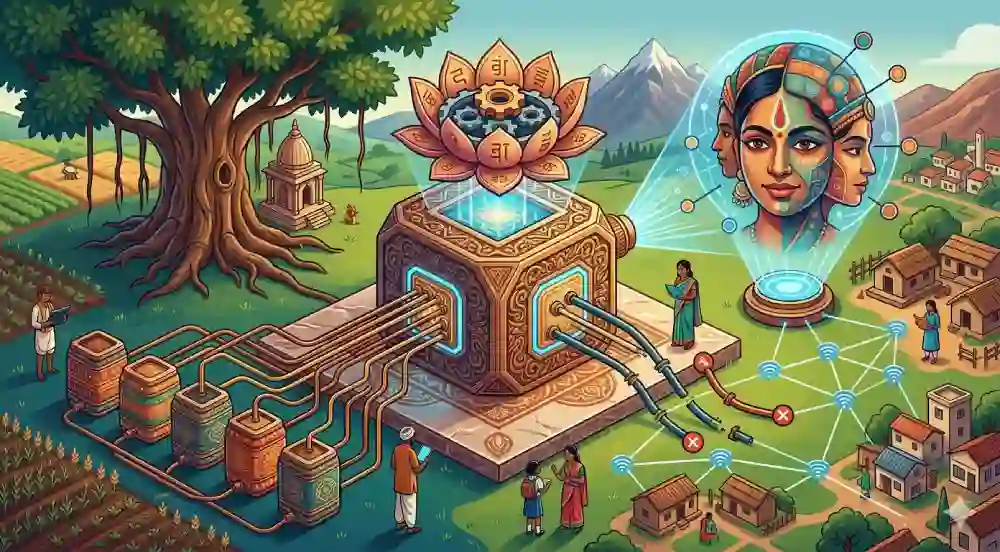

An AI assistant running fully offline on a laptop chip hints at a different path for India, one where intelligence stays on the device, not in distant data centres.
If you’ve been following India’s AI push, the name “BharatGPT” has been floating around for a while now, part ambition, part branding, part something still taking shape behind the scenes. It doesn’t arrive with the same kind of splash as ChatGPT or Gemini, no viral demos or celebrity endorsements, but it keeps resurfacing in conversations about what India actually needs from artificial intelligence.
The latest trigger came from a quieter demonstration, where an AI assistant ran entirely offline on a consumer-grade device, no cloud connection, no server calls, just the machine in front of you doing the work. It’s a small shift on the surface, but it lands differently once you think about where it could end up. In a country where connectivity still fluctuates between cities and villages, that detail stops feeling minor very quickly.
AI that runs where the internet doesn’t
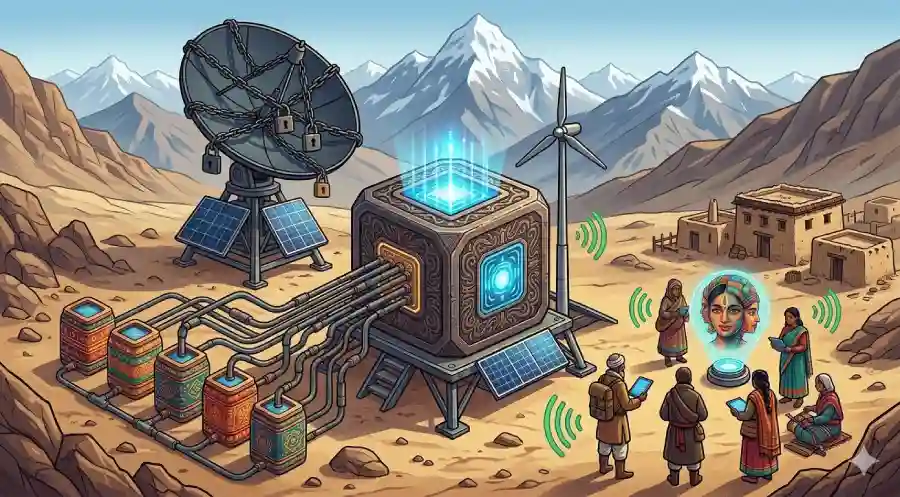
What makes this version of AI stand out isn’t that it’s more powerful; it isn’t, but that it works differently. Instead of sending every query to distant data centres, the system processes requests locally, sitting inside the device itself. The demo, built through a collaboration involving Indian AI firm CoRover and Intel, showed a model running fully offline on an Intel Core Ultra Series 3 processor.
You ask a question, and it responds instantly, no loading wheel, no dependence on network strength. That changes the rhythm of how AI feels in use. It’s less like accessing a service and more like interacting with something embedded. The gap between asking and getting an answer disappears, and with it, the sense that this is all happening somewhere far away, in infrastructure most users never see.
The trade-offs, though, are impossible to ignore. Running AI locally means working within tighter constraints, smaller models, limited memory, and less access to constantly updated information. These systems aren’t competing with the most advanced cloud-based models in raw capability, and they’re not trying to. What they offer instead is consistency.
A banking kiosk in a semi-urban town doesn’t need the full breadth of the internet to function; it needs something reliable, predictable, and always available. The same applies to railway counters, health clinics, and government service points where interruptions are more than just inconvenient. In those environments, the idea of an AI that doesn’t rely on connectivity begins to feel less like a compromise and more like a different kind of solution altogether.
Keeping data close and control closer
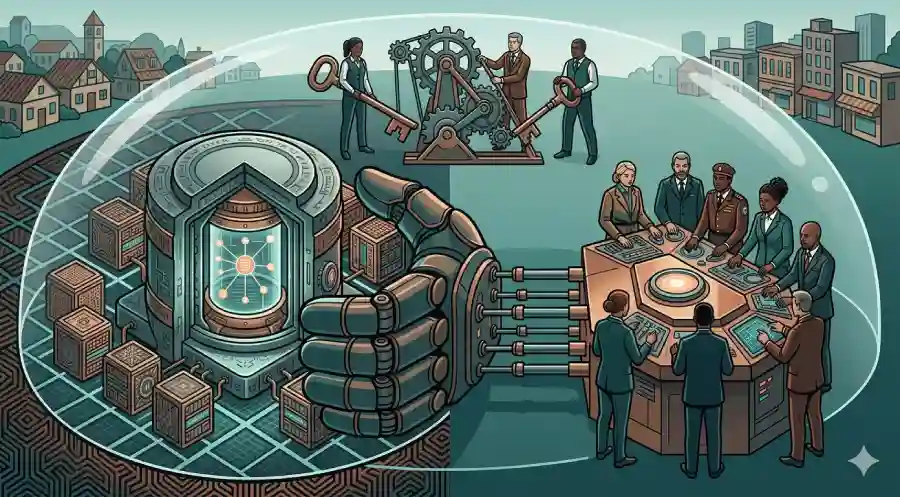
There’s also a quieter layer to this shift, one that doesn’t show up in demos but sits underneath the entire conversation. Most of today’s AI ecosystem is tied, in one way or another, to infrastructure controlled by a handful of global companies. Data flows out, gets processed elsewhere, and returns as an answer. Offline AI breaks that loop.
When processing happens on the device, data doesn’t need to travel as far, or at all. That has implications for privacy, for regulation, and for how countries think about technological independence. India has spoken often about building digital systems that remain within its own control, and this approach fits neatly into that thinking, even if it’s still early and uneven in execution.
What makes BharatGPT, or whatever form it eventually settles into, interesting isn’t just the technology itself, but where it’s being aimed. This isn’t about replacing high-end AI models used by developers or researchers. It’s about reaching places where those models don’t always function smoothly. Think of a rural banking agent using an assistant that understands multiple Indian languages without needing a stable internet line, or a healthcare worker pulling up basic information in real time during a field visit. These aren’t edge cases in India; they’re everyday scenarios.
The idea that AI could operate reliably in those settings shifts the conversation away from benchmarks and toward presence, where it shows up, and who actually gets to use it.
A different path for AI
For now, the pieces are still scattered, different prototypes, overlapping names, competing approaches, but the direction is becoming clearer. AI in India may not follow the same path as it has elsewhere, where scale is tied to massive data centres and constant connectivity. Instead, it could end up being something more distributed, less visible, built into devices that don’t draw much attention to themselves. There’s no single moment where this becomes obvious, no headline-grabbing launch that defines it.
Just a series of small changes in how people interact with machines, especially in places where the internet has never been a guarantee. It doesn’t look like a revolution when you see it up close, but the shift is there, steady and hard to ignore once you notice it.
In case you missed:
- Lego’s Smart Bricks are here: Are we ready to change how we play?
- You Can Now Host an NVIDIA Data Centre in Your Home. Some Neighbours Already Want Them Gone.
- Google Launches ATL Saathi: An AI App for India’s Teachers
- Goodbye Blackwell, Hello Rubin: Nvidia’s new AI platform is here!
- Not Just Oil: Iran War Could Put India’s Internet Connectivity at Risk
- ISRO’s Next Big Plan: To Put Indian Data Centres in Space!
- While the World Watched Iran, India Quietly Made a Nuclear Breakthrough
- India’s Mappls Revolution: The Swadeshi Push to Dethrone Google Maps
- Not Just Oil Part 2: How the Iran War is Disrupting Helium, Chips, and the AI Boom
- Malware with AI-Powered Code Mutations: Google Sounds the Alarm!