


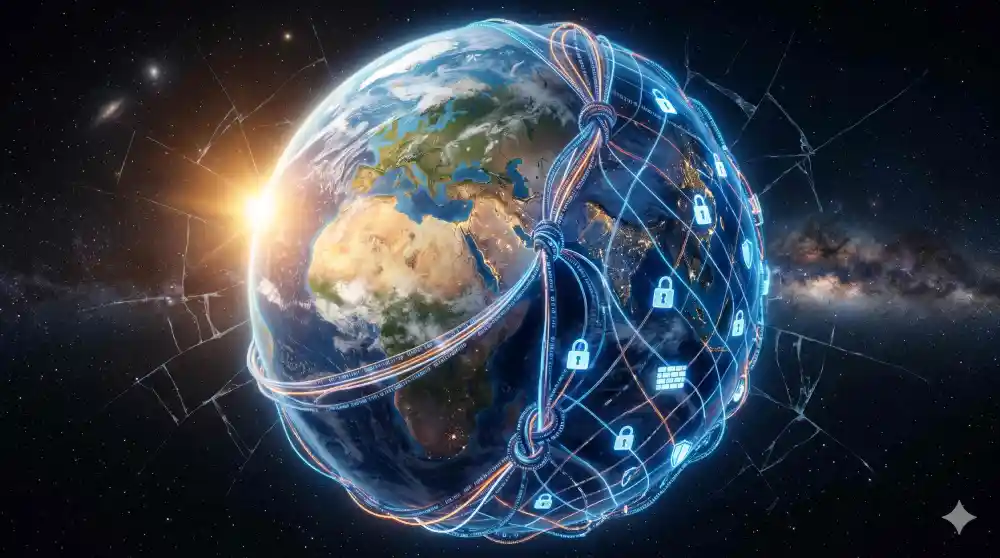

The internet, that was supposed to be a bastion of freedom and liberalism, has become the plaything of authoritarian regimes who have figured out unique ways to cage this bird, writes Satyen K. Bordoloi
This is something only those born before the mid-80s know. That when internet cafes spread across India in the late 1990s, often we had to book a spot days in advance, wait hours for our turn, and after typing a URL, wait minutes for a simple page to load. Yet, the sense of freedom and wonder we felt when a page hosted 5000 miles away loaded before us, pixel by pixel, has never been replicated – not even in the age of AI over fibre-optic, where your toughest existential query travels to and from thousands of miles within seconds.
To all of us then, the internet was the hammer that shattered the Berlin Wall of international borders and united the world. And we talked of how the world would soon become like the net: free and borderless.
Oh, the naivete of that generation.
To begin the list of grievances against the internet today, this AI-driven monster has polarised the world and pushed data sovereignty ideas through much of the digital world, thanks in large part to the new US regime. The worst thing, however, is that many regimes across the world have found a way to either fully cage or clip the wings of the mighty internet. For proof, check out 2025, which became a record year for internet shutdowns, with at least 313 incidents across 52 countries, with not a single day in the year passing without internet being shut down somewhere in some part of the world.
Today, there are at least 25 countries that restrict access to entire social media or messaging platforms (minus the age restriction in some nations like Australia). The freedom of the late 1990s internet? Today it sounds like a fairy tale for billions worldwide because what they actually live with is something far more fragmented, surveilled, and controlled. The web hasn’t been allowed to stay wild by the powers that are. It got domesticated, nation by nation and firewall by firewall.
China’s Original Blueprint
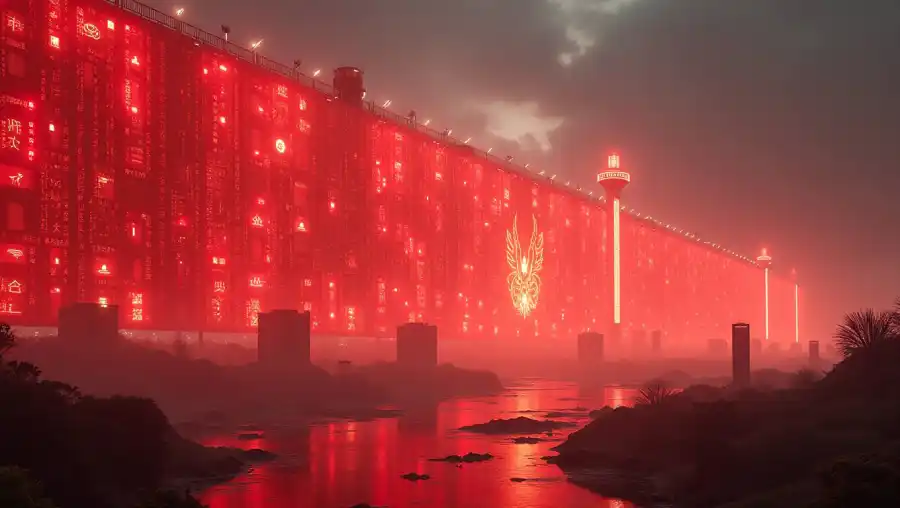
Nobody has built a more thorough system of internet control than China, and nobody has had more time and employed more people to perfect it. The Great Firewall – officially called the Golden Shield Project – has been running since 2000, creating a sort of parallel internet or a national intranet that operates on different rules from the rest of the world.
Google, Facebook, Twitter, and YouTube are all blocked, and instead they have a domestically built ecosystem: with Baidu replacing Google, WeChat taking over the role of WhatsApp, PayPal and part of Amazon among others, Weibo instead of Twitter, etc. These weren’t built as replacements but evolved in and of themselves, inside a framework of state access control. WeChat has no end-to-end encryption, and as per security researchers, it contains backdoors that allow third parties to read messages.
What makes China’s approach so crucial, though, isn’t just its existence but that other nations have watched and learned from it. Leaked documents confirmed that a Chinese company exported the Great Firewall’s underlying technology to other countries, including Myanmar, where the military regime has used it to suppress dissent since the 2021 coup. China didn’t just build a cage for their internet, they figured out a way to sell it to others as well.
Russia’s Slow & Steady Pace
Russia took a different approach from China’s, but the direction is the same. Instead of building a parallel internet from the word go, Russia has spent years gradually tightening its grip on it by banning platforms, strangling bandwidth, and pushing citizens toward domestic alternatives.
The invasion of Ukraine only worked to accelerate its pace, with Facebook and X (formerly Twitter) being blocked almost instantly as part of their information war. In the summer of 2024, the government blocked Signal and began throttling YouTube. Signal was specifically targeted because its encryption made government surveillance nearly impossible, which was the reason why ordinary Russians were using it.
Seven countries now have full bans on VPN use, and Russia leads the pack. In March 2024, Russia even passed a law making it illegal even to share information about how VPNs work.
Max appeared in Russia, almost like a replica of China’s WeChat, where users can chat, shop, send and receive money and even access government services. It is, as tech-experts point out, part of this broader push to make Russian citizens comfortable inside a smaller, nationally managed version of the internet.
The endgame doesn’t seem to be total isolation overnight, but normalisation via making the domestic internet good enough so that fewer and fewer people bother to look outside the nation.
Iran’s Choking the Feed in Real Time Approach
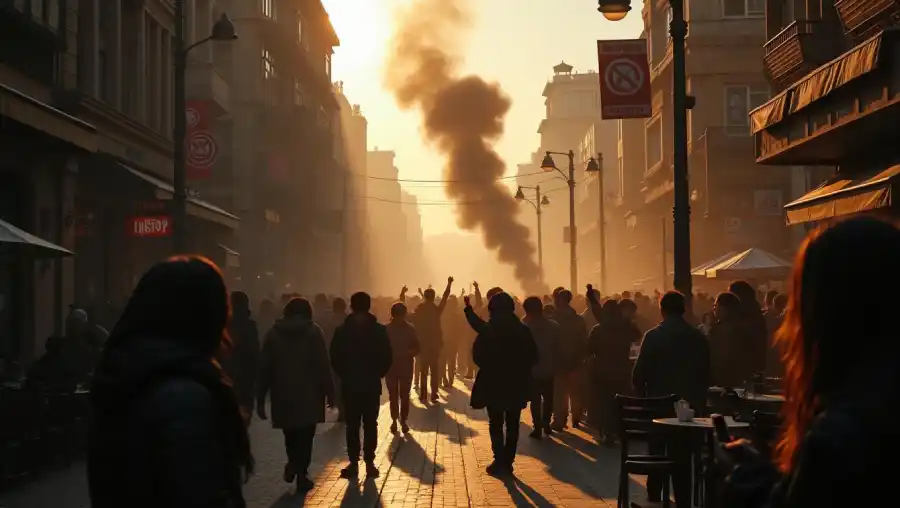
Iran’s internet restrictions aren’t as broad or sophisticated as those of China or Russia, but they respond to the news cycle like a reflex, with the internet slowing or shutting down to the beat of a protest’s eruption. When the government wants to control a story, they do. Iran has long blocked Instagram and YouTube, and in 2024 introduced a regulation to criminalise the use of VPNs without a government-issued permit.
What makes Iran interesting is how clearly censorship follows politics. After the 2022 death of Mahsa Amini and the protests that followed, internet speeds were throttled so severely if not blocked entirely in parts, that uploading a video took hours. The government understood what social media could do – it had seen the Arab Spring – and it had no intention of allowing a similar feedback loop to form.
The result is an internet that functions normally enough during calm periods, but shuts down – partially or entirely – when the state feels threatened.

North Korea’s Ultimate Blanket
North Korea’s case is the most unique because the country isn’t really on the internet at all. The government operates a domestic network called Kwangmyong, which only provides access to government-approved sites. It’s less an internet and more a heavily curated intranet, what observers have called a closed loop of state propaganda, academic resources, and approved content.
As a foreigner visiting North Korea, you are also subject to these restrictions. But for most of the population of the country, the global Internet is not something they have been locked out of, like other examples in this piece, but it is a place most don’t even know exists.
Myanmar Military Kill Switch
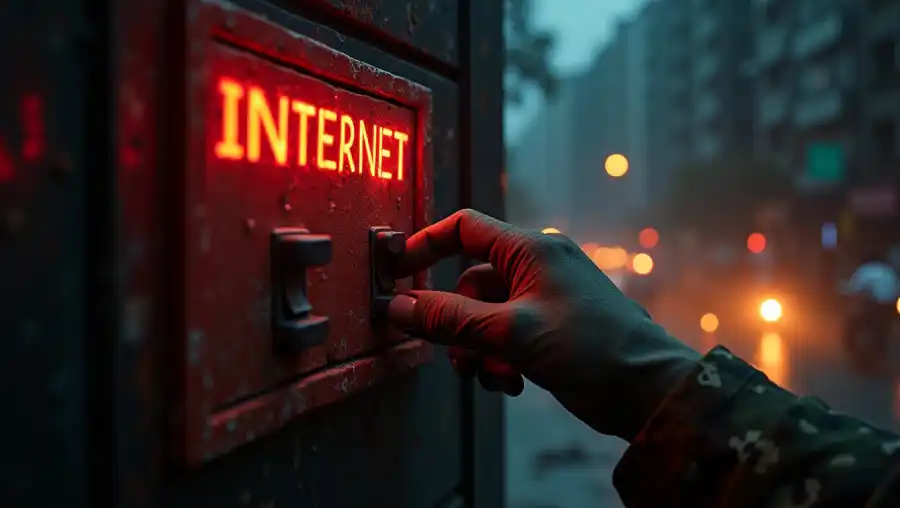
Myanmar’s internet began with heavy censorship from its beginning in 2000 to about 2011, when the internet cost a bomb and was thus accessible only to the elites. In 2011, though, there was liberalisation, and Facebook emerged as the primary way for people to access the net. However, the 2021 coup plunged the nation into one of the most digitally repressive states in the world, with widespread shutdowns, surveillance, and arrests tied to online activity.
A new cybersecurity law codified restrictions into a law, and some of the technology used in China’s Great Firewall has been imported into the nation, giving the Junta regime more power and control over the internet and thus their people.
Varying Practices In The Rest Of The World
The rest of the world practices some of these restrictions and internet surveillance tools in different capacities. Take Pakistan, which is not an authoritarian state in name, yet its internet censorship shows signs of that. In 2024, the government implemented internet blackouts during protests and political unrest, especially when former Prime Minister Imran Khan was arrested.
VPN is not blocked directly, but requiring citizens to register for it is almost like banning it. Sites like Twitter have also been so severely throttled that loading it feels like how using the internet felt in the late 1990s.
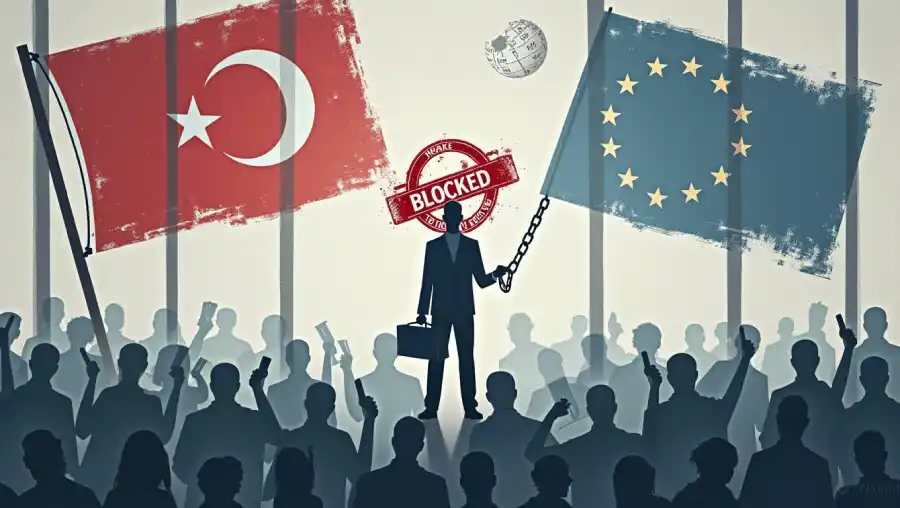
Turkey is a NATO member and an EU candidate nation, yet it is where hundreds of ordinary citizens are imprisoned and face criminal penalties for their online activity. And this is besides the thousands of content removal requests to social media platforms and entire platforms being throttled during politically sensitive times. Wikipedia was blocked there for about three years between 2017 and 2020.
India also joins this infamous club with the largest number of shutdowns of the internet, with parts of the nation, especially Kashmir, bearing the brunt of it in the last couple of years. For years, while the rest of the nation enjoyed 4G internet access, Kashmir got the super slow 2G network. And that is besides the banning of over 100 Chinese apps – including TikTok, in the name of national security. Our government has also often asked social media companies to identify anonymous users for them.
This is just the start. As authoritarianism spreads, more nations are likely to join this infamous club of nations throttling or killing a large part of the internet in the name of national security, and protection from terrorists, pornography, foreign interference and misinformation. The framing is always ‘safety’, but the need is always control, with global internet freedom now in decline for fifteen consecutive years, according to Freedom House. That is a trend with momentum behind it, and many other nations, small and big, are following in the path laid by these.
The internet was supposed to be this tech that liberated people, which governments couldn’t touch or control. Turns out that not only can it be restricted, but it can also become a tool of both mass control and surveillance. It’s a tool that can help regimes that don’t want to lose power know what their people are thinking and thus mitigate rebellion.
AI, at this moment, feels like the internet used to in the late 1990s: a technology that democratises information analysis and transformation. It is the cheapest intelligence tool humans have ever created. But that won’t stay the same for long. China has already mandated that AI chatbots must align with “socialist values.” Other governments are watching, learning, and some are on the move with their own filters and national models.
There was a time, in this generation itself, when the internet felt like something governments couldn’t touch. It was designed that way – almost philosophically. That turned out to be catastrophically wrong and proved that every tech promising freedom eventually gets run through the same repressive machine. The internet didn’t change that. It just gave it more to work with. And now, AI will follow suit.
In case you missed:
- South Korea Made Generative AI a Citizen’s Right: Should the Rest of the World Follow?
- OpenAI, Google, Microsoft: Why are AI Giants Suddenly Giving India Free AI Subscriptions?
- Indian AI’s Power Problem: We Woke Up Late to AI, We’re Still Half-Asleep
- The 3-Hour Countdown: India‘s New AI and Deepfake Rules Spark a Free Speech Firestorm
- GoI afraid of using foreign GenAI in absence of Indian ones? Here’s how they still can
- Australia Tells Teens To Get Off Social Media; World Watches This Prohibition Experiment
- A Small LLM K2 Think from the UAE Challenges Global Giants
- 5.6 Cr Pending Cases: How India Is Letting AI Slip Through Even As World Courts Revolution
- Great quantum poker: Who’s bluffing, and who is holding the aces?
- The Weight of the World: Why the Open vs. Closed AI War Is Really About Who Controls the Future