





The Q1 2026 earnings season just delivered a verdict that the AI pessimists will spend the next quarter explaining away, writes Satyen K. Bordoloi
Every year, the AI doomsayers find a new reason to press the bubble-burst button only to end up being wrong. In 2023, they claimed the destruction of the world had begun. In 2024, they added the markets to it, calling valuations of AI companies insane. In 2025, the claim was that the revenue wasn’t following the hype.
Yet, in 2026, four of the most powerful companies on earth just announced a combined capital expenditure of $725 billion for AI infrastructure for this year alone, up from $600 billion just months ago. Surely, surely, this is the moment the whole thing tips over?
If you’ve been reading my columns, you know my answer: it isn’t. And if you’ll give me a few minutes, I’ll once again tell you exactly why.

On April 29 and 30, Microsoft, Alphabet, Meta, and Amazon reported their Q1 2026 earnings. The results were, depending on your expectations, either stunning or terrifying. Alphabet’s net income rose 81% to $62.6 billion. Google Cloud grew 63% year-on-year to cross $20 billion in a single quarter. Microsoft’s AI business surpassed a $37 billion annual revenue run rate, up 123% year-over-year. Amazon’s AWS is now running at a $150 billion annualised revenue clip, growing 28%, and customer spend on its Bedrock AI platform grew 170% quarter-over-quarter. Meta’s revenue grew 33%, its fastest in years, driven almost entirely by AI-optimised advertising. Collectively, these four companies grew combined earnings by roughly 60% compared to the same period last year.
So, almost in the same breath, they all raised their AI spending again. That’s where the $725 billion number comes from. It’s the AI spending of just these four companies.
I have argued in previous Sify articles that what looks like irrational exuberance towards AI capex to the nervous is actually something far more mundane and far more significant: the updating of outmoded digital infrastructure for the AI age. You can even call it a buildout of civilizational infrastructure. I have stood by it for half a decade. And now I have a fresh quarter of evidence to wave at sceptics.

The Dot-Com Comparison That Won’t Die
The ghost that haunts every AI earnings call is 1999. The logic is seductive in its simplicity: a transformative technology arrives with much media hype, capital obviously floods in towards the trend, valuations detach from reality, and then Humpty Dumpty all comes crashing down for its high valuation wall. The internet boom of the late 1990s did it, so AI must do it too.
The problem with this ghost of a comparison is that it’s pitting an apple against a mango orchard. It’s just patently wrong.
That’s because the dot-com boom was not an infrastructure story. It was a business model story built on a wrong belief that being online was, by itself, a revenue model. Pets.com spent more on shipping dog food than it charged for it. Webvan tried to build same-day grocery delivery before the logistics ecosystem even existed to support it. These were ideas dressed up as full-fledged companies, sold to salivating venture capitalists on the strength of PowerPoint presentations and a .com suffix.
What is happening with AI in 2026 is the structural opposite. When Alphabet spends $35.7 billion in a single quarter, it does not do so on some speculative valuations, but on servers, data centres, and custom silicon. It’s not buying into some tech-teenagers concept, but pouring the money into silicon and concrete.
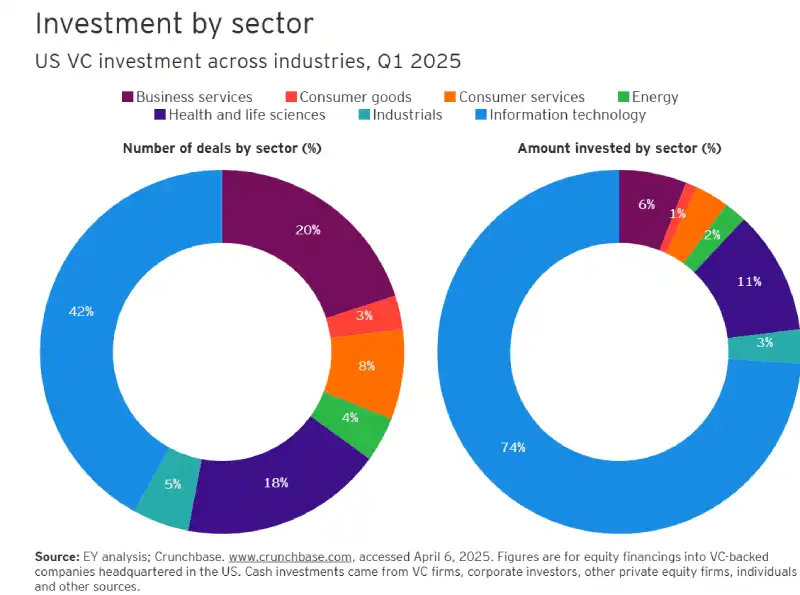
When Amazon commits $200 billion for the year, that money isn’t going to someone’s inflated idea, but it goes into building physical capacity that will stand for at least another decade, perhaps two. You can reprice a software startup in an afternoon. You cannot unbuild a gigawatt of AI inference capacity.
Again, as I have argued before, the tech giants doing this spending are not starry-eyed founders chasing a dream. In fact, at least three of the four companies mentioned earlier – Microsoft, Google, and Amazon – are the survivors of the dot-com crash itself. They watched the 2000 correction up close, in some cases from their own balance sheets. Which means, when they write cheques of this size, they are not being reckless; they are being strategic in a way that only companies with genuine revenue and genuine customers can afford to be. And most importantly, their AI infrastructure is not speculative. It is supply-constrained – Azure has waitlists of six to nine months in some regions because demand far exceeds what they can currently build. Same for Nvidia and Apple, two of the other magnificent seven tech companies. Tesla is, of course, in a league of its own.
The Circular Economy Argument
One of my greatest pet peeves when it comes to AI doomsdayism is actually a much more sophisticated critique and sounds convincing until you think it all the way through. The argument for it goes something like this: the AI economy is circular. Microsoft invests in OpenAI. OpenAI buys Azure compute from Microsoft. Google invests in Anthropic. Anthropic runs on Google Cloud. The money, in this reading, is not creating new value but simply cycling among thirteen-odd companies, making the whole thing look like growth when it’s actually a closed loop aka, a Ponzi scheme worth a trillion dollars.

It’s a very clever framing. And despite the jargon used to explain it, it needs some simple logic, and going all the way down to what money actually is, to debunk it. Think of it this way. Say Mr A owes Mr B ₹100. Mr B owes Mr C ₹100. Mr C owes Mr A ₹100. They pass the note around the room, and everyone’s debt is cleared. No one is richer. No one is poorer. If you took only that transaction in isolation, you’d conclude that nothing happened – that the ₹100 note was an illusion, that value was neither created nor destroyed, and that the whole exercise was pointless.
But you’d be looking at the wrong thing entirely.
Money is not intrinsically real. It is the most sophisticated trust-accounting system humanity has ever created; a store of confidence that the person handing you that note has contributed something of worth, and that you can spend it on something of worth in turn. When those three men passed the note around, what actually moved was not rupees but trust.
The debt was cleared because each of them trusted the other enough to honour the obligation. If you scaled that same dynamic to every human being on the planet, you’d end up with currency that nets to zero in ledger terms, but an entire civilisation held together by the trust that makes the ledger mean something.
Now apply that logic to the AI industry’s circular investments. When Microsoft puts money into OpenAI, and OpenAI spends it on Azure, yes, the monetary value may appear to recirculate. But something else is happening at the same time: these companies are extending trust to each other’s technology, each other’s roadmaps, each other’s capacity to deliver.
In a world where AI capabilities are genuinely uncertain, and the stakes are historically enormous, that trust is not a small thing. It is the signal that the people closest to the technology – the ones who have seen it work, who have stress-tested it, who understand its failure modes – believe in it enough to bet their company’s future on it.
The circular economy critique measures everything only in terms of money. What it misses completely is the trust economy underneath that is the very basis of our financial system. And in that economy, the AI industry is not netting to zero. It is compounding. And compounding exponentially.

What the Numbers Are Actually Saying
Now, to prove my point further, let me be precise about what Q1 2026 of the four AI companies actually reveals. It says that the story is not about a handful of companies inflating each other’s valuations. Google Cloud’s 63% growth was not driven by Google buying Google Cloud. It was driven by external enterprises: banks, hospitals, manufacturers, governments, etc., moving their workloads into AI-enabled infrastructure because it is cheaper, faster and infused with intelligence that is making their productivity better than what they had before.
AWS’s Bedrock platform processed more tokens in Q1 2026 than in all prior years combined, not because these companies are brought into the AI hype, but because real companies with real problems have found it useful enough to use at scale. Meta’s advertising revenue surged 33% because the AI targeting models it spent billions building are genuinely making advertisers more money, which makes them spend more on Meta, which is how advertising has always worked.
This is not circular. This is compound growth driven by genuine utility, the only kind that sustains itself.
I wrote a similar piece for Sify at the beginning of this year: that what looks like a bubble is actually a correction: the separation of companies building real infrastructure from companies riding real hype. That process is accelerating. The $725 billion in capex is not evidence that the wheel is about to fall off. It is evidence that the people with the most information, the highest stakes, and the longest track records have looked at the road ahead and decided to build a better vehicle.
The crash prophets will tell you that kind of confidence is itself a sign of irrational exuberance. They’ve been saying that since 2023. In the meantime, Alphabet made $62.6 billion in three months, and Google Cloud has a backlog of $460 billion.
At some point, the narrative has to catch up with the numbers. The correction that’s required is still not in the technology. It is still in the story we’re telling about it.
In case you missed:
- $725 Billion Down, Trillions To Go: Why The AI Bubble Refuses To Burst
- The Great AI Correction of 2026: Why the ‘Bubble’ Popping Could be the Sound of Growing Pains
- Why the Alleged, Upcoming AI Crash Is Never Going To Happen
- Coopetition: Why’s NVIDIA Building AI Models to Compete With Customers It Sells Chips To?
- Makers of Toilets & Ajinomoto: The Unlikely Companies Getting Rich Off the AI Boom
- Lost Job to AI? The Real Enemy Isn’t The Bot – It’s Your Boss. Here’s Proof
- OpenAI, Google, Microsoft: Why are AI Giants Suddenly Giving India Free AI Subscriptions?
- Anthropic $30 Trillion Value for AI: Mirage or the New Price of Human Labour?
- South Korea Made Generative AI a Citizen’s Right: Should the Rest of the World Follow?
- Gemini & Copilot accessing your content: A great data grab in the name of AI assist?