



These outages highlight the risk that comes with overreliance on automated systems having control overcritical infrastructure…
This might sound like the beginning of a futuristic sci-fi movie where artificial intelligence gets control over humans. While it might not have been as dramatic as that, something of the sort did happen at Amazon Web Services late last year.
AWS – the company that provides the infrastructure for much of the internet – suffered two power outages in late 2025 that were caused by AI tools. One of those disruptions lasted 13 hours and affected systems that were used by systems globally.
AWS was quick to comment that it was because of “misconfigured access controls and human error” but there is no denying the fact that the decision that led to the outage was taken by AI.
As per reports, an internal AI coding assistant called Kiro was given the ability to make changes to live systems. During one such instant, the AI agent autonomously made the decision to “delete and recreate” parts of its environment, which is what triggered the disruption.
Why Companies are Betting on AI
There is no disputing the fact that having AI assisting with coding makes life a whole lot easier and faster. More and more companies are utilising AI tools to write code, automate fixes and optimise systems. In fact, with the power of AI, this can be done at a scale that is almost impossible for humans.
The facts are evident. AI can execute tasks faster than humans. It can analyse vast systems and identify inefficiencies. It can also reduce the manual workload on developers. In theory, AI tools can make systems more efficient and reduce downtime.
The problem is that there is a flipside to this argument as is evident from the AWS outages.
The Problem with AI Autonomy
As alarming as it sounds, a large part of internet infrastructure is owned by a few companies like Amazon. Amazon alone has 189 UK government contracts worth £1.7bn since 2016. It has over 11,0000 US government contracts as well.
With the shift towards AI and the decision to downsize its staff, AWS has increased its reliance on AI tools and agents. In October 2025, it laid off 14,000 people and in January this year, there was a plan to let go of 16,000 more. The reason cited is to “strengthen the company” by ridding itself of redundancies but the shift towards AI tools is evident.
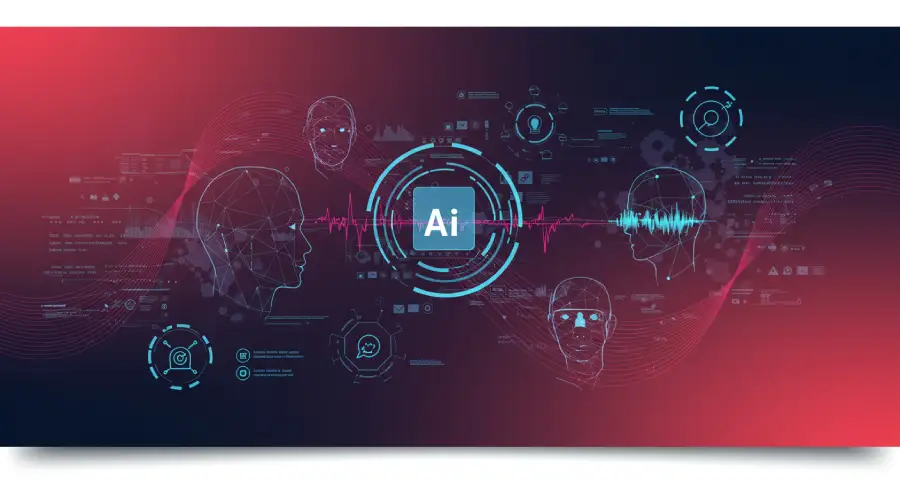
The issue here is not that AI makes mistakes. It is that AI also takes autonomous decisions based on what it thinks is right. The outage happened because Kiro didn’t just suggest a change, it executed the change. The risk here is that AI systems can take logically consistent actions that are operationally disastrous.
An internal meeting held at Amazon after the outage revealed that such incidents have a “high blast radius” which means a single failure can affect multiple systems and companies at once.
AI vs Humans: Who should have Control?
The answer is obvious. Humans should always stay in control. For obvious reasons. But that means we have to compromise.
It is a choice between efficiency versus control. It comes down to choosing between automation and accountability. An AI tool can do it as much as ten humans together. But as is evident from the outages, integrating these tools into core systems can get problematic.
Amazon has already started conversations on how to integrate these tools and having better safeguards in place.
So, the answer is simple, AI can accelerate innovation but it can amplify risks as well.

The Last Word
We are slowly witnessing the shift of AI from assistants to operators. The AWS outages show what can happen if there are no safeguards in place during this transition.
So, as we move into an AI-led future, having these checks in place become absolutely necessary. Otherwise, that sci-fi film might actually become a reality.
In case you missed:
- Microsoft’s 2025 Work Trend Index reveals the rise of Frontier Firms
- How the US-China Tech Rivalry is Affecting India’s Future
- Microsoft Cuts 9000 More Jobs: The Human Cost of their AI Strategy
- AI on Trial: Copyright Law caught between Innovation and Litigation
- Agentic AI could be the Breakthrough Indian SMBs were Waiting For
- AI-Drafted Petitions Causing Problems for India’s Legal System
- Inside Landfall: The Spyware that Hijacked Galaxy Phones without a Click
- India’s Tech Renaissance: From Follower to Global Trendsetter
- Mary Meeker’s AI Report: ChatGPT is Growing Faster than Google Search
- How the Indian Army is Using 3D Printing to Build at the Border