



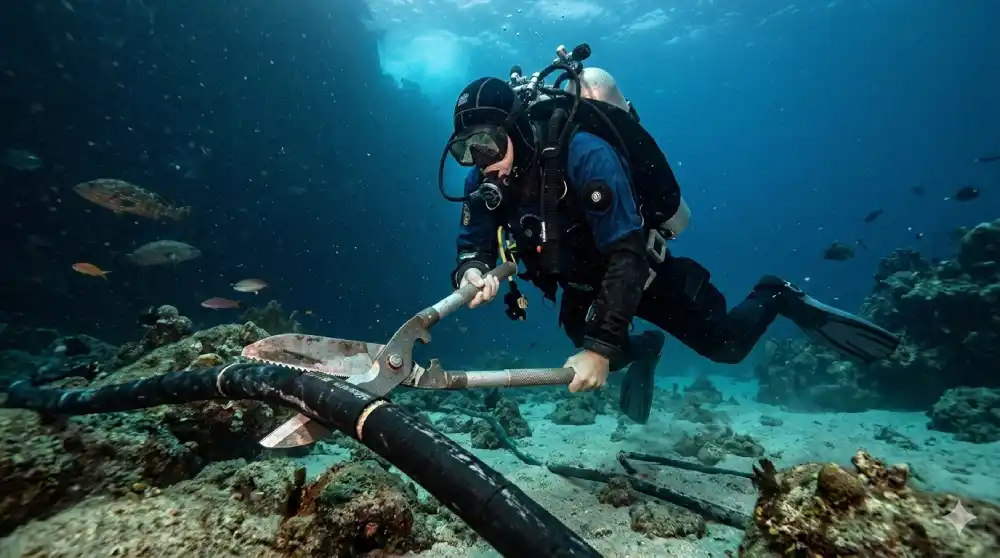

The war in the Strait of Hormuz could affect more than oil routes; it may also threaten the undersea cables carrying India’s global internet traffic…
The conflict unfolding around Iran and the United States in the Strait of Hormuz has drawn global attention to oil shipments and tanker traffic, but another critical system lies beneath those same waters. A dense network of fibre-optic cables runs across the seabed of the Gulf, carrying large volumes of global internet traffic between Asia, the Middle East, and Europe.
With geopolitical strains intensifying and maritime security becoming more precarious, experts are sounding alarms about the potential for indirect damage to this vital infrastructure. Ships, naval maneuvers, or even accidents could easily sever cables in the area. This is a particularly pressing concern for India, given that numerous international data pathways linking the nation to Europe traverse cable corridors that hug the Gulf.
The threat of war
The security environment in the Strait of Hormuz has deteriorated rapidly as tensions escalate. According to reports, Iranian forces have warned that they could “set ablaze” vessels attempting to pass through the strait if hostilities intensify. Such warnings have heightened risks for commercial shipping and for specialised vessels operating in the region.
The strait is one of the world’s busiest maritime chokepoints, and any military escalation could affect both tanker traffic and other vessels operating nearby. The concern extends beyond shipping because subsea cable infrastructure lies along similar maritime corridors. Although the cables themselves aren’t being targeted (yet), the uptick in naval activity and potential threats to ships could make it harder for maintenance and repair crews to safely reach the underwater networks.
Another issue now being discussed in the telecom sector is the availability of cable repair ships in the Gulf region. Some vessels that had been stationed nearby to handle faults in subsea cables have reportedly begun leaving the area as security concerns grow. These ships normally remain close to major cable routes so they can respond quickly when a line develops a break.
The repair process itself is slow and requires specialised equipment. Technicians must locate the damaged section, bring the cable up from the seabed, and reconnect the fibre before lowering it again. Even under stable conditions, this work can take several days. If vessels are no longer operating close to the Strait of Hormuz, reaching a damaged cable could take longer simply because the repair teams would need additional travel time before work can begin.
Lessons from the past
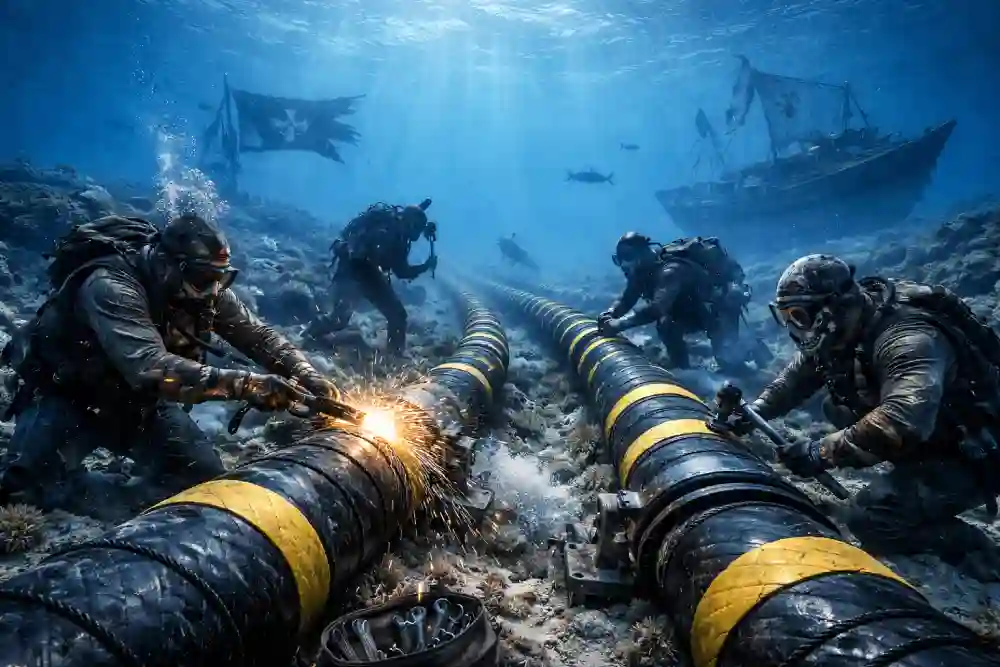
Damage to subsea cables has happened before. In 2008, several major internet cables in the Mediterranean Sea were cut near Egypt. Systems including SEA-ME-WE 4 and the FLAG Europe-Asia cable were affected. Internet services across parts of the Middle East and South Asia slowed or stopped for a period after the incident.
Another case occurred in 2013 near Alexandria. Egyptian authorities detained divers who were suspected of interfering with an undersea cable. The disruption briefly affected international data traffic moving through that network route. Subsea cables run across busy shipping areas, and faults are sometimes linked to anchors, fishing equipment, or other activity on the seabed.
The Red Sea corridor has already seen several incidents affecting internet cables in recent years. In early 2024, attacks on commercial vessels by Yemen’s Houthi movement created risks for subsea infrastructure running along the same shipping routes. Reports later linked damage to several cable systems, including Seacom, TGN-Gulf, and Europe India Gateway, to a cargo vessel whose anchor scraped the seabed after it was hit during the fighting.
Those links carry large volumes of data between Asia, Europe, and the Middle East. Repairs took time because cable ships were reluctant to operate in waters where attacks on shipping were continuing. Similar connectivity problems were reported again during 2025 in the same corridor, when faults affecting cables such as SEA-ME-WE-4 and IMEWE led to slower connections and higher latency across parts of South Asia and the Gulf.
Why the Gulf Region Matters for India’s Internet

India has several cable landing points along its coastline. Many international cables that connect the country with Europe pass through waters near the Gulf before heading west. These lines carry everyday internet activity between regions. Financial transactions move through them. Cloud data and software services also pass along the same routes. Large volumes of communication traffic travel there as well.
Network operators usually spread data across different cables instead of sending everything through one path. That arrangement allows operators to move traffic from one cable to another when faults occur. When activity in the same corridor affects more than one cable, traffic begins shifting to other parts of the network.
Alternative routes exist, but they already handle large volumes of data. Under those conditions, connections may slow for a period while networks redistribute the traffic across available links.
Subsea cables rarely attract attention during normal times, even though they carry the vast majority of international data traffic. The Strait of Hormuz has long been known as a strategic route for global oil shipments, but it also sits along important digital pathways connecting Asia, Europe, and the Middle East.
As tensions grow in the region, telecom operators and network providers are quietly watching developments because the cables running through these waters carry a significant portion of the world’s online communication. The situation serves as a reminder that the global internet relies on physical systems that can be affected by geopolitical conflicts far from the places where most users actually go online.
In case you missed:
- Quantum War Tech: DRDO and IIT help India take the lead!
- Humans Just Achieved Teleportation? Clickbait vs. Facts
- Tesla’s India Launch: It’s not about the Model Y, it’s about the AI!
- India’s Starlink Moment is Finally Here: Green Light from The Government!
- 4 New Chip Fabs and a Rallying Cry from The Red Fort!
- India’s Mappls Revolution: The Swadeshi Push to Dethrone Google Maps
- One Chip to Rule Them All: The 6G Chip at 100 Gbps!
- India’s First Paid Chip Prototype: Kaynes Fires the Starting Shot
- From Earth to Orbit: Data Centers are Heading Out to Space!
- Moltbook: AI agents now have their own Reddit, and humans aren’t allowed to post!