



Adarsh explains how India’s Trishakti Corps is going digital by using 3D printing to transform construction at the country’s borders…
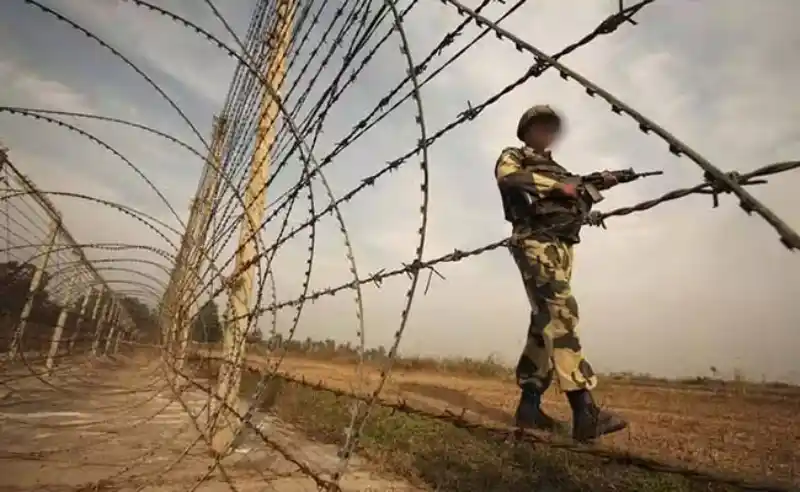
Construction at the border is no easy feat. Treacherous terrains, indomitable climate, too close to enemy lines, the obstacles are several and varied. Which is why, in a major leap for defence infrastructure, India’s Trishakti Corps has started using on-site 3D printing technology to construct across the country’s northern borders.
It is one of the first’s strategic uses of additive construction technologies in real frontline environments, where traditional building methods are slow, labour intensive and logistically demanding.
Developed under Project PRABAL – which stands for Portable Robotic Printer for Printing Bunkers and Accessories – in collaboration with IIT, Hyderabad, the system has been designed to deliver mission-ready military infrastructure quickly and efficiently.
What the Technology is and How it Works
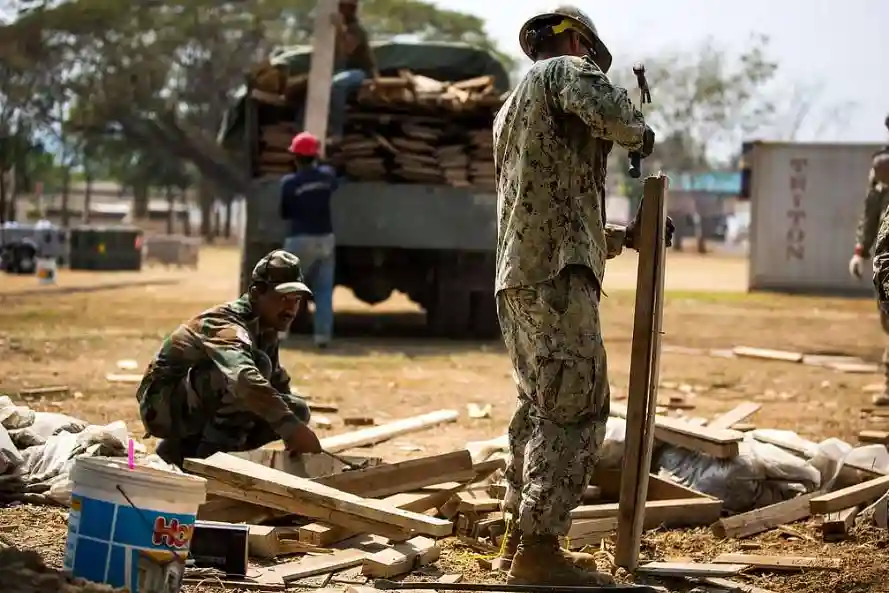
The mechanism is centered around a vehicle-mounted 3D concrete printer that is equipped with a robotic arm, circular mixer, piston pump and onboard power generator. The fact that the entire platform is mobile allows it to operate in the mountainous terrain around the border. If not for this technology, just laying the foundation in such areas can take weeks.
Conventional construction relies on manual labour and the shipment of multiple materials. But the 3D printer lays down exact layers of specially formulated concrete as per the pre-programmed designs. This approach speeds up the construction and also simplifies the building of complex, terrain-specific structures that are near impossible to build using traditional techniques.
Faster Builds, Better Protection
There are lots of advantages of using 3D concrete printing around the border. For starters, the construction of bunkers, sentry posts and other shelters happen at a much faster pace. Customized designs based on topography and mission requirements are easily achievable.
Through live ballistic trials, it is easy to test and ensure enhanced ballistic and blast resistance as well as high compressive strength and quality control. And by using locally available materials efficiently,
logistically dependencies are also reduced significantly. 3D printing also helps with integrating advanced camouflage features that help in blending the constructions into the surrounding landscape.
And considering the high-altitude and remote regions where the Army has to guard the borders, these benefits play a big role in having greater operational readiness.

Strategic and Operational Impact
The employment of 3D concrete printing in remote areas signifies a lot more than engineering breakthrough. This is a major step in how the Indian army is looking at construction and logistics.
Especially in areas like Sikkim – where traditional construction techniques often get delayed by weeks and months because of harsh weather and the challenges of material transport – 3D printing allows the construction of complex buildings in just a fraction of that time.
This frees up our military forces to focus on core operational duties instead of solving construction challenges. This also provides greater tactical flexibility as troops can quickly construct defensive positions or modify infrastructure as and when required instead of waiting on slow, linear processes.
Broader Innovation and Future Potential
India is not the only country that is exploring 3D construction around its borders. But its indigenous development, adaptation to extreme terrain and rapid field deployment is setting a benchmark in the developing field.
Beyond military use, this technology has greater implications in several areas – from emergency shelters and disaster-response buildings to sustainable housing in geographically difficult areas. The same techniques that help speed up military construction can one day be used for civilian construction projects where speed, efficiency and resilience are crucial.

The Last Word
The Indian Army’s deployment of 3D concrete printing is a major landmark in combining cutting-edge technology with battlefield necessity. As additive manufacturing becomes more mainstream in defence engineering, its impact will go far beyond speed and convenience.
It will shape how countries build, defend and sustain infrastructure in challenging environments.
In case you missed:
- The Hidden AI Boom Transforming India’s Tech Economy
- Elon Musk wants to ensure your phone never loses signal in India
- The AI Gold Rush Is Turning India Into a Data Centre Powerhouse
- India Is Exporting UPI Faster Than Ever. The World Is Buying In
- From Smartphones to AI Hardware: India’s Next Manufacturing Bet
- How Operation Sindoor Defined a New Era of Technology in Defence
- India’s Tech Renaissance: From Follower to Global Trendsetter
- India’s 3-Hour Rule Signals a New Era for Social Media Platforms
- India’s Next AI Advantage Lies Beneath the Ocean
- India May Be Entering Its “Applied AI” Era