


Generative AI is often villainised as something that will dumb people down. But new tools from AI companies are doing just the opposite, finds Satyen K. Bordoloi
The 1990s were an exciting time to be a teenager. New studies and advances in learning were teaching us, kids, how to learn better. One of the key findings was the use of Mind Maps, which you used to create visual maps of a topic to better understand and remember it. The idea was that engaging the mind’s visual part would make learning better and faster. 30 years later, generative AI companies seem to be doing not just that, but are taking that idea to a whole new level.
So far, we have been taught a different lesson, in which dystopian images come to mind when we think about artificial intelligence’s impact on education. Visions of students cheating on their lessons, passively receiving pre-digested information, and critical thinking skills atrophying as machines do the intellectual heavy lifting. This narrative of technological dependency and cognitive decline is a common dystopia that everyone parades.
However, Google has launched a new initiative called “Learn Your Way” that challenges this notion. Their recent research paper, “Towards an AI-Augmented Textbook,” presents a dramatically different vision of education: generative AI doesn’t replace thinking; it enhances learning by creating deeply personalised educational experiences tailored to individual students’ needs, rather than to a collective, as education does today.
Their idea is simple yet no less revolutionary. Because what they’re asking is this: what if textbooks could adapt to individual learners rather than forcing all learners to adapt to a static textbook? Their team has developed a system to turn traditional educational materials into dynamic, multimodal learning experiences tailored to each student’s grade level, interests, and preferred learning methods. This is not just an incremental improvement in educational technology but a fundamental reimagining of the education system’s most vital and enduring tools: the textbook.
Breaking the One-Size-Fits-All Mould
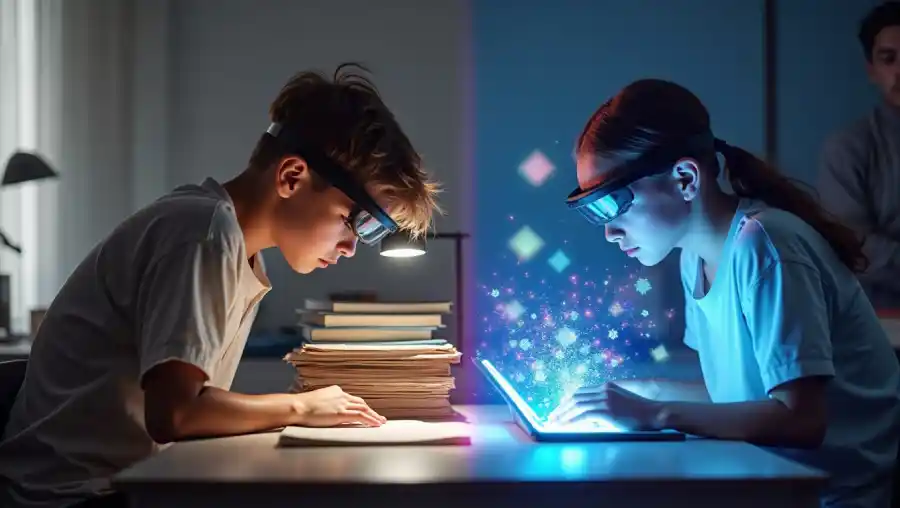
Traditional textbooks have what Google’s researchers identify as a “fundamental limitation: they are a one-size-fits-all medium.” In a classroom of 30 students with diverse backgrounds, interests, and learning styles, a single static textbook cannot hope to serve everyone equally well. Adaptation of educational materials to individual needs has always been the high ideal, but human educators naturally face practical constraints that make true personalisation at scale nearly impossible.
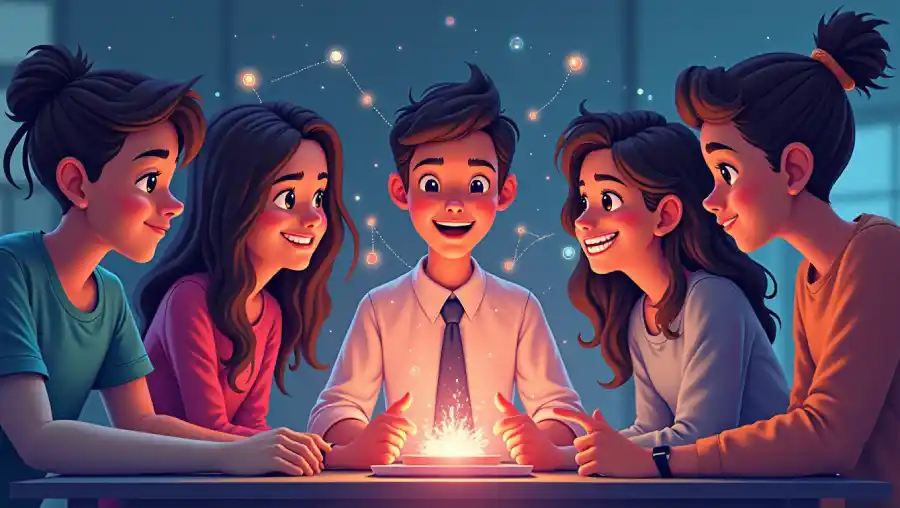
Learn Your Way tackles this challenge by implementing a two-step AI generation process. It first personalises content based on inputs, then transforms it into multiple representations. The system begins by asking every learner two simple questions: their grade level and their personal interests in categories such as sports, music, or gaming. These attributes serve as the basis for the system’s module development.
A Personalisation Engine
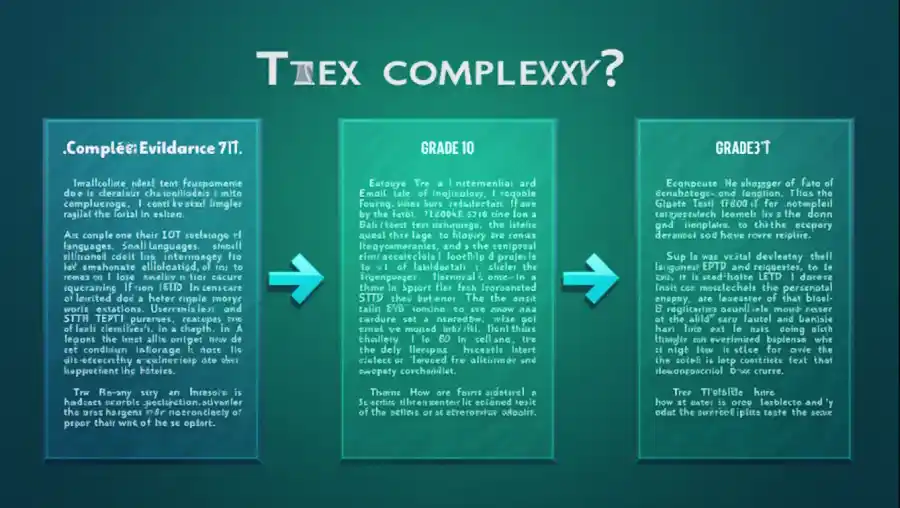
The system’s grade-level adaptation uses algorithms to adjust text complexity while remaining factually accurate and preserving the integrity of the concept in question. This “re-leveling” process is evaluated against the Flesch-Kincaid Grade Level formula, which means that a student encounters the material to be learnt at their own linguistic complexity, and this is done without lowering the conceptual content.
Equally innovative is interest-based personalisation, which rewrites examples of concepts based on a student’s stated interests. For instance, Newton’s Third Law of Motion might be illustrated through a cricket example for a sports fan or an artistic technique for a student who loves art. This means that an individual’s existing knowledge serves as a base for subsequent learning and performance, as noted in the research paper.
The Multiple Representations Advantage
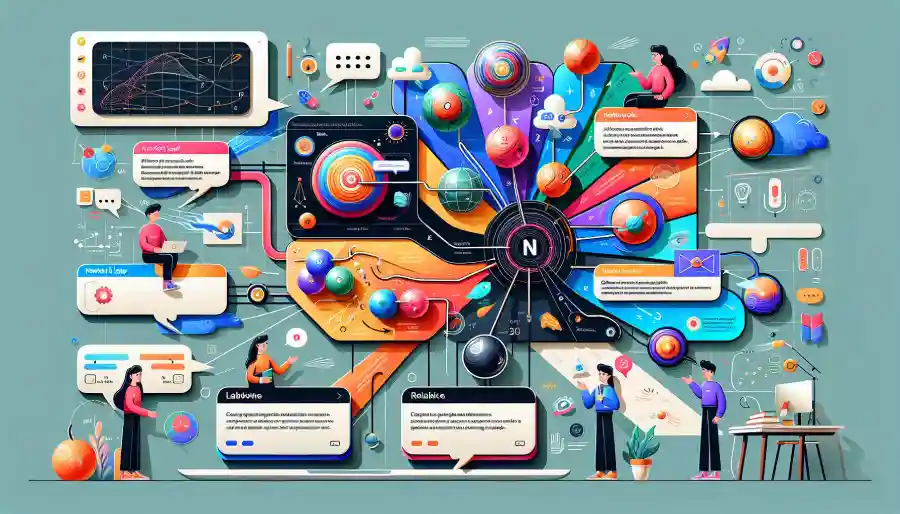
The first step is personalising the core text, but after that, Learn Your Way generates multiple ways to present the material. This includes slides that are narrated to cover the core material in brief, engaging manner, audio graphic lessons vial simulated conversations between teacher and student avatars, interactive mind maps which include hierarchical visual representations to let the student explore relationships between different concepts, and immersive text which are personalised texts enhanced with embedded questions, personalised examples like using cricket to explain Newton’s laws and other interactive elements.
The reason for this multimodal approach is the same as that for mind maps, which I mentioned at the beginning of this article. Showing the same concepts in different ways engages different parts of the mind, which strengthens learning. When a learner moves between different formats, it reinforces the concepts through different pathways.
The Broader Educational AI Landscape
Google’s initiative isn’t the only one. Others are doing their bit to leverage artificial intelligence to enhance human learning. Take Khan Academy’s Khanmigo, a personalised tutoring assistant that guides students through problems using Socratic questioning rather than providing direct answers. The intention is to develop a student’s problem-solving skills and critical thinking through interactive dialogues.
Duolingo also uses AI to create adaptive language lessons to adjust difficulty levels based on a user’s performance. It also generates contextual examples and provides immediate, personalised feedback, all to accelerate language acquisition. Similarly, Quizlet has an AI system that generates personalised study plans, offers varied assessment formats, and identifies knowledge gaps, transforming passive memorisation into adaptive learning.
Reversing the “Dumbing Down” Narrative
There is a grand fear that AI is dumbing us down. That it will make us all intellectually lazy. That is, to an extent, true. Yet, tools like these show us that it need not be so. Instead of being an intellectual crutch, AI can serve as our intellectual wings.
Because think about it. In the 1990s, I was forced to learn black-and-white texts on paper by rote. Let me tell you, this was not just undesirable, but exceedingly boring and a chore. By gamifying learning with AI, colours, images, and videos, we are, first of all, making learning fun. Secondly, by personalising education to each learner’s abilities, we ensure that no kid, no learner, is left behind. A randomised controlled trial cited by the study also demonstrated this “improved learning efficacy” for the AI-augmented approach, providing empirical evidence that well-designed AI educational tools can enhance learning outcomes rather than diminish them.
We are thus in a future where learning technologies are as exciting as entertainment was decades ago. The future may see us ditch the general curriculum in favour of a completely individualised one that not only adjusts to a kid’s knowledge but also their learning style, page, and perhaps even their emotions. Instead of being a nuisance that it is right now, AI could become the collaborators and assistants that teachers so desperately need, providing them with detailed insights into student understanding and recommending targeted interventions.
And the best of all, advanced AI might help students see connections between disparate subjects, link maths to historical events, or politics to artistic expressions, thereby triggering creativity in ways not seen in previous generations. Better still, learning will never stop. That with AI, we will truly do what we should be doing anyway: become lifelong learners.
Thus, the promise and potential of AI is not in replacing human teachers or automating learning, but in addressing the scalability of personalised education. Learn Your Way isn’t thus artificial intelligence, as much as it is augmented intelligence with systems designed to extend and enhance our cognitive abilities rather than be a substitute.
In this respect, the future of AI may not lie in humans becoming more like machines. It could rather be in machines finally becoming capable of serving the diverse, beautiful complexity of human minds.
In case you missed:
- First Students, Now Teachers: How AI Sparked a “Cheating” Crisis & How to Fix It
- The Cheating Machine: How AI’s “Reward Hacking” Spirals into Sabotage and Deceit
- With AI Set to Destroy Millions of Indian Jobs, Traditional Career Advice is a Death Trap
- PhD Students, Pack Your Bags: AI Just Beat You at Your Own Game, & Without Needing Coffee
- Sci-Hub’s War To Keep Research Free Has Got A Free-AI Upgrade
- Use AI or Get Fired: The New Workplace Ultimatum Hanging Over Every Job
- AI Will Create Double The Jobs It Takes. The Catch: It’ll Take Time
- South Korea Made Generative AI a Citizen’s Right: Should the Rest of the World Follow?
- 2025 – Year of Gene Therapy: Curing Lymphoma & Wiskott-Aldrich Syndrome, & Using AI
- What The First Fully AI Film To Enter A Major Festival Says About AI Filmmaking’s Future