



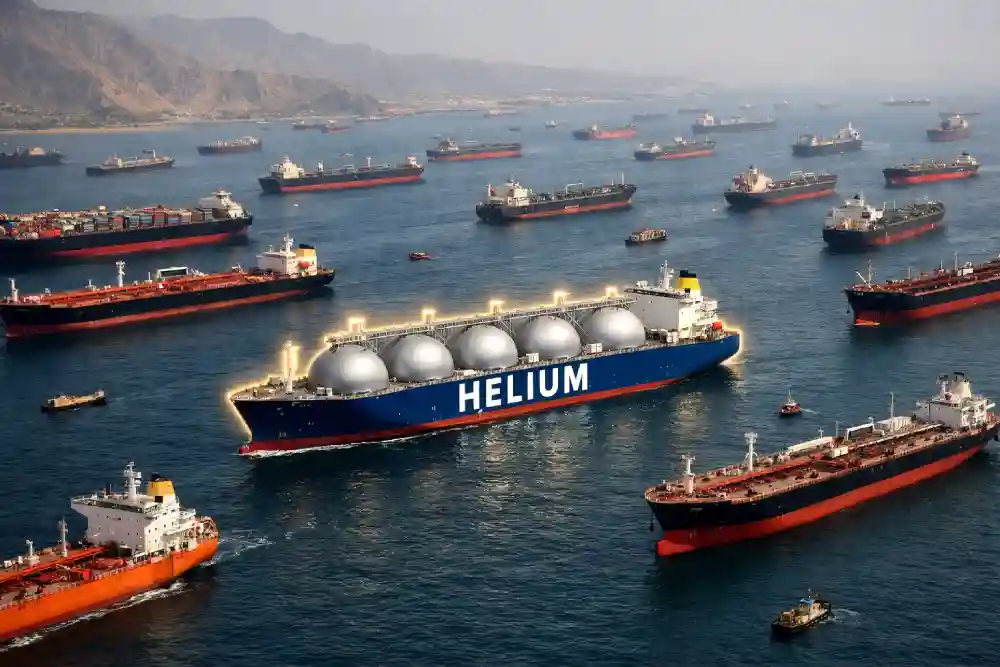

Rising tensions in the Middle East are putting pressure on helium supply, a key input in chipmaking that could ripple into the AI industry
In our previous post on the war in Iran, we talked about how the world’s internet connectivity is being put at risk, and while the focus usually stays on oil, another important resource is featured in recent reports, helium. While it doesn’t usually get much attention, it is used across several industries, and semiconductor manufacturing is one such industry.
Helium is a byproduct of natural gas. Qatar is one of the largest suppliers in the world, making up for a third of the world’s helium. That’s a large concentration, and supply depends on processing facilities, export routes, and stable shipping conditions. Recent disruptions in the region have drawn attention to how exposed that system can be. Some markets have already reported tighter availability. Price movement has also been noted, and the situation is being tracked way more closely than usual.
Semiconductors and Chip Fabrication
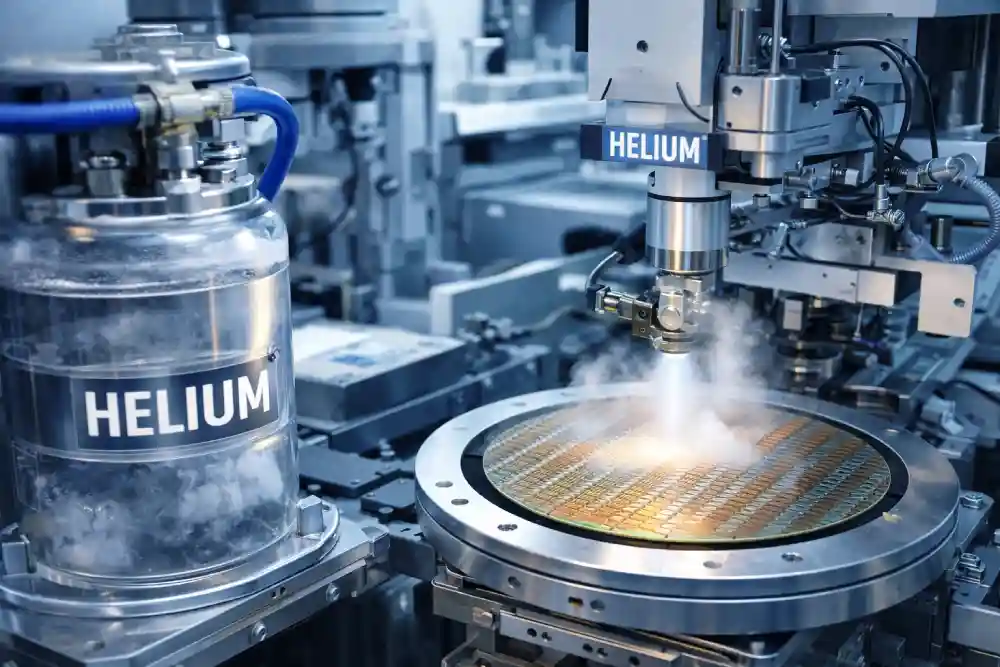
Helium is used inside chip fabrication environments where temperature control is critical. While it is required during a number of stages in the chip-building process, it’s the equipment that handles wafers under controlled conditions that needs it the most. Most importantly, there is no known substitute for it in these settings. Semiconductor companies treat it as a regular input, similar to other industrial materials required during production.
Chip manufacturing runs continuously, with tightly managed timelines. Changes in the supply of any input can affect how those systems operate. Demand for chips remains high. Data centres, cloud platforms, and AI workloads continue to expand. Production schedules are already under pressure in many parts of the industry.
Helium supply has faced disruptions before. Shortages have been recorded over the past decade, sometimes referred to as repeated supply cycles. These disruptions rippled through various industries simultaneously. Previous reports had already flagged supply shortages in medical imaging, space exploration, and semiconductor production. This isn’t a novel occurrence.
Supply is limited to certain areas and depends on energy infrastructure. As a result, when there are disruptions, the effects are usually seen across different industries, rather than just one. Monitoring these cycles is a part of life for companies that rely on helium. However, each new disruption is assessed on its own conditions.
Manufacturers on Alert
Recent developments have drawn attention from chipmakers in Asia. Industry groups in Malaysia have flagged possible risks linked to helium supply conditions. The country plays a role in semiconductor packaging and testing. South Korean firms have also been mentioned in reports around supply monitoring.
Taiwan remains central to global chip production. Its fabrication facilities depend on steady access to imported materials. Supply chains are closely watched because of their role in advanced chips. Any shift in the availability of industrial inputs is noted across the region. While these are all routine checks, the current situation has brought a considerable amount of “additional” attention.
The connection to AI is indirect but visible. Advanced computing systems rely on specialised chips. Those chips come from fabrication processes that depend on stable inputs. Data centre expansion continues at a rapid pace. Companies are adding capacity for training and deploying models. Hardware demand has never been higher across the sector.
While production does not typically stop because of a single constraint, inputs are tracked closely, and disruptions are expensive. This is because supply conditions can affect timelines, costs, or allocation decisions. The same applies to other industries that depend on semiconductors. The system adjusts, but it does not operate in isolation from material supply.
The hidden costs of war
The current situation in the world has shifted attention toward parts of the supply chain that most of us didn’t even know existed. Finding out that helium production is directly connected to the oil industry and moves through energy infrastructure, processing facilities, and shipping routes before reaching end users is an eye-opener.
Additionally, much of that network sits in regions affected by geopolitical tension. So while the focus remains on energy markets, other materials move through the same system. Industry watchers are tracking developments without drawing firm conclusions. Supply continues, but conditions are changing.
For now, it is being treated as a risk and an early-stage disruption and not a confirmed global supply-chain collapse (yet).
In case you missed:
- Tata Electronics to Manufacture Intel Chips & AI Laptops in India!
- Apple, Tesla, Tata: The Cyberattack That Hit India’s Manufacturing Boom
- Aatmanirbhar Push: India Becomes 7th Nation to Crack Gallium Nitride Chip Technology
- NVIDIA’s Taiwan Problem: The AI Boom Is Now Dependent on One Island
- Huawei Is Coming for Nvidia Now. Its New AI Chips Arrive in 2027
- Not Just Oil: Iran War Could Put India’s Internet Connectivity at Risk
- Goodbye Blackwell, Hello Rubin: Nvidia’s new AI platform is here!
- QpiAI Unveils Kaveri, India’s First Aatmanirbhar 64-Qubit Quantum Chip
- You Can Now Host an NVIDIA Data Centre in Your Home. Some Neighbours Already Want Them Gone.
- While Bezos Bets $100 Billion on Physical AI, His Top AI Picks Walk Away to Model the Universe