



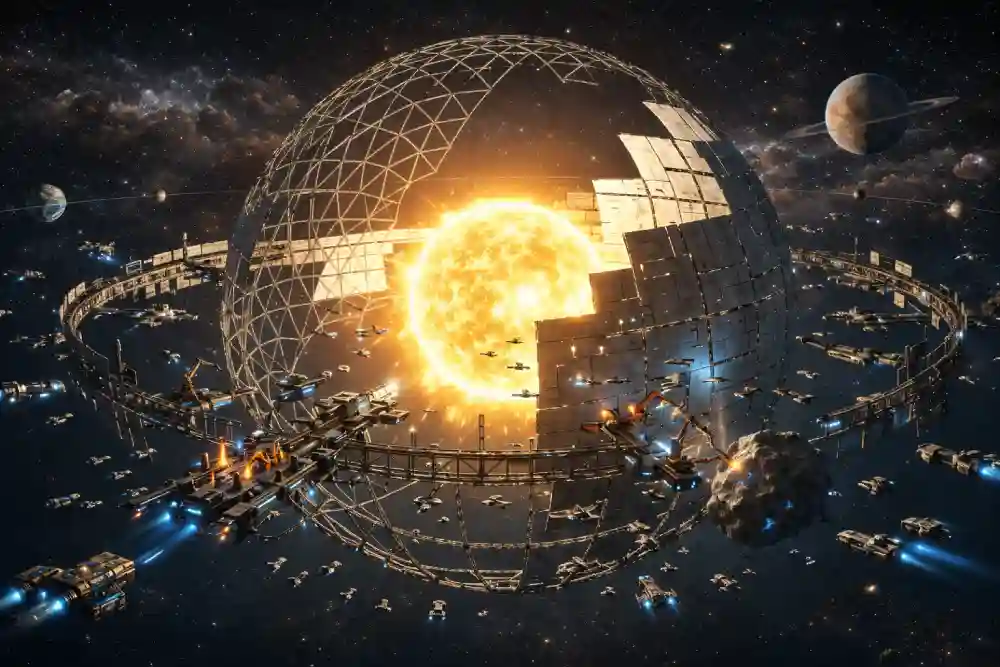

The idea of “wrapping the Sun” is going viral again, with Elon Musk’s name once more attached to a long-running concept.
Posts claiming that Elon Musk could one day “wrap the Sun” have been circulating across social media in recent days. Many of them include visuals showing large structures placed around a star. The idea is presented as a way to capture energy directly from the Sun. Some posts describe it as a future step in how energy might be used at a much larger scale.
The concept has been shared across short videos and image posts. Different versions of the same idea continue to appear. The visuals are often similar, with variations in how the structure is shown. The topic has been picked up again by new audiences online.
Dyson Spheres and Type II Civilizations
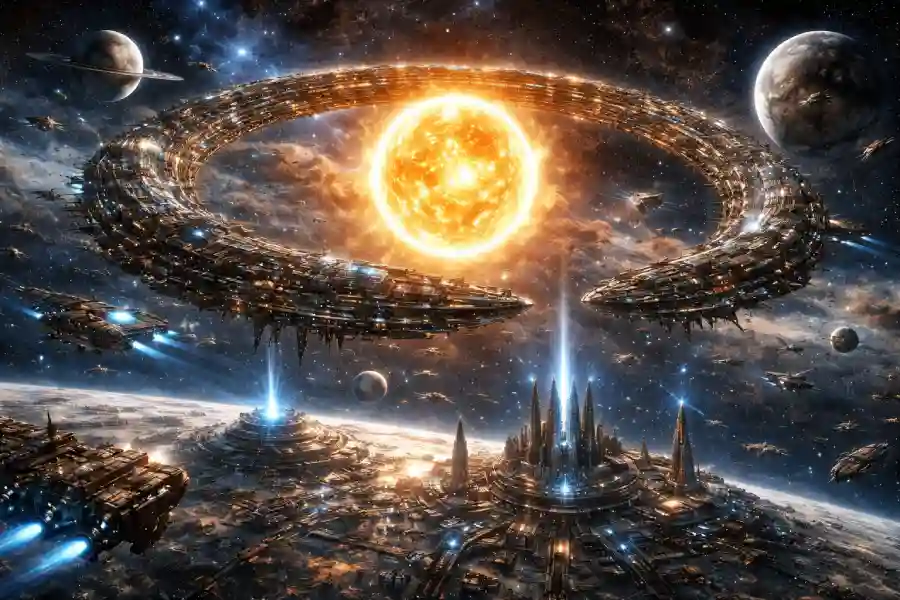
What these posts describe aligns with a long-standing concept known as a Dyson Sphere. Rather than a solid shell, the idea usually involves a vast network of structures orbiting a star, collecting its energy. The concept has appeared in both scientific discussions and science fiction for decades. The concept of a civilization using all the energy from its star is often used to imagine how such a society might work. Even in theory, the scale of this idea is difficult to understand. The amount of materials needed would be huge, and the structures would have to move in a coordinated way around the Sun.
The idea is closely linked to something called the Kardashev Scale. This scale measures how advanced a civilisation is based on how much energy it can use. A Type I civilization uses the energy available on its home planet.
In contrast, a Type II civilization operates on the scale of its star, capturing a large part of its energy. Dyson Spheres are often used as examples of how a Type II civilization might work. It is a way of thinking about technological progress in terms of energy access rather than individual inventions.
A Giant Idea That Keeps Returning
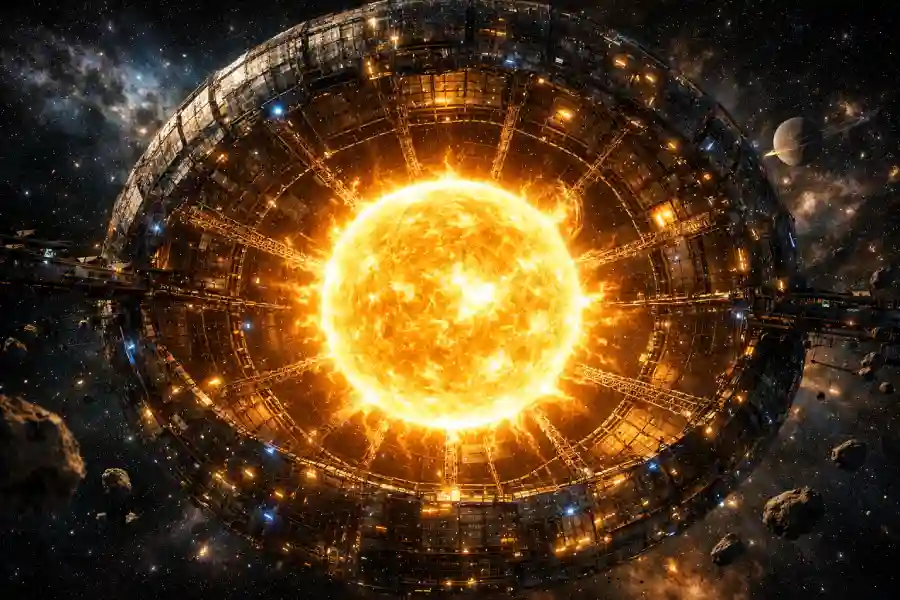
Ideas like this involve extremely large structures built in space. They are often described in terms of orbiting systems placed around a star. The scale is far larger than anything currently in use. Building even smaller space-based systems takes time, planning and testing. Missions today focus on satellites, stations and transport systems. These operate at a much smaller level.
The concept of surrounding a star appears in scientific discussions and written work from earlier decades. It continues to be referenced in newer material as well. Different versions of the idea exist, with variations in how the structures are arranged. This idea often comes up in discussions about future technological developments.
Similar versions of this idea have appeared online before. Articles and posts have described large solar structures in space at different points in time. Some of them mention existing space companies or well-known figures, though not always in the same way. The details tend to vary from one post to another. In some cases, the visuals are similar, while in others the presentation looks different.
The same theme shows up again with slight changes. Older posts continue to circulate alongside newer ones. Different formats are used across platforms, including short videos and image-based posts. The idea appears in cycles rather than as a single discussion.
Debunking the Viral Claims
The current surge of online chatter links this idea to Elon Musk, frequently suggesting it’s under active consideration. Many of these posts feature his name alongside images or descriptions of massive solar installations in space. Musk’s endeavors with SpaceX and Tesla have centered on fields like space travel, satellite networks, and energy storage solutions. These projects operate within current technological limits, even as they continue to expand what is possible in those areas.
No confirmed plans or announcements from his companies have surfaced regarding large-scale stellar engineering. No official roadmap or project details have been shared in connection with such ideas.
In case you missed:
- Disney Walks Away as OpenAI Shuts Sora, Ending $1 Billion AI Bet
- Moltbook: AI agents now have their own Reddit, and humans aren’t allowed to post!
- ISRO’s Next Big Plan: To Put Indian Data Centres in Space!
- QpiAI Unveils Kaveri, India’s First Aatmanirbhar 64-Qubit Quantum Chip
- Goodbye Blackwell, Hello Rubin: Nvidia’s new AI platform is here!
- Not Just Oil Part 2: How the Iran War is Disrupting Helium, Chips, and the AI Boom
- $70 for cocaine, $30 for weed, and $50 for ayahuasca, that’s what it costs to get ChatGPT high!
- The Sodium-Ion Breakthrough That Could Unplug Lithium’s Reign
- CES 2026: ASUS Unveils Smart Glasses With 171-Inch Virtual Screen
- AI Is Bringing Dead Nuclear Plants Back to Life