

The AI boom has become so power-hungry that America is reviving a nuclear plant once linked to its worst atomic disaster
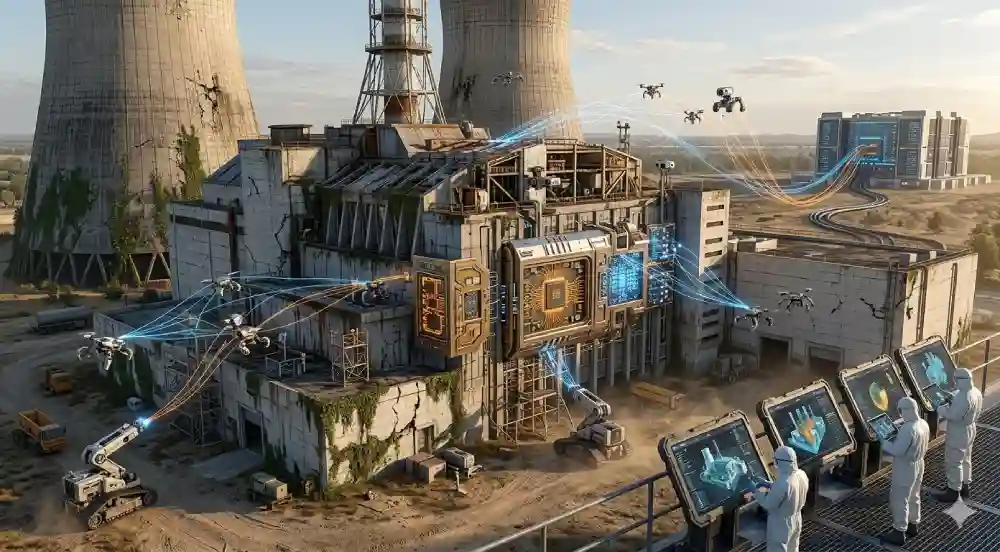
The cooling towers at Three Mile Island Nuclear Generating Station were supposed to belong to another era. For decades, the site carried the weight of America’s worst nuclear accident, its name drifting somewhere between industrial history and public trauma. Even people too young to remember 1979 knew the phrase. It became shorthand for nuclear fear, the moment that froze the country’s confidence in atomic energy and pushed entire generations toward suspicion of reactors, radiation, and giant concrete towers humming beside rivers.
One of the reactors at the site eventually shut down in 2019 because it no longer made economic sense to keep operating. Now, unexpectedly, it is being brought back to life. Not because of war, oil shortages, or industrial manufacturing booms, but because artificial intelligence companies suddenly need staggering amounts of electricity to keep their systems running around the clock. The AI boom is dragging old nuclear infrastructure back into relevance.
The AI boom is becoming an energy crisis
For years, artificial intelligence was sold to the public as something almost weightless. Ask a chatbot a question, generate an image, automate a task, and somewhere far away, invisible systems handle the rest. The scale of the infrastructure underneath remained mostly hidden from ordinary users. That illusion is starting to crack fast. Training modern AI systems already consumes astonishing amounts of electricity, but the bigger shock has come after launch.
Millions of users querying AI models nonstop every day have created a second wave of demand that utilities say is climbing far faster than expected. Analysts now warn some AI-focused data centres could soon consume as much electricity as entire towns or small cities. Across the United States, long-term grid projections are being revised upward, largely due to growth in AI infrastructure. The technology industry suddenly sounds less like Silicon Valley and more like an industrial empire scrambling to secure enough fuel before expansion outruns the power grid itself.
That pressure is already reshaping corporate behaviour in ways that would have sounded absurd only a few years ago. Microsoft has signed a 20-year power agreement tied to the restart of a reactor at the Three Mile Island site, while plant operator Constellation Energy prepares to spend roughly $1.6 billion to bring the dormant reactor back online by 2028. The symbolism is difficult to ignore.
One of the most infamous nuclear sites in American history is being revived because AI systems consume too much power. At the same time, Google and Amazon have accelerated discussions around advanced nuclear projects and small modular reactors, betting that stable baseload power may become critical to the future of AI infrastructure. In another era, tech giants competed for office campuses and software engineers. Increasingly, they are competing for electricity itself.
Dead reactors are becoming valuable again
What makes the moment feel surreal is the kind of infrastructure now being reconsidered. Reactors once viewed as politically radioactive or economically outdated are suddenly starting to look strategically valuable again because AI has altered the economics of power demand almost overnight. Some nuclear plants were never closed because they failed technically; they shut down because cheaper natural gas and renewables made them less profitable to maintain.
AI may now be reversing that equation. Meta recently signed a nuclear energy deal to power its Prometheus AI supercluster, and Google has signed deals to power its data centers via advanced nuclear plants by 2030. Analysts have begun openly discussing whether dormant reactors and aging nuclear assets could become among the most valuable industrial sites in the world if computing demand continues to rise at current rates.
The imagery itself feels almost cinematic: abandoned cooling towers, silent reactor buildings, and Cold War-era infrastructure returning to life because algorithms generating text, images, and video require industrial quantities of energy to survive. AI has quietly crossed a line from software into heavy infrastructure, and once that happened, the logic of the technology industry changed with it completely.
There is also a geopolitical edge forming underneath the energy conversation. Countries dominating AI may not be the ones producing the smartest models anymore. Instead, they may be the ones capable of sustaining the largest and most stable energy systems. China continues to expand its nuclear capacity aggressively. Russia remains one of the few nations operating fast breeder reactors commercially.
India recently pushed its long-delayed Kalpakkam breeder reactor to criticality while linking nuclear growth to its broader “Viksit Bharat” ambitions. Across the world, governments are slowly realising that AI leadership may depend just as much on megawatts as machine learning breakthroughs. The fantasy version of artificial intelligence imagined sleek digital systems floating above the physical world.
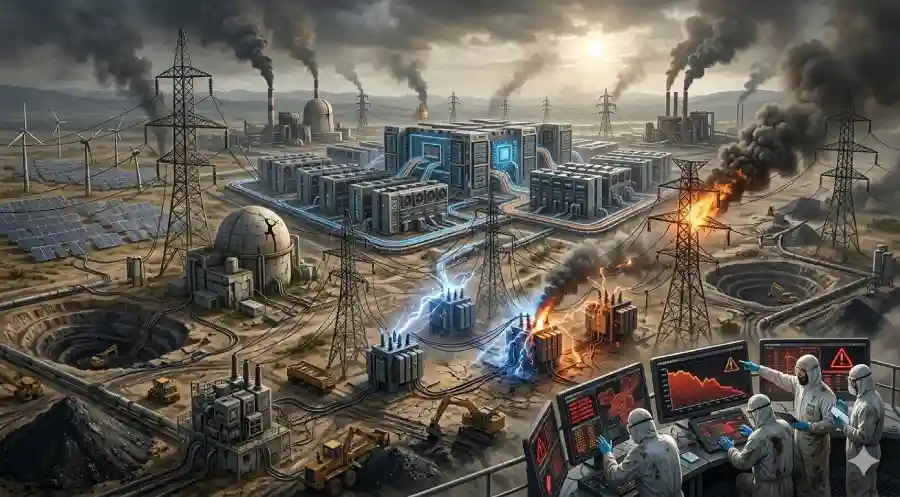
The real version is looking increasingly tied to mines, substations, chip fabs, water cooling systems, uranium supply chains, and giant industrial corridors stretching across continents. The cloud, in the end, still runs on steel, concrete, and electricity.
The cloud was never really a cloud
That may be the biggest illusion collapsing underneath the AI boom right now. For years, the language surrounding technology made digital systems sound detached from material limits. Data lived “in the cloud.” AI felt abstract, frictionless, almost magical at times. But every chatbot response, every AI-generated image, and every search query ultimately runs through physical systems consuming land, water, minerals, and enormous amounts of electricity.
The return of nuclear energy into mainstream technology planning exposes that reality more clearly than anything else so far. It also hints at where this race may eventually lead.
If AI demand continues expanding at the current speed, technology companies may increasingly resemble industrial powers themselves, securing long-term energy partnerships, reshaping grids, and influencing national infrastructure policy simply to keep their systems operational. That is a very different future from the one most people imagined when AI first arrived as a novelty on their phones and laptops.
In case you missed:
- While the World Watched Iran, India Quietly Made a Nuclear Breakthrough
- You Can Now Host an NVIDIA Data Centre in Your Home. Some Neighbours Already Want Them Gone.
- NVIDIA’s Taiwan Problem: The AI Boom Is Now Dependent on One Island
- Not Just Oil Part 2: How the Iran War is Disrupting Helium, Chips, and the AI Boom
- Goodbye Blackwell, Hello Rubin: Nvidia’s new AI platform is here!
- One Chip to Rule Them All: The 6G Chip at 100 Gbps!
- Singapore Just Built a Data Center With 16 Million Living Human Neurons
- Japan just made Remote Quantum Computing a reality!
- ISRO’s Next Big Plan: To Put Indian Data Centres in Space!
- The Sodium-Ion Breakthrough That Could Unplug Lithium’s Reign