




With the arrival of AI coding agents like GitHub Copilot and Claude Code, software engineers are seeing drastic changes to their everyday roles…
Software engineers have always followed a predictable path. Graduate, find a junior level job where you write code, gain experience and eventually move to senior roles that involve code architecture or leadership positions.
But with the arrival of AI coding tools, that path is changing drastically. From GitHub Copilot to Cursor to Claude Code, there are plenty of coding tools that are doubling up as AI assistants and not just at an experimental level. They have become an integral part of software development as they’re changing not just how code is written but also what it means to be a software engineer.

From Writing Code to Reviewing It
One of the major changes is the way AI coding has changed a developer’s day to day work.
A recent study of professional software engineers by Cornell University revealed that 82% of developers reported spending less time writing code after adopting AI coding assistants. Their focus now is instead on reviewing and evaluating the code that is generated by AI. This emerging role is being described as “supervisory engineering work.” The study also revealed that 84% of participants reported productivity improvements from AI tools.
In simpler words, software engineers have moved from writing code to managing AI coding tools.

How Entry-Level Roles Are Being Transformed
The impact of AI coding tools is most visible in the impact it has had for junior software engineers.
According to another recent study, this time by Cognizant-Pearson, AI is already performing 37% of entry-level work in India. The study also revealed that the global average for the same is 33%.
Most traditional entry level jobs are now automated with engineers taking up supervising roles at the start of their careers.
AI now handles the routine coding, debugging and documentation while engineers have to focus on defining requirements, evaluating outputs and understanding broader business problems. While companies look for these qualities, engineering training has not kept pace with these requirements.
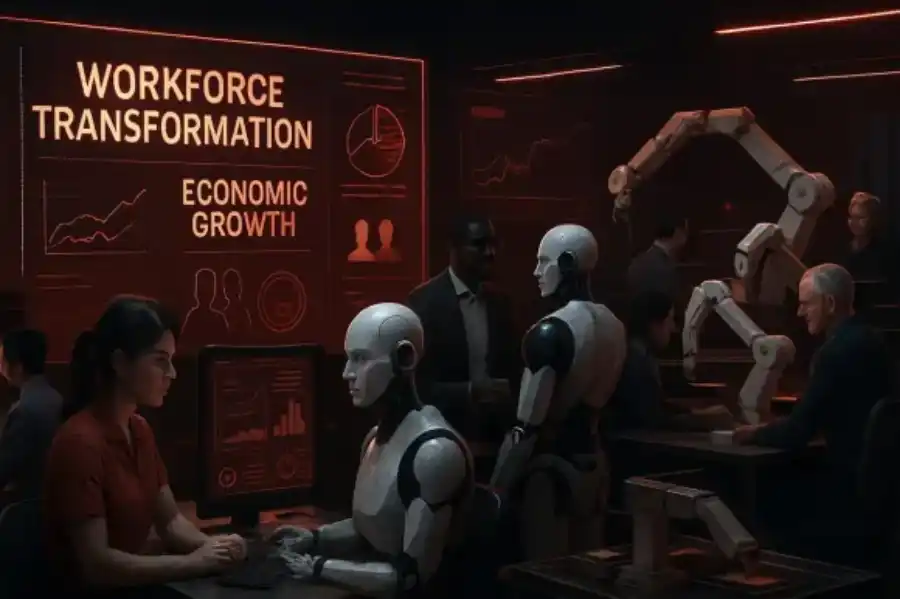
AI Makes Life Easier But Also Raises Expectations
Speaking recently at a Bengaluru event, Deutsche Bank’s investment division CIO Denis Roux spoke about how AI has helped reduce technology project timelines from years to months. The bank now employs AI across software development, research, analytics and data processing functions.
While AI comes with efficiency, this has put a major strain on engineers. Companies expect them to deliver output in much less time. The value of a software engineer has shifted from coding towards judgment, architecture and decision-making.
The Most Valuable Skill is Human Judgment
AI can generate code quickly but it still requires human oversight. AI might generate code but there is still a lot of work for the engineers in terms of reviewing AI-generated code for errors, security vulnerabilities and performance issues. A human is needed to verify if the code works correctly and safely.
Experts have warned about “skill erosion” where engineers become too reliant on AI tools so much so that they lose their ability to problem-solve and debug, which are extremely important to their roles.

The Last Word
The future software engineer will spend a lot less time writing code and a lot more time handholding AI tools with their code generation and evaluation.
As mentioned earlier, rather than code production, qualities like specification, verification, critical evaluation and agent orchestration have become valuable skillsets for a budding software engineer.
Up until recently, software engineers learnt their trade to write code. The next set of engineers will have to learn to manage teams of AI coding agents if they want to be good at their job.
In case you missed:
- AI Can Write Code. What Happens to India’s Millions of Software Engineers?
- ChatGPT vs Claude Code: How the AI race is shifting
- The Hacker That Never Sleeps: AI Is Changing Cyberattacks
- AI Was Supposed to Save Us Time. Why Are We Just Working More?
- AWS hit by two Outages caused by AI Tools
- Meta wants everyone to have a powerful personal AI
- OpenAI says AI could Soon Launch Cyberattacks on its Own
- From Curiosity to Utility: Inside 1.5 million ChatGPT Conversations
- Privacy Was a Myth. AI Just Proved It
- Google’s HOPE Model: A Big Leap Toward AI That Never Forgets