




As companies find that AI is more expensive than hiring people, and some see this as karma catching up, the truth is actually more complicated, opines Satyen K. Bordoloi
I need research for everything: when writing about AI and writing films. Hence, Perplexity’s ‘Deep Research’ is one of my favourite AI tools. I can ask deep questions about a topic, and it gets me answers even hours of surfing Google wouldn’t. Yet, initially, I kept hitting the tool’s limit in the pro version.
What was happening? Do I need to pay multiple times more to get the Max version? It took me a few months, but the solution was a big ah-ha moment for me.
The corporate world has not yet reached a similar ah-ha moment on its AI use. That’s why you keep hearing that many corporates in the US have spent their AI budgets – reaching tens of thousands of dollars – within months and now, surprise surprise, are discovering that using humans was cheaper.
One part of the story is great news: that humans are being rehired. The humans being fired only to be replaced by AI is one of the dumbest things companies across the world are doing. That’s because AI is a tool that companies can use to grow their business exponentially with the same employees, instead of saving a bit of money by firing them.
The other part of the story – of companies spending a year’s AI budgets within a few months – screams of the kind of incompetence I showed when first using the ‘Deep Research’ tool.

HUMANS CHEAPER THAN AI
The numbers, at first glance, seem embarrassing. The average U.S. knowledge worker earns just above $100,000 per annum in total compensation. Now stack that against what AI actually costs an enterprise to run – at $50,000–$100,000 per year for continuous operation. And that is before we consider the hidden layer of prompt engineers, evaluation pipelines, security reviewers, and the human staff still needed to check the AI’s work.
Companies running deep AI workflows usually end up paying for tokens plus the engineer wrapping them, plus orchestration, plus the supervisor, plus the eval pipeline – none of which disappears when AI shows up.
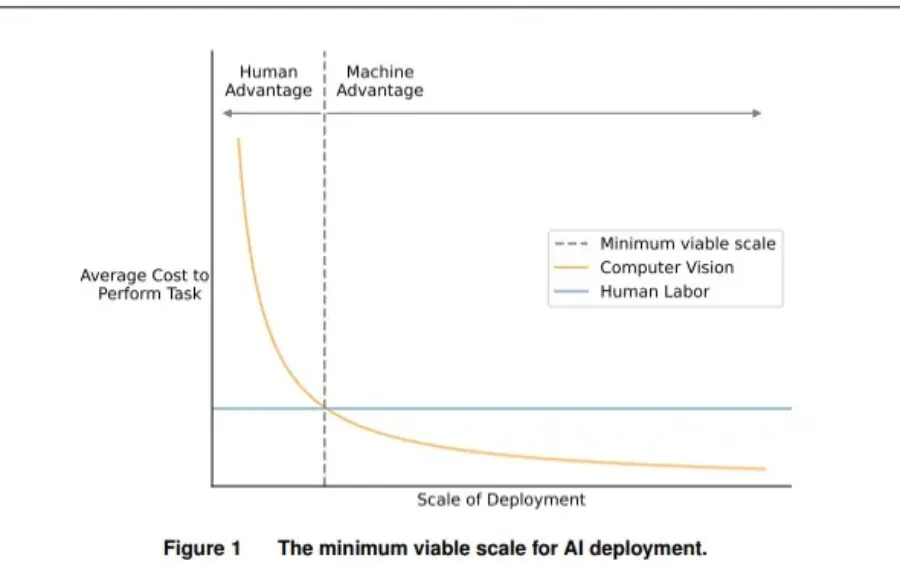
A 2024 MIT study found AI automation economically viable in only about 23% of jobs that rely heavily on visual tasks. In the other 77% of cases, keeping human workers was still the more cost-effective option. This makes the mass-layoff strategy not just cruel, but arithmetically stupid.
As an example, consider Uber. It burned about $3.4 billion in AI budget in just four months, with per-engineer API costs running between $500 and $2,000 per month. The same has been the case with many other companies that are suddenly discovering that the cost of computing is way above what human employees cost.
So, looking at this, it would seem AI is more expensive, and humans are cheaper. That conclusion, however, is a mistake as it diagnoses the symptom and misses the disease entirely.
WHY AI IS EXPENSIVE FOR THESE COMPANIES
When I started using Perplexity Deep Research and ran out of limits quickly, I realised the problem was not the AI but the way I was using it. What would you call a person using an axe to cut butter? That’s the word I’ll use for myself in the initial days of the tool’s use.
My problem was going to it for everything – what the weather would be like for a work trip, the nickname of a particular person, the date something happened. Things that a simple Google search could answer in a fraction of a second. I was burning premium queries on trivia.
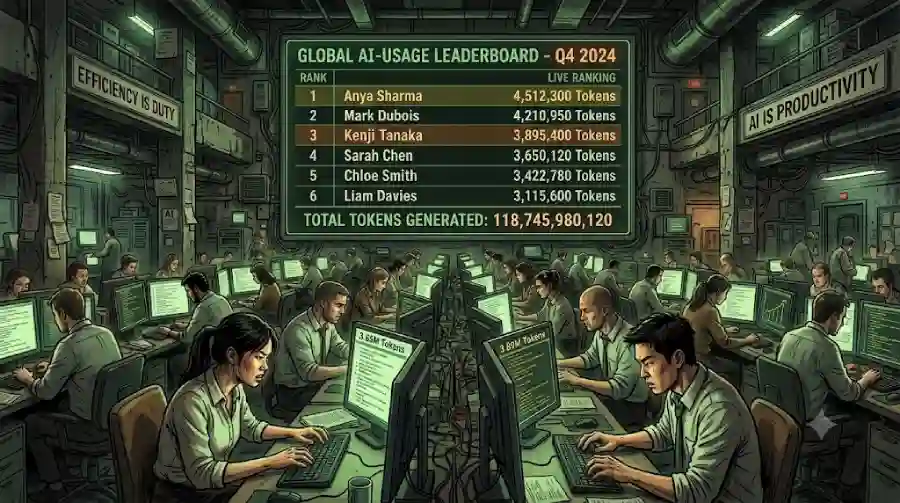
That, I believe, is precisely what these companies are facing. At Amazon, some team members admitted to using AI tools for unnecessary tasks just to inflate internal usage scores because that was what was asked of them. It wasn’t any different in Microsoft and Meta. Uber also had created internal leaderboards ranking teams by AI usage.
The base logic in doing all this was simple: companies thought that more AI usage meant more productivity. Sadly, the financial logic did not keep up with it, resulting in a budget blowout that forced the company to completely rethink its adoption strategy. Most companies, later, have stopped equating productivity with AI use.
There’s even a term for this: ‘tokenmaxxing.’ Employees who were urged to use AI constantly began burning through tokens on trivial tasks. Think of it like in a production floor, employees keeping engines running all night when no one’s there, just because the manager equated machines running with productivity.
Agentic AI compounds this problem: it can use up to a thousand times more tokens than a standard LLM query, depending on the number of steps needed to carry out an instruction. The problem is also that AI companies, under pressure from investors to show profitability in their books, have little incentive to warn you. Though costs of tokens in general are falling, this won’t mean cheaper enterprise AI for one simple reason – agentic models require far more tokens per task, which means this increased consumption will outpace falling unit costs.
WHAT IS THE SOLUTION
My solution was to spend time doing basic research the old-fashioned way first, and then investing time in crafting the specific prompt that genuinely needed AI’s depth – anticipating follow-up questions so I could ask them in one go to minimise usage. The result: even with a 20-query daily limit on Deep Research, I stayed well within it no matter how much ground I covered.
The corporate solution is that simple, and that hard. It requires building a culture of AI discipline – teaching employees not to use a Ferrari to go buy milk. Some AI systems are already building in a layer that routes lightweight queries to cheaper edge processing rather than expensive frontier models. That’s the right instinct, but it needs to be codified into company policy, without leaving it to the goodwill of individual engineers.
AI will have to prove itself reliable, with fewer hallucinations and a reduced need for human oversight, before the economics truly tip in its favour – it’s about becoming both cheaper and more predictable at scale. Until then, the onus is on companies to use AI intelligently, not just abundantly.
The irony is that though this increases profitability in the short term, it is ultimately also bad for AI companies eventually. A wave of enterprises hitting budget walls and retreating is not good for the industry’s long-term story. AI software prices have already climbed 20–37% over the past year, even as the backlash grows. The smarter AI vendors will pivot to helping their enterprise clients use AI optimally – because a customer who doesn’t go broke is a customer who won’t leave.
Which brings me back to where I started. The ah-ha moment I eventually had with Perplexity wasn’t about the tool at all. It was about me. Once I understood that deep research was not a search engine on steroids but a precision instrument for complex, layered questions, everything changed. The limits stopped being a problem, and the output was exactly what I needed.
Companies will have to work towards their own ah-ha moment. The ones who get there first, who learn to match tools to tasks rather than throwing everything at the most expensive AI in the room, will be the ones who discover what AI can really do – not as a replacement for the people they fired, but as a force multiplier for those they should never have let go.
In case you missed:
- Use AI or Get Fired: The New Workplace Ultimatum Hanging Over Every Job
- Does your company need AI or simple automation? Don’t spend more on wrong solutions
- After Years of Job Slashes, Companies Use AI to Boost People, Not Replace Them
- Indians Using AI For Faster, Better Work: But Psst.. Don’t Tell The Boss
- OpenAI, Google, Microsoft: Why are AI Giants Suddenly Giving India Free AI Subscriptions?
- Lost Job to AI? The Real Enemy Isn’t The Bot – It’s Your Boss. Here’s Proof
- Research finds AI ‘scheming’ is increasing; Is it, and will it destroy the world?
- The B2B AI Revolution: How Enterprise AI Startups Make Money While Consumer AI Grabs Headlines
- AI Browser or Trojan Horse: A Deep-Dive Into the New Browser Wars
- $725 Billion Investment, Best Tech Q1 Ever Says AI Bubble Isn’t Bursting, It’s Thriving