





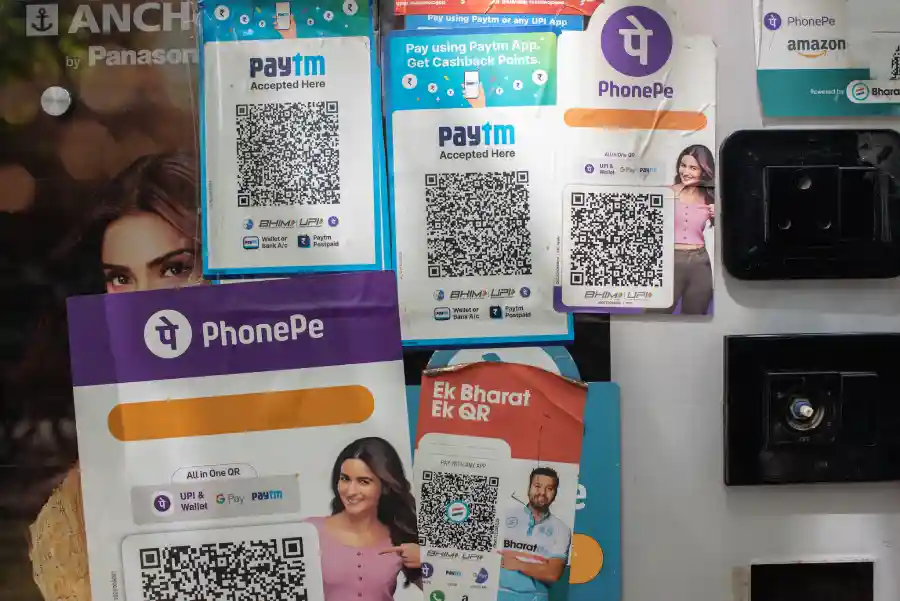
Unified Payments Interface (UPI) has transformed how India makes payments.
From transferring money to friends to making payments for groceries, almost all payments these days is done through UPI. But while the technology has made money transfer convenient, it has also opened up opportunities for fraudulent activities. And Artificial Intelligence is making that problem harder to control.
Fraudsters are now using Generative AI to create convincing messages, clone voices and impersonate trusted individuals. These scams existed earlier as well but they required a considerable amount of time and effort. With AI, the same can be achieved faster and reach thousands of people simultaneously.
At the same time, banks and financial institutions have also begun to employ AI to detect fraudulent activities. This has turned the UPI landscape into an AI vs AI battle.

UPI’s rapid growth creates new risks
Over the past decade, UPI has become the backbone of payment modes in India. According to the Reserve Bank of India’s Annual Report 2025–26, almost 86% of all retail payments in India were through UPI.
But the growth of digital payments has also directly contributed to the rise in financial fraud. According to another RBI report, digital payment fraud complaints increased from 2.6 lakhs in 2021 to 28 lakhs in 2025.
The total reported value of the frauds in 2025 amounted to ₹22,931 crores. Which is a major cause for concern!

AI is making scams more convincing
Previously, phishing links were manually written by fraudsters and hence often included poorly written messages, spelling mistakes and suspicious links.
But Generative AI has fixed all this. It helps fraudsters write professional-looking messages in multiple languages, create realistic fake voices and impersonate bank employees and government officials. Conversations can now be personalised and automated to seem more convincing.
The RBI has specifically identified deepfake impersonation and social engineering as growing risks to digital payments. The difference is that unlike traditional hacking, these methods convince unsuspecting individuals to transfer money themselves.
Banks are fighting back with AI
Even as fraudsters use AI, banks are also turning to AI to fight fraud cases. In 2024, RBI developed MuleHunter.ai, a tool designed to identify bank accounts used to receive and transfer fraudulent funds.
By March 2026, this system is being used in 26 banks across the country to combat digital fraud.
The National Payments Corporation of India (NPCI) is also looking at AI-powered fraud detection. According to an Economic Times report, the NPCI is currently testing an AI system to track suspicious money transfers across bank accounts in real time.
An AI-versus-AI cybersecurity battle
As fraudsters gain access to advanced AI tools, banks will also need to keep updating to fight back against new methods of fraud. This could create a continuous loop where fraudsters develop new techniques and banks figure out how to fight back against these methods.
The concern here is the cost to fight AI with AI. A report in the Indian Express claims that UPI operators have already warned the government that emerging AI threats could significantly increase cybersecurity costs.
Security-related infrastructure already costs approximately 10–20 paise per UPI transaction. As threats become more complex, payment companies will have to spend more on fraud detection, cybersecurity software and specialised teams.

The Last Word
While AI can help make digital payments more secure by identifying suspicious transactions faster, it cannot identify every single scam. This is especially the case when users get convinced to transfer the money themselves.
While AI can help in the fight, customers need to be made aware and remain cautious against urgent phone calls or messages that create panic and make them transfer money. Banks also need to report fraud cases faster and constantly update their software to fight suspicious activity.
As AI continues to become more powerful and UPI usage continues to surge, the future of UPI security may depend on whether banks can use it to detect fraud faster than criminals can use it to commit fraud.
In case you missed:
- India Is Exporting UPI Faster Than Ever. The World Is Buying In
- How WhatsApp is becoming much more than a messaging app in India
- AI Agents are Starting to Use Computers like Humans
- India May Be Entering Its “Applied AI” Era
- How Tech is Transforming Investigations for the Indian Enforcement Directorate
- No More Budget Phones: India is Buying Premium Phones Now
- India Turning Into One of the World’s Biggest Gaming Markets
- India’s Next AI Advantage Lies Beneath the Ocean
- The Hidden AI Boom Transforming India’s Tech Economy
- From Smartphones to AI Hardware: India’s Next Manufacturing Bet