



India finds itself at a place in the world of AI where most say the glass is half empty. Satyen K. Bordoloi says it is actually half full.
The news of Sarvam AI offering Chinese models to its subscribers was met with both disappointment and consternation in India. Sarvam was supposed to be India’s answer to the foundational models coming out of the US and China, the indigenous, sovereign AI.
Then, on 16 November, it launched Token Factory, an inference platform hosted on Indian infrastructure, and in the catalogue, alongside Sarvam’s own 105B model, there were DeepSeek V4.1 Flash, Kimi K3.1 Pro from Moonshot AI, GLM 5.3 from Z.AI, and Qwen from Alibaba. Six of the eight models on offer were Chinese; one was Sarvam’s own. The immediate and loud backlash to it asked just one question: has India missed the AI bus entirely?
The naysayers have a point. But only half of one.
WHAT SARVAM IS ACTUALLY DOING
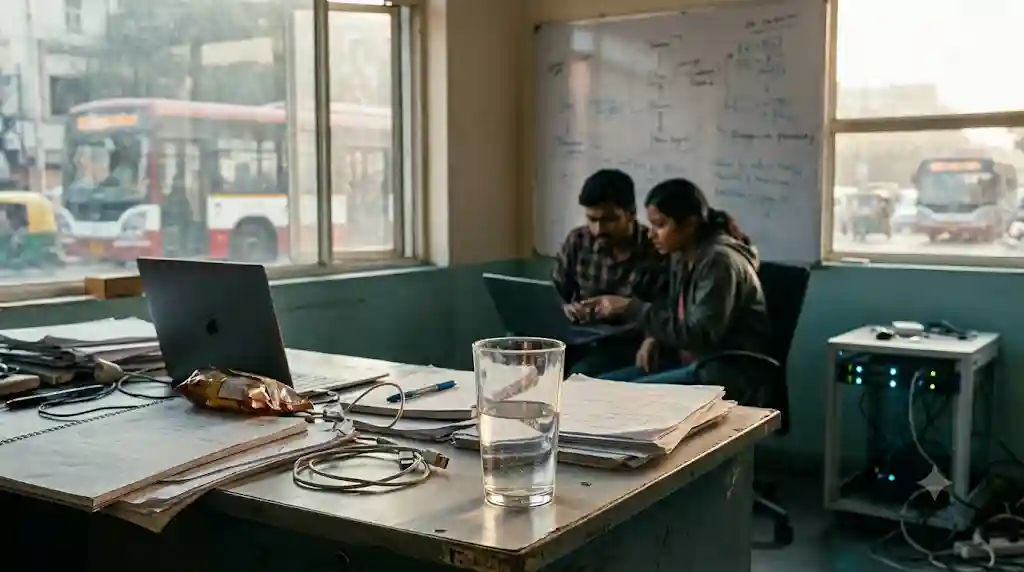
Strip away the wounded nationalism and look at what Token Factory is. It is an inference stack – a service that lets startups and enterprises run large models on GPUs located in India without buying the hardware themselves. The world already has those like Together AI, Fireworks AI, and OpenRouter doing exactly this for Western models. Sarvam is doing it on Indian soil, with Indian compute, so what if the models are open-source Chinese ones?
Let’s not forget that Sarvam is a business whose investors want returns, and that the company needs to survive long enough to build frontier models that are on par with the world. What Sarvam seems to be doing is funding its survival with inference revenue. Offering Chinese open-weight models that are cheap, capable, and legally redistributable is nothing but a pragmatic way to keep the lights on while the harder work of foundational research continues. As a business, the company will take its own course, as it should because a startup that dies because its founders chose ideological purity over survival helps no one.
That does not mean that the criticism is wrong. Sarvam has a lot of the Government of India’s money. This means that, in a way, the public money is going into subsidising GPUs that are primarily hosting Chinese models. And let’s not forget the data security concerns about Chinese models.
A NEW DIRECTION FOR INDIAN AI
India does not need to copy OpenAI, Anthropic, DeepSeek, or Z.ai. Because that race already has too many players, is capital-intensive, and is moving too fast for a new entrant to catch. Instead, we can find a better template in what India did during the rise of the internet. We did not try to reinvent the network or the computer, but our services sector, from BPOs, software maintenance to general back-office operations, rode those technological developments. It isn’t too different in the AI era, and we don’t need to be hung up on foundational models, when the tools that can be built atop them are where a big part of the pie lies.
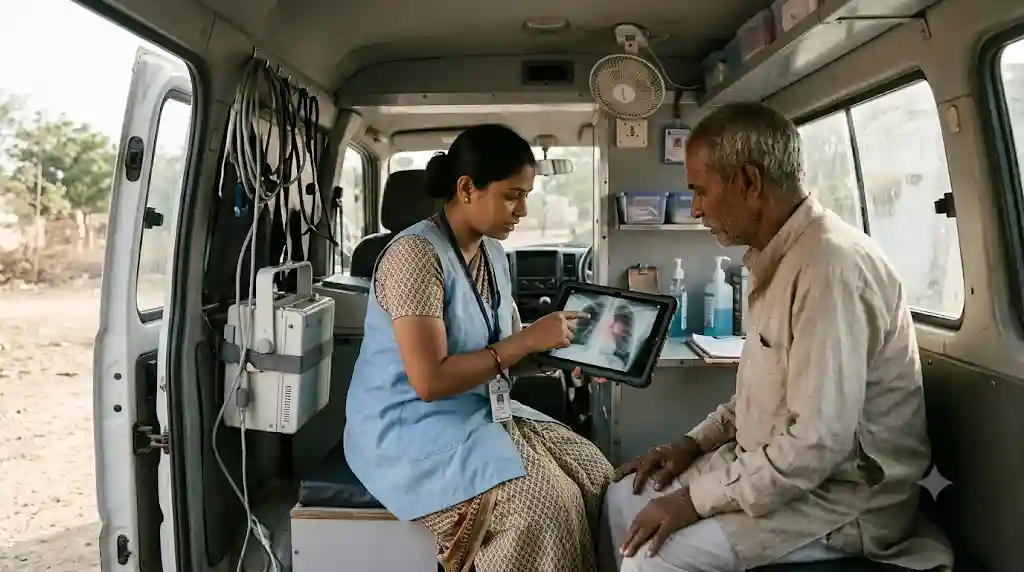
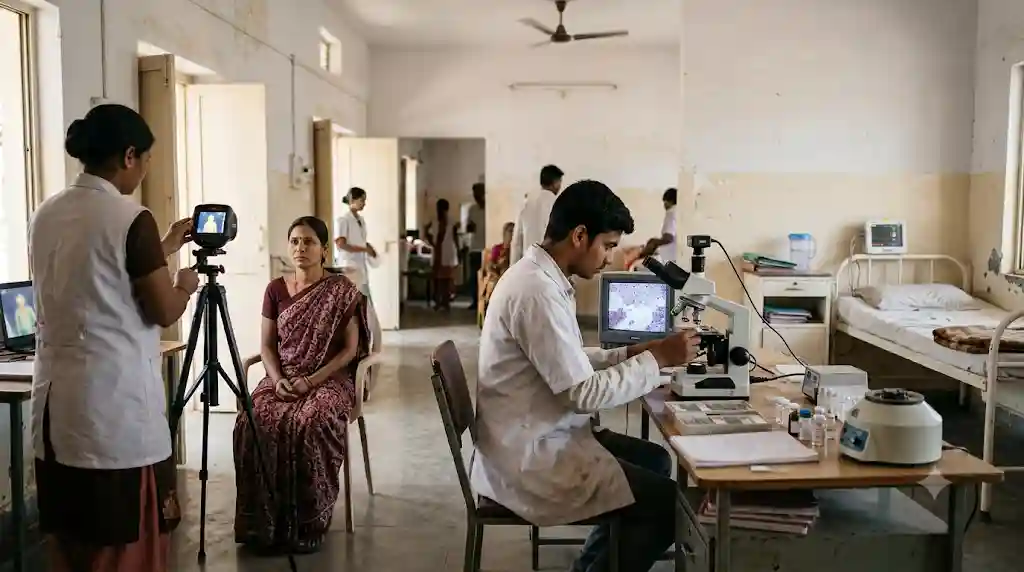
And it’s already happening, as I have written in the past. We find this in Qure.ai with their algorithm that is trained to scan chest X-rays and CT scans for TB, lung cancer and stroke. Or Niramai’s thermal imaging and machine learning for non-invasive breast cancer screening. In SigTuple’s pathology microscopy and blood sample analysis. In Dozee turning a simple bed into a contactless vitals monitor, a la ICU-lite for smaller towns, or CropIn’s digitised farmlands, KissanAI’s voice-first assistant for farmers. These are just a few of the hundreds, perhaps thousands, of effective tools already functional and many under construction in this country.
We did not need to build a GPT-5 for this. What we needed was founders to understand our own problems, from our chaotic public health system to our fragmented farm plots and linguistic diversity. That understanding is the moat that will drive India’s AI.
THE VIBE-CODING PIPELINE
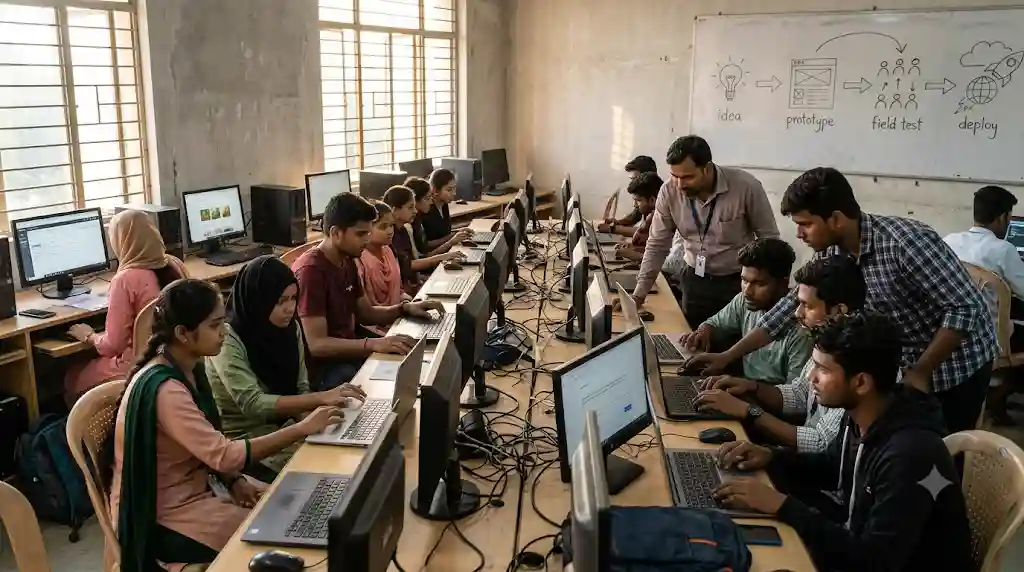
The awesome news is that to build tools for the masses just like these, you no longer need a PhD in machine learning. Instead, we have Vibe Coding, where we use natural language prompts to generate prototype software. The distance between an idea and working software is just a prompt away today, and all it requires is two things: basic literacy and a hunger to solve local problems. India has both of these in ample measure.
Yet, though anyone can prepare a prototype, turning it into something useful, safe and deployable requires domain knowledge and the ability to iterate and scale up using actual experts. Tens of thousands of tools are being generated daily using vibe coding, but the challenge is to create a pipeline to turn them into market-worthy, usable solutions.
Hence, India’s power can come from turning vibe coding into a pipeline. Teach vibe coding as a subject in schools and colleges, where you inspire the students to bring real problems from real communities and connect these to mentorship and distribution. And we have proof that it will work. India’s own Emergent, the AI app-building, i.e. vibe coding platform launched in 2025, has surpassed 8 million users globally and reached $120 million in annual run-rate revenue within a little more than a year of launch.
WHY THE GLOBAL SOUTH IS OUR MARKET
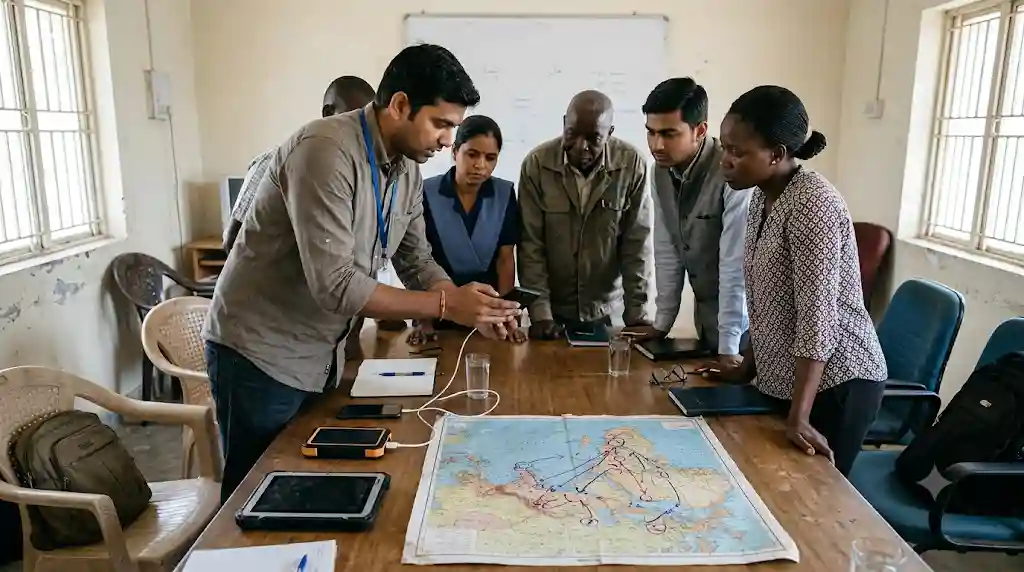
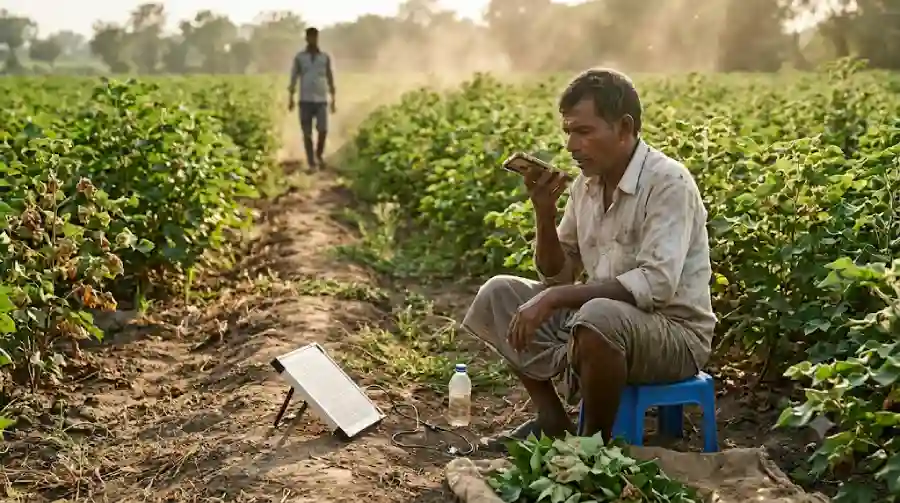
Look at India’s neighbourhood. We are not neighbours to Silicon Valley but nations like Bangladesh, Sri Lanka, Pakistan and Nepal. Add to that Africa, which is closer to us than the West is, and you see a clear business opportunity emerging. What these countries need are not frontier models, but tools that work on a cheap phone, in a local language and one that only gets intermittent connectivity. Voice models, image-based guidance, telemedicine kits, and offline assistants are already being deployed across exactly these settings. India is closer to those constraints than the Global North is, and in building tools for our people, we build one for them by default.
CropIn’s presence across Africa and Asia is not an accident but a result that came out of designing for smallholders, rather than the enterprise clients of OpenAI. Wadhwani AI’s pest and TB work is explicitly built for “underserved communities in India and other developing countries”. The government’s SAHI framework for safe, ethical, inclusive AI in public health is another piece of the same puzzle. These may look like insignificant side projects, but in truth are the beginning of an export category India could rule.
Our fascination for Jugaad, i.e. improvisation under constraint, can also be a design philosophy where we build with what we have, for the constraints we actually face, built for those like us because those with the money are already being served by someone else. This can become India’s niche, as BPOs became it a quarter of a century ago.
BUT WHAT ABOUT FOUNDATIONAL MODELS
I am not advocating that we stop building foundational models. Quite the opposite. A nation of our scale needs people who understand how these systems are built, and not just the ability to connect a tool to an API. But the money should go to those who are passionate about it, instead of the loudmouths I see, be it in panel discussions or government bodies. People who have learnt to market themselves or take advantage of their proximity to power. Talent should decide funding, not obsequiousness to the ideology of the ruling dispensation. And the government, its job is to separate the two – the wheat from the chaff.
HOW BIG BUSINESS CAN HELP
True innovation has rarely come from big, established businesses. In India, big businesses have been better at scaling existing models than at creating the field for true innovation to emerge. Hence, the companies with capital should get busy laying the data centres, the GPU clusters and the digital backbone – the infrastructure that a million tool builders will need. These companies will make money doing this. And that’s fine.
But I strictly believe that real innovation in India’s application of AI will not come from Mumbai boardrooms or a Bengaluru unicorn’s office. It will come from tier-2 and tier-3 cities, from small towns where the cost of survival is lower, and the desire to prove oneself is exponentially bigger. It will come from young women and men who may not speak flawless English but who understand the problem in front of them better than any visiting consultant ever could. In the big cities, we’re all burdened by the pressure to make rent. In the smaller ones, there is still room to make something real.
The work of government and big business should be to support those builders, not to lecture them, not to burden them with compliance before they have a product, and definitely not to mistake the proximity to power for the presence of substance.
AI is never going away. And the next phase of its growth is not in who trains the biggest models, but who builds the tools that make everyday life measurably better for the world’s majority. And this majority does not live in the Global North. The world is at the start of a tool-building revolution. We do not need to win the model race to lead in it. Instead, we need to take the revolution seriously – and get out of the way of the people already building.
India may have missed the first AI bus. But the second one, should we choose to board it, could be much more fulfilling for our nation and the people of the Global South.
In case you missed:
- The AI Peace Race: Why India’s Real Opportunity Starts Where the Arms Race Ends
- South Korea Made Generative AI a Citizen’s Right: Should the Rest of the World Follow?
- Not Fastest, but Frugalest: Why Indian EVs Are Suddenly World-Class
- GoI afraid of using foreign GenAI in absence of Indian ones? Here’s how they still can
- Indian AI’s Power Problem: We Woke Up Late to AI, We’re Still Half-Asleep
- 5.6 Cr Pending Cases: How India Is Letting AI Slip Through Even As World Courts Revolution
- The Airbound Story: While India’s Geniuses Flew Away, a 20-Year-Old Built Something That Flies Back
- Anthropic Accuses Chinese AI of “Stealing”, Internet Points Finger Back At Them
- $725 Billion Down, Trillions To Go: Why The AI Bubble Refuses To Burst
- The Weight of the World: Why the Open vs. Closed AI War Is Really About Who Controls the Future