



The AI infrastructure wave is lifting the most unexpected boats, including the makers of Ajinomoto and toilets, and that’s exactly how you know the boom is real, writes Satyen K. Bordoloi
Even as the US economy is passing through a kind of recession on most fronts, it has still not been called one because the rising tide of AI companies has lifted the US economy so high that it is masking a recession. Most of the AI companies, including the Magnificent Seven – Google, Amazon, Apple, Meta, Microsoft, Nvidia and Tesla – are known.
But in this list are also some of the most unexpected companies, which makes AI reporters like me write sentences we never thought we would have to: a toilet maker and food flavouring giant are two of the most exciting investment plays on the planet.
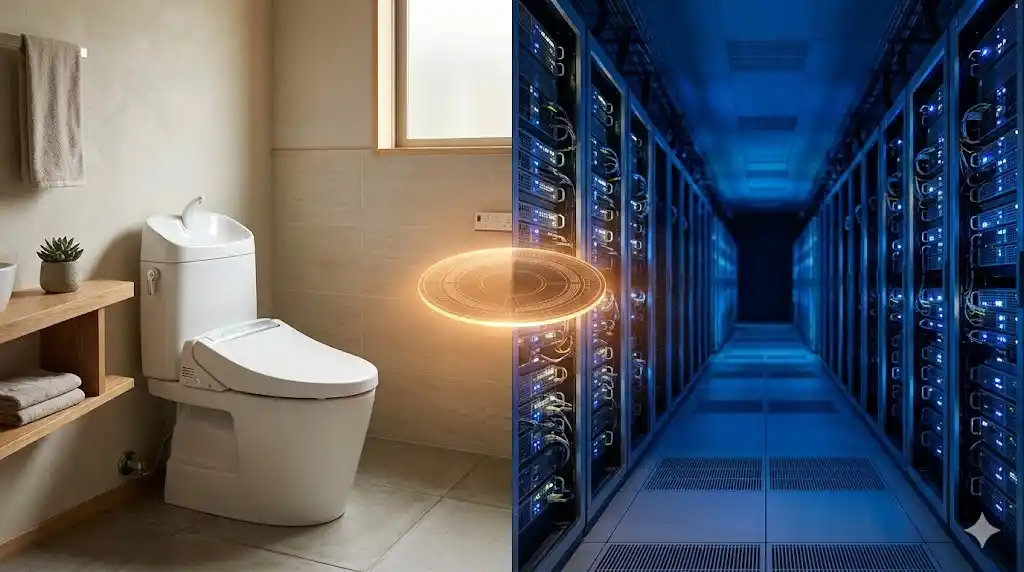
Japan is fascinated with fancy toilets. And among the companies that make the most fancy ones in the country, is one called TOTO Ltd. Its shares surged nearly 40% in the first two months this year alone, and not because they’re falsely claiming to have AI in their toilets – a term known as AI washing. Instead, TOTO’s ceramics business — a division it has been quietly running since 1984 — has turned out to be sitting at the very heart of the AI semiconductor supply chain. And investors who noticed this before the rest of the world are now plucking notes from the Wall Street money tree.
And Toto is not the only one. It’s part of a pattern of companies in the AI support business. Together, they tell us something important about the nature of the current AI buildout that goes far beyond the numbers that make global headlines.
A Toilet Maker With an AI Monopoly
Let me explain what TOTO actually does in the semiconductor world, because the details are more interesting than the clickbait headlines.
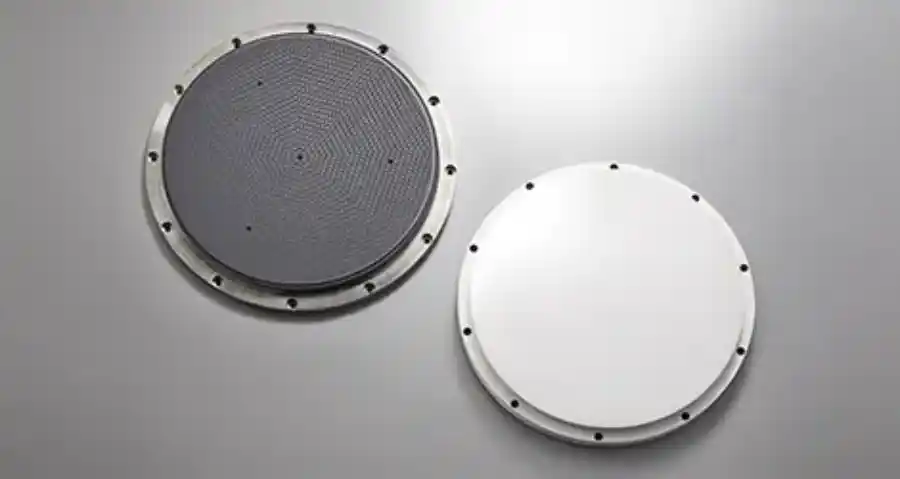
TOTO’s ceramics division produces electrostatic chucks: precision ceramic plates that use electrostatic force to hold silicon wafers in place during critical manufacturing steps like etching and deposition. These aren’t your typical bathroom fixtures. They are highly engineered components that must withstand extreme thermal stress, resist contamination, and be manufactured to tolerances so tight that even a microscopic flaw can destroy an entire production run. After all, 1-nanometer chips aren’t a child’s ceramic play!
Now TOTO is the world’s second-largest producer of these electrostatic chucks, crucial to manufacturing NAND flash memory: the same memory that powers the storage inside every AI data centre. TOTO’s advanced ceramics division, started more or less as a side business, now carries an operating margin that has surpassed 40% for the fiscal year ended in March: a dramatic rise from just under 9% five years ago and one that points to the size of the AI boom in the world.
When TOTO reported record annual earnings for the fiscal year ending in March — operating profit rising to ¥53.8 billion — the rally was driven almost entirely by this ceramics division. Leading UK-based activist investor Palliser Capital, which took a significant stake in TOTO, sent a letter to the board calling the company “the most undervalued and overlooked AI memory beneficiary” in the market.
Why This Matters More Than It Seems
I have written before, in multiple viral Sify articles (viral because few are seeing, saying it), that what seems like an irrational exuberance towards AI capex to the unaware, is in truth something far more significant, even though mundane: the updating of the world’s outmoded digital infrastructure for the digital age to the age of AI. TOTO isn’t just a small boat being lifted by the rising AI wave but a vital proof of my argument, coming from a most unexpected quarter.
The very reason that makes a toilet company a critical AI supplier is the same reason the AI boom is not a bubble: because it is not a software play like the dot com bust quarter century ago, but an infrastructure story. And infrastructure, as you might have heard, runs on physical things – on brick and mortar that houses AI data centres, and ceramics that hold wafers in place, on films that insulate chip layers, on chemicals that clean silicon, on concrete and power and cooling and the ten thousand other unglamorous components that make a data centre function. The hundreds of billions, adding up to trillions in a few years, is made up of this boring stuff.
And TOTO is not the only proof of the AI pudding. If anything, there are stories out there that are stranger still. Take your “favourite” food flavouring: Ajinomoto.
The Seasoning That Runs Nvidia
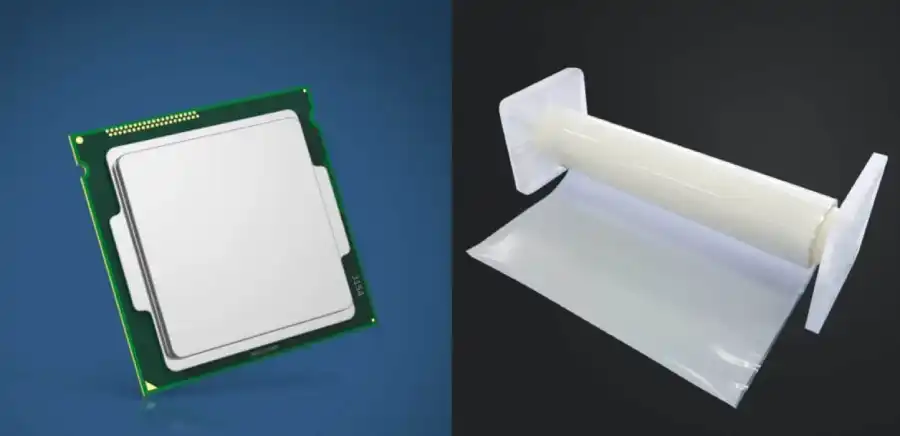
Ajinomoto is actually a Japanese food giant famous for Kikunae Ikeda’s discovery of umami and MSG (Monosodium Glutamate) seasoning found in kitchens across Asia. Yet this food-flavouring company quietly controls something that’s far more valuable than a notorious flavour enhancer: approximately 95% of the global supply of Ajinomoto Build-up Film (ABF), a critical semiconductor material without which modern AI chips simply could not function.
ABF is an ultra-thin insulating layer that sits inside the substrates connecting advanced computer chips to circuit boards. No one – not Nvidia, Intel, AMD or ASML has found a way to bypass this critical link. And the technical barriers for this Ajinomoto that flavours your AI, are extraordinarily high: ABF must simultaneously satisfy requirements for low thermal expansion, low dielectric loss, and high insulation, while maintaining exceptional flatness and yield during multi-layer stacking – a minute flaw in any layer can lead to the entire packaging substrate being scrapped.
The origin story of how Ajinomoto found its way into flavouring your AI is wonderfully improbable. Ajinomoto began experimenting with chemical byproducts from MSG production in the 1970s. Engineers, seeking value in what others considered industrial waste, eventually developed a synthetic resin with properties ideally suited to silicon chip packaging. The transition from food chemistry to advanced materials was not planned – it was born out of a necessity to find usefulness in what was being thrown away.
The result: as of April 2026, Ajinomoto’s stock has risen by more than 40% cumulatively, hitting a record closing high in February, as its electronic materials business transforms from a “neglected side business” into the company’s most valuable growth engine. The global ABF market, valued at $11.56 billion in 2026, is projected to reach $49.63 billion by 2032 — a compound growth rate of 27.5%. Palliser Capital, which spotted the TOTO story, has also taken a stake in Ajinomoto.
The Cosmetics Company In AI Boom
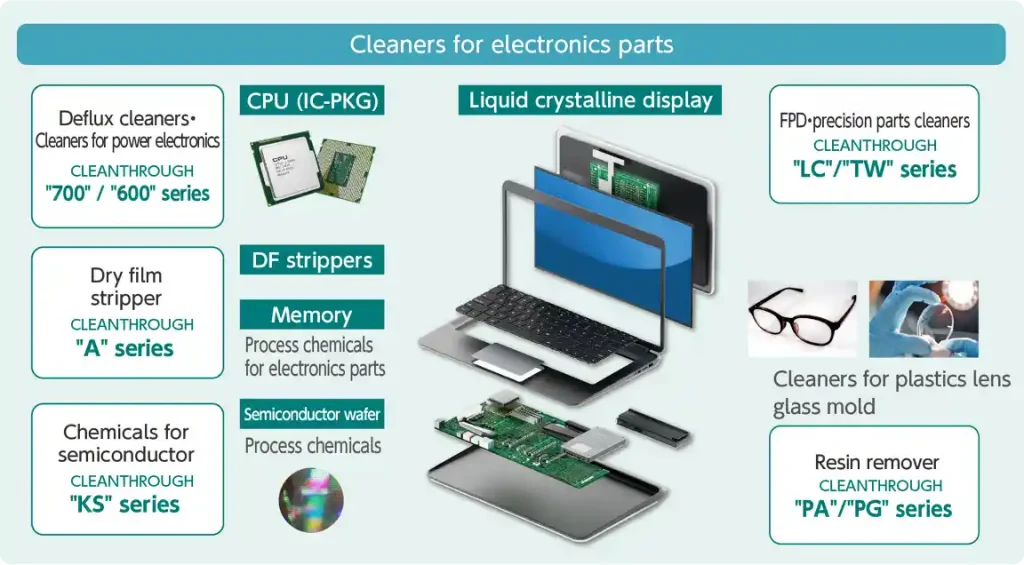
Japan’s cosmetics manufacturer, Kao is another unlikely AI winner. That comes from a growing business in cleaning agents for semiconductors — wafer cleaning being as chemically precise and as essential to chip manufacturing as any of the headline processes. Cleaning adds up to about a third of chipmaking steps, and Kao’s CLEANTHROUGH product line has been designed to strip particles and residues with superhuman precision. With the rise in demand for AI chips, demand for Kao has also risen, and markets have also taken note of this company, with investors now seeing this company not as a side business but as its hidden growth engine.
There is an important story you must remember in all of this that is vital for you to understand why the AI boom is not going to go bust. That’s because the AI boom is not a software play, but a real infrastructure initiative.
And like the railway boom in the 19th century USA enriched steel manufacturers, coal miners, and telegraph operators or the internet boom of the 1990s – despite the bust – not just ultimately enriched logistics companies, advertising networks and undersea cable operators, but shaped the world we have today, AI is boosting all kinds of different companies: from a toilet maker, to a seasoning to even a cosmetic brand. This is not where you look for the future of artificial intelligence. Yet, this is exactly where you find proof of the most real, structural and durable returns of this boom.
The AI bubble sceptics continue to look at the flashy names and breathless press releases. The people actually profiting from the boom are looking at the list of parts that make AI possible. And if you’ve been reading my pieces, you know where my money is at.
In case you missed:
- $725 Billion Down, Trillions To Go: Why The AI Bubble Refuses To Burst
- The Great AI Correction of 2026: Why the ‘Bubble’ Popping Could be the Sound of Growing Pains
- Coopetition: Why’s NVIDIA Building AI Models to Compete With Customers It Sells Chips To?
- $725 Billion Investment, Best Tech Q1 Ever Says AI Bubble Isn’t Bursting, It’s Thriving
- The AI Prophecies: How Page, Musk, Bezos, Pichai, Huang Predicted 2025 – But Didn’t See It Like AI Is Today
- NVIDIA’s Strategic Pivot to Drive our Autonomous Future with Innovative Chips
- Great quantum poker: Who’s bluffing, and who is holding the aces?
- Forget Chernobyl: Your Instagram Feed Might Cause The Next Nuclear Disaster
- Why the Alleged, Upcoming AI Crash Is Never Going To Happen
- The B2B AI Revolution: How Enterprise AI Startups Make Money While Consumer AI Grabs Headlines