


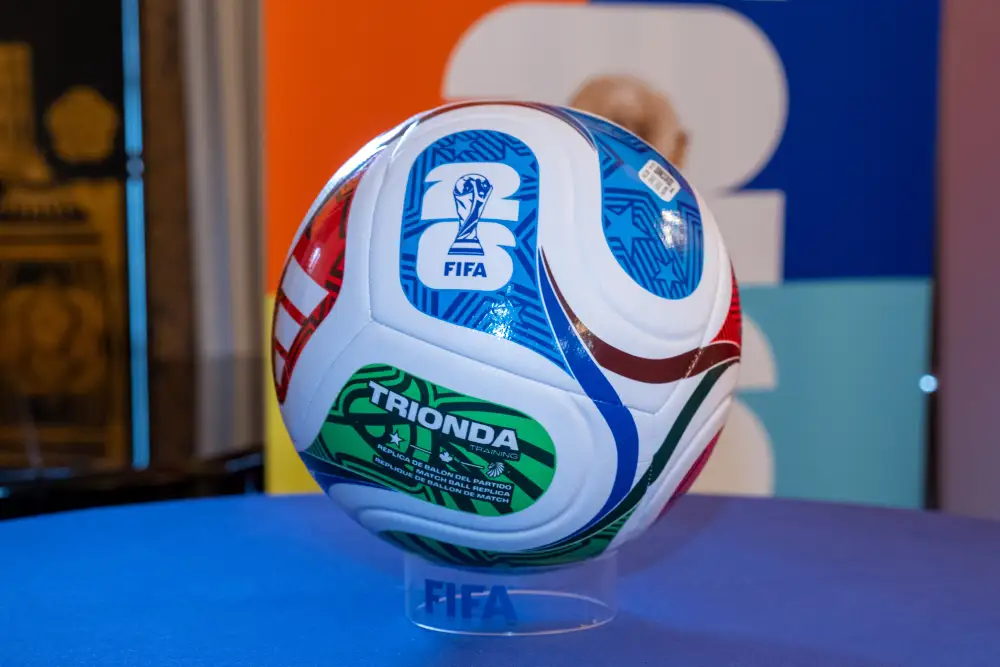

A closer look at the technological marvel that is the official match ball of the ongoing FIFA World Cup…
Every four years, at the FIFA World Cup, Adidas unveils a new football and in 2026, the latest edition is called the Trionda. But unlike the previous ones, this year’s version is a connected sports device with sensors, advanced materials, aerodynamic engineering and real-time data capabilities.
Called Trionda, to mark the first time three countries are hosting the sporting spectacle, this ball represents one of the biggest technological upgrades ever seen in football. It actively communicates with the referees, providing live positional data.
It is the fruit of years of computational modelling and wind-tunnel testing.
A Football that Generates Live Data
The biggest technology inside the Trionda is the Connected Ball Technology, which is a miniature electronics setup that has been embedded deep inside the football.
Within the ball is an Inertial Measurement Unit (IMU), a sensor suite which has accelerometers and gyroscopes. It can measure movement, acceleration, rotation and impact. The sensor inside the ball captures motion over a hundred times a second.
This data is transmitted in real time into FIFA’s semi-automated offside system and Video Assistant Referee (VAR) platform. It tells the system the exact moment a player touches the ball and this level of precision helps referees determine offside calls with far greater precision than relying solely on camera footage. It also helps with handballs, deflections, corners as well as disputed possession changes.
The Al Rihla ball used in the previous World Cup in Qatar also had the sensor but this time, Adidas has redesigned the sensor placement so precisely that the electronics remain perfectly balanced with the football without affecting its flight characteristics.
The All-New Four Panel Design
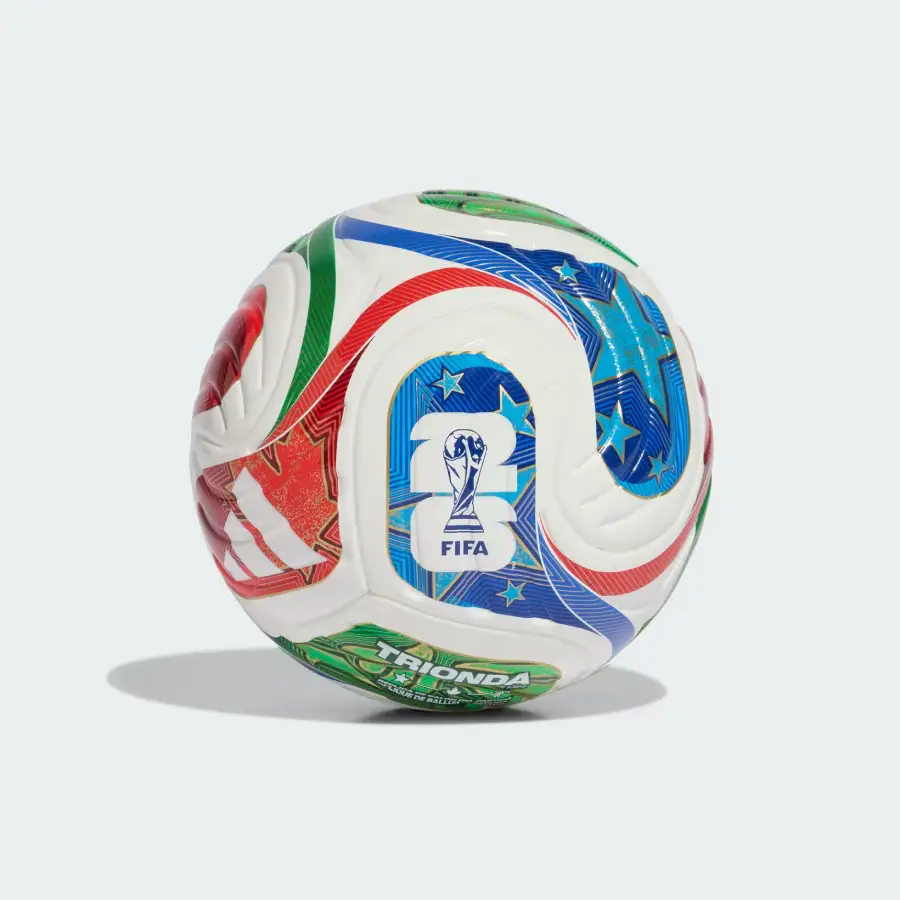
Traditionally, footballs used to have 32 stitched leather panels. To improve the aerodynamics of the ball, that number had reduced to eight and then to six in previous iterations. But the Trionda has been designed with just four thermally bonded panels, this is the fewest number ever used in a FIFA World Cup ball.
Reducing the number of seams creates a smoother surface which decides how the ball behaves during powerful shots, crosses and long passes.
Additionally, instead of the usual stitching, the panels have been heat-bonded, which eliminates water absorption while increasing durability and maintaining a perfectly spherical shape.

Computational Aerodynamics Replaces Trial and Error
Designing a football involves more than just testing it on the field. The designers of the Trionda utilized CFD models for their understanding of how airflow interacts with the ball.
According to a WIRED article, the Trionda, unlike other balls in the World Cup history, has a less severe aerodynamic drag crisis. Because of this, the separation of airflow off the Trionda’s surface helps stabilize the ball’s flight. The improvements to the ball’s aerodynamics help reduce erratic movement.
Aerodynamic improvements help to enhance the quality and stability of the Trionda’s flight which helps players on the field and referees as well.
Precision Manufacturing Meets Traditional Craftsmanship
This year’s World Cup ball is made with a combination of automated thermal bonding, precision quality inspections, robotic testing and a little bit of hand sewing.
Every match ball goes through a rigorous evaluation by FIFA standards and testing for weight, circumference, rebound, water absorption, pressure retention and sphericity.
The ball is produced in Sialkot, a city in Pakistan, which is responsible for about 70% of global football production.
The Last Word
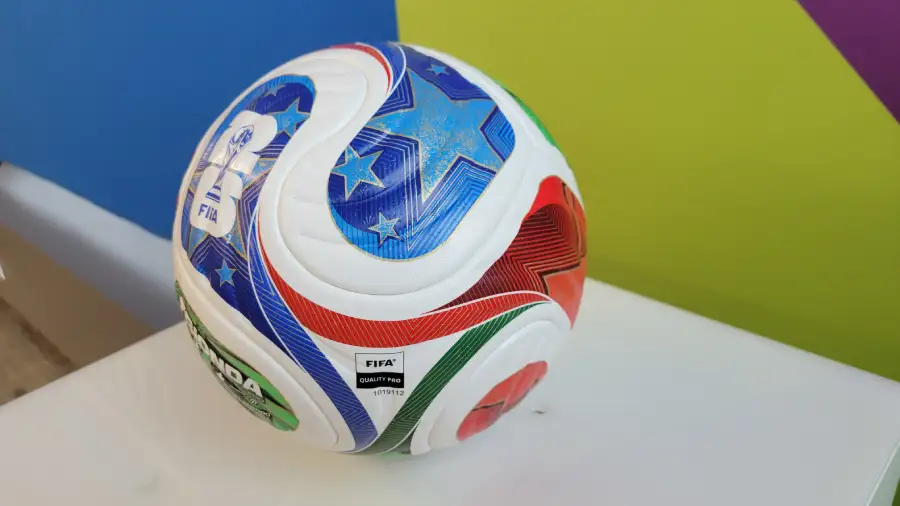
The Trionda, the official 2026 FIFA World Cup ball, is not just another piece of sporting equipment. It is a technological marvel and a milestone in professional sport.
For the players, it adds consistency and control. For the officials, it reduces errors. For broadcasters, it enables richer visualisations and replay analysis. And for the engineers who designed it, it goes to show how electronics can be integrated into sports equipment without compromising its physical behaviour.
The Trionda is proof that hardware, sensors, wireless communication and AI-assisted officiating have become inseparable from the future of sport.
In case you missed:
- AI Has Already Predicted the 2026 FIFA World Cup Winner?
- From Smartphones to AI Hardware: India’s Next Manufacturing Bet
- How Operation Sindoor Defined a New Era of Technology in Defence
- SpaceX’s Starship: A Heavy-Lift Future for 2026
- Are Your Headphones Safe? Harmful Chemicals Found in Popular Brands
- AI Isn’t Taking Your Job, the Story Around It Is
- Google’s HOPE Model: A Big Leap Toward AI That Never Forgets
- OpenAI says AI could Soon Launch Cyberattacks on its Own
- How to turn your Old Smartphone into a Home Security Camera
- India’s Tech Renaissance: From Follower to Global Trendsetter