




South Korea became the first nation to treat generative AI as a public utility, a move bound to shake up the world of AI dramatically, writes Satyen K. Bordoloi
Remember the famous adage: Give a man a fish, and you feed him for a day; teach a man to fish, and you feed him for a lifetime. What if you give him a fishing rod instead? That is what South Korea has set out to do when it makes generative artificial intelligence into a public utility by offering all 52 million of its residents unlimited usage with no subscription, paywall or token limits. That is like giving the entire population of all of North East India free AI.
On August 28, 2026, the South Korean government selected three consortiums – SK Telecom, Kakao, and KT – from six bidders to build and operate a nationwide, government-backed generative AI service for all its citizens. The service, called “AI for Everyone” or “All for AI,” will be free, unlimited, and without token or usage restrictions.
Beta testing will begin in September with a full rollout expected by December. The government has set aside about 10 trillion won, nearly $7.2 billion, for AI-related spending in 2026, triple what it spent the year before. It will also provide the three operators with a combined 512 Nvidia’s top-tier B200 graphics processing units to handle the computational load.
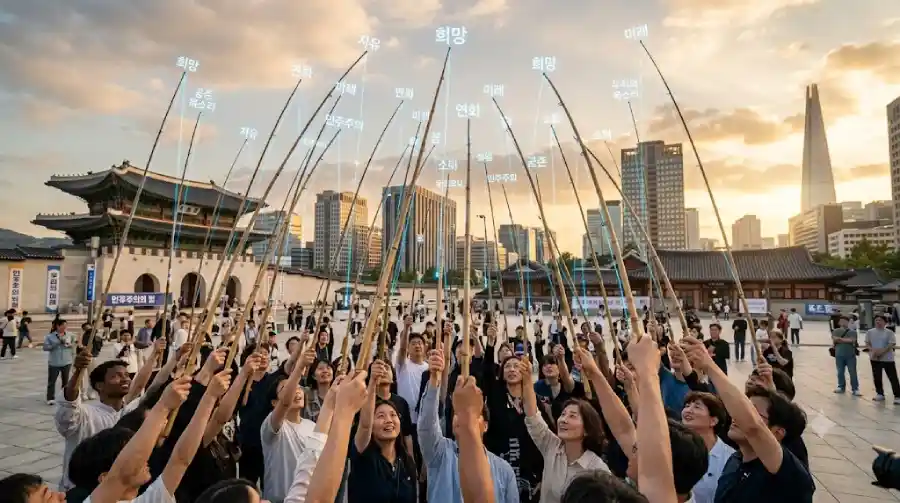
The question is why? Why should any country, let alone one with one of the world’s most advanced digital infrastructures, decide to give away something that companies like OpenAI and Google charge good money for? And more importantly, is this the path the rest of the world should take?
The answer to the first question reveals itself like the layers of an onion. The outermost layer is simple: South Koreans are already using AI, in numbers larger than the rest of the world. As per government estimates, over 20 million South Koreans already use free versions of gen AI tools, with a quarter of the population already paying for AI services- a staggering number of paid users if you consider the United States, where only about 2 per cent of people pay.
Not just that, but South Korea also has the fastest user growth acceleration at 43 per cent – the fastest in the world. Unlike a lot of the world, that nation does not have to be sold on AI; it’s already bought into the idea and all that the government has done is decide that if people are paying to use it, we might as well help build domestic models to serve national interests.
The second layer is AI sovereignty. This is the phrase that appears in almost every official statement the government makes about the program. South Korea is one of the world’s most technologically advanced nations but, like India, has no major foundational AI model of its own. It makes the world’s best memory chips, but does not make the world’s best AI chips. That, to Seoul, is a strategic vulnerability which the “AI for Everyone” program has been designed to change.
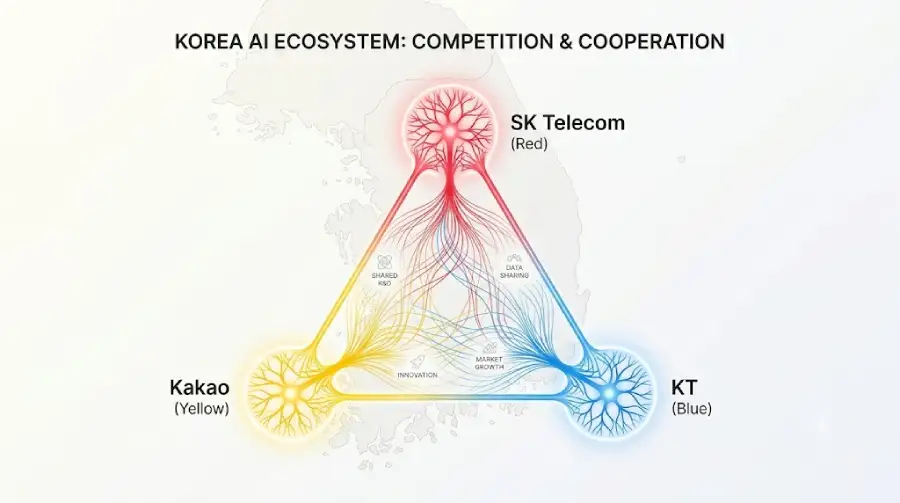
To ensure it does, the government has put down a strict condition that at least 50 per cent of each service must run on the operator’s own domestically developed foundational model, and another 30 per cent must come from other Korean developers. That means at least 80 per cent of the AI powering these services has to be homegrown. Foreign models are permitted only in the rarest cases where domestic technology just cannot do the job. And if they are used, these models receive no government subsidy, which means that domestic companies are inclined to find a local solution to it.
The third layer is economic, where the government wants to turn AI into public infrastructure, very much like roads, electricity, or broadband internet. The idea is that if everyone has access to a competent AI assistant, the productivity gains will ripple through the entire economy of the nation.
From small businesses calculating their taxes or checking their eligibility for government support, to parents creating personalised educational content for their children, to navigating the labyrinth of public services including booking doctors, finding housing, filing paperwork… this AI push is supposed to make everyone an expert without needing an actual degree.
Presidential Chief of Staff for Policy, Kim Yong-beom, argued that: “If cash helps people consume, computing helps them produce. It is less like giving someone a fish or teaching them how to fish than putting a fishing rod into everyone’s hands.” Touche.
South Korea sees this as a market correction. As the global AI industry becomes dominated by a handful of American and Chinese companies, all of which are businesses with shareholders, they are bound to raise prices or restrict access, as we have already seen, moving towards what is most profitable to the company. In contrast, a state-backed free alternative means South Korea is telling the market that they’ll not be held hostage to the prices set either in Silicon Valley or Shenzhen.

The only problem with all this: is it sustainable? Ten trillion won is a lot of money, even for a wealthy nation like South Korea, and the subsidisation of free AI service to 52 million people will be staggering. The other problem is that operators have been permitted to generate revenue through premium features and specialised services, which could mean that the freemium models would be government-funded, in which case, who would own the data?
What happens to data privacy when the government is both the funder and the integrator of an AI that handles medical appointments, tax filings, and housing searches?
Yet South Korea’s gamble has a strong logic to it that is hard to deny, where AI is treated not as a luxury like the rest of the world is treating it, but as a basic right. That is a philosophical shift in thinking and not just a policy one. It reflects a recognition that in an era where AI runs everything- from who to hire or fire, who you date, to who gets left behind- AI no longer remains a perk, but a prerequisite for equality.
So, is this the way to go for the rest of the world? Well, it depends on who you are. For a small country with limited domestic AI capability, the answer is no. Even for larger countries like the US, China and perhaps even India, the market is already providing cheap or free access to good and powerful AI models that anyone with a little knowledge can use.

However, for a mid-sized economy that wants to maintain technological sovereignty without relying on the superpowers, South Korea’s experiment might be worth considering because it offers a third alternative of a public-private partnership to guarantee a baseline level of access that also leaves room for commercial innovation.
In the end though, South Korea’s action will go down in history as a political decision, one that could shape not just the future of the technology, but of nations and the world as such. Because what South Korea is saying is that in this century, this decade on, the most valuable resource a nation can give its citizens is not necessarily land, oil or even money – but intelligence, distributed and democratised. Whether this proves to be a visionary will depend on the citizenry, whether they use the fishing rod to catch fish, or simply waste it away.
Yet, one thing is certain: South Korea has rolled the dice, and the rest of the world is eager to see what comes out of it.
In case you missed:
- South Korea Passes World’s First AI Laws: Visionary or Foolish?
- The Net That Caught Itself: How the World Learned to Cage the Internet
- OpenAI, Google, Microsoft: Why are AI Giants Suddenly Giving India Free AI Subscriptions?
- Not Fastest, but Frugalest: Why Indian EVs Are Suddenly World-Class
- GoI afraid of using foreign GenAI in absence of Indian ones? Here’s how they still can
- After Years of Job Slashes, Companies Use AI to Boost People, Not Replace Them
- Digital Heartbreak: Why China Is Banning AI Boyfriends, Should the West Follow
- How India Can Effectively Fight Trump’s Tariffs With AI
- The AI Peace Race: Why India’s Real Opportunity Starts Where the Arms Race Ends
- How Can Indian AI Startups Access Global VC Funds?