



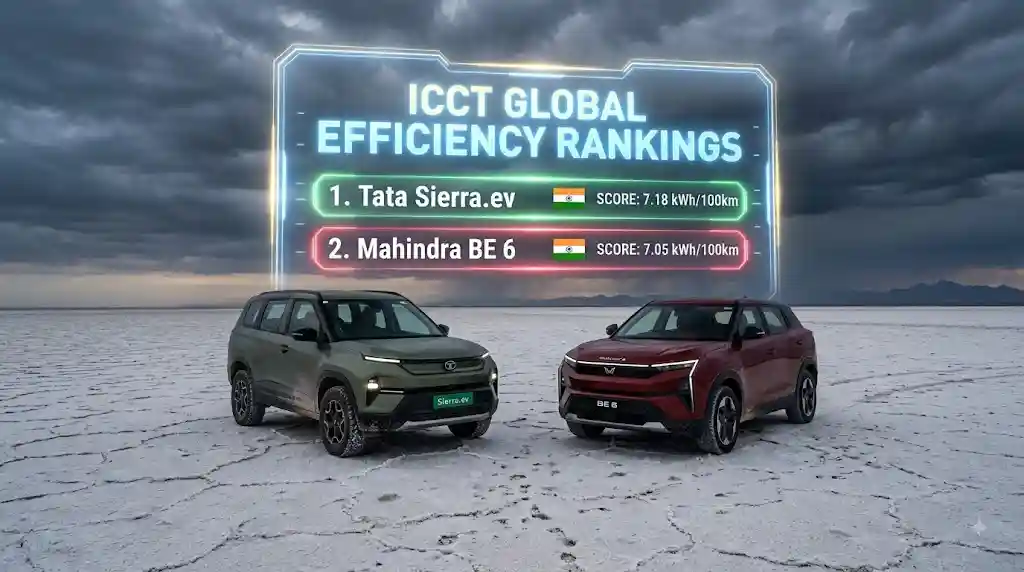

Tata and Mahindra built an EV for a traffic jam, not the highway and won the race against Tesla and BYD at 106 watt-hours per km, writes Satyen K. Bordoloi
To understand what efficiency really is, you’ve got to get into a cycle rickshaw in Old Delhi. The way the old warhorses navigate a maze of stray animals and humans, alongside incoming and all-side-going traffic, a surgeon would be impressed. These ‘vehicles’ aren’t powerful or fast. Nor do they have leather seats or panoramic sunroofs, but they’d still be faster than the fastest car in those lanes.
That none-to-nose traffic where the fastest vehicle in the world would fail turns out to be the perfect inspiration for the world’s most efficient EVs. And out there to prove this to the world are two of India’s darling EVs: Mahindra and Tata, who shocked the global electric vehicle industry.
The Rankings That Shook the EV World
In June 2026, the International Council on Clean Transportation (ICCT) released its Global Automaker Rating for 2025. It evaluated 22 of the world’s largest automakers across ten metrics measuring progress toward zero-emission mobility. To say that the results sent shockwaves through an industry that is used to treating Tesla and BYD as the undisputed kings of electric mobility would be an understatement.
Tata Motors ranked first globally with an adjusted energy consumption of 106 watt-hours per kilometre. Mahindra followed at 113 Wh/km. Tesla came in third. BYD, the world’s largest EV manufacturer by volume, settled for fourth.
For context, the average energy consumption across all 22 manufacturers evaluated was 131 Wh/km. Tata’s fleet was roughly 19 per cent more efficient than the industry average. That’s not a marginal victory, but a marauding stamp of authority on EV efficiency.
What is interesting is that this competition was not about the fastest cars, or the one with the most luxury features. It was bout who had the best battery with the most efficient range. In essence, this was about how far you can go on how little; you know, middle-class India’s favourite word: mileage.
What 106 Wh/km Actually Means
To the layperson, watt-hours per kilometre sounds technical. But the concept is simple: it is akin to the fuel efficiency of a petrol car, where instead of “kilometres per litre,” it’s “electricity used per kilometre”.
Tata’s EVs use 106 watt-hours to travel one kilometre. Mahindra uses 113. Tesla and BYD use more.
To explain it in smartphone terms: imagine two phones with identical battery sizes. Phone A is optimised to squeeze every last drop of life out of that battery so that battery power in it lasts hours longer than phone B, which burns through it faster. Tata and Mahindra are Phone A, the rest of the world… well, for once we can gloat about our own successes.
The implications are huge. Lower energy consumption means lower electricity bills for the car owners, which means manufacturers can use smaller, cheaper batteries to achieve the same range, making cars lighter and much more affordable. It also means that they put less strain on the electricity grid as millions of vehicles in the world switch from petrol to volts.
To be blunt, this isn’t even all about saving money, but making electric vehicles accessible to people who can’t afford a luxury sedan. And it is about scalable sustainability.
How Did Indian Carmakers Achieve This?
BYD and Tesla have been in a race for a miraculous battery breakthrough: like the ability to charge a car in under 10 minutes. In this case, though, the ‘breakthrough’ came from something so pragmatic you might not even consider it: Indian automakers designed their EVs for Indian conditions.
American and Chinese EVs are built for highways, for long stretches at high speeds, for drivers who expect massive range and rapid acceleration. This makes the cars heavy; powerful, yes, but this also means they consume more energy.
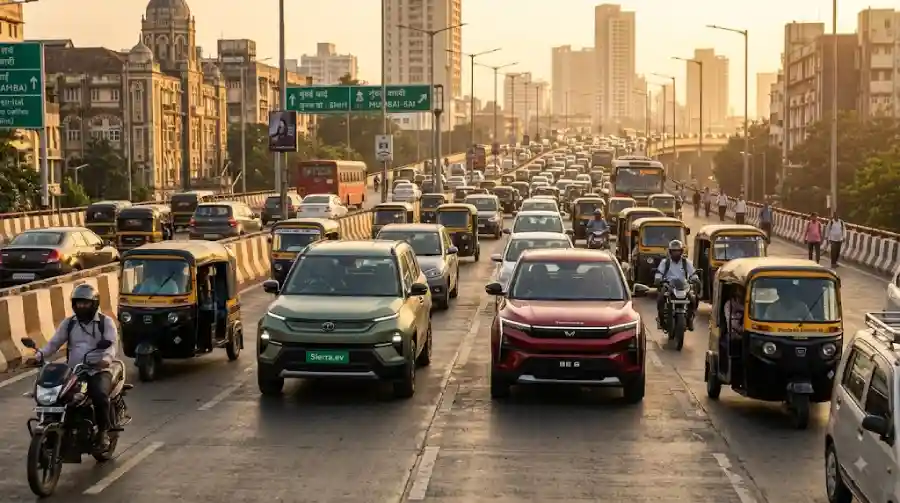
Indian EVs, on the other hand, have been built for Mumbai traffic and Bangalore gridlock; optimised for city speeds of 30 to 60 kilometres per hour, not autobahn speeds above 120. Thus our cars are lighter, smaller, and tuned for the reality of Indian roads.
Now, the ICCT wanted to be fair, so they adjusted their ranking for vehicle weight to ensure heavier vehicles weren’t unfairly penalised. Surprisingly, even with that adjustment, Tata and Mahindra came out on top because their efficiency wasn’t just about being small: it was about being smart: jugad to the power of infinity.
The Models Behind the Numbers
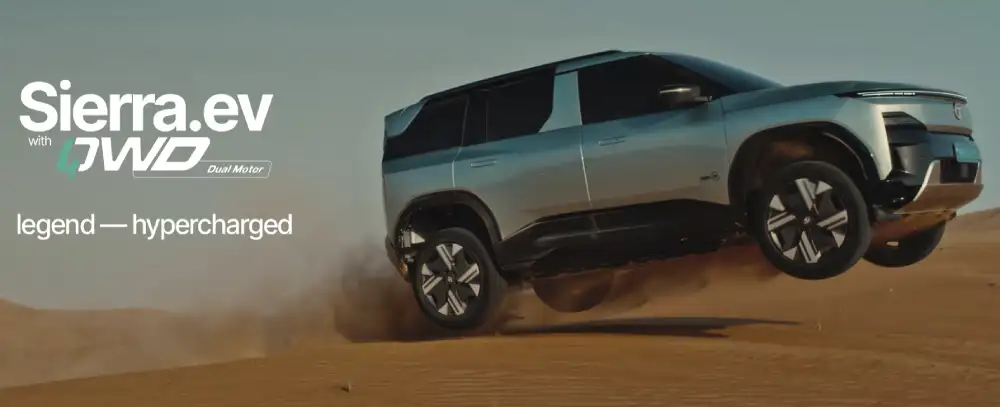
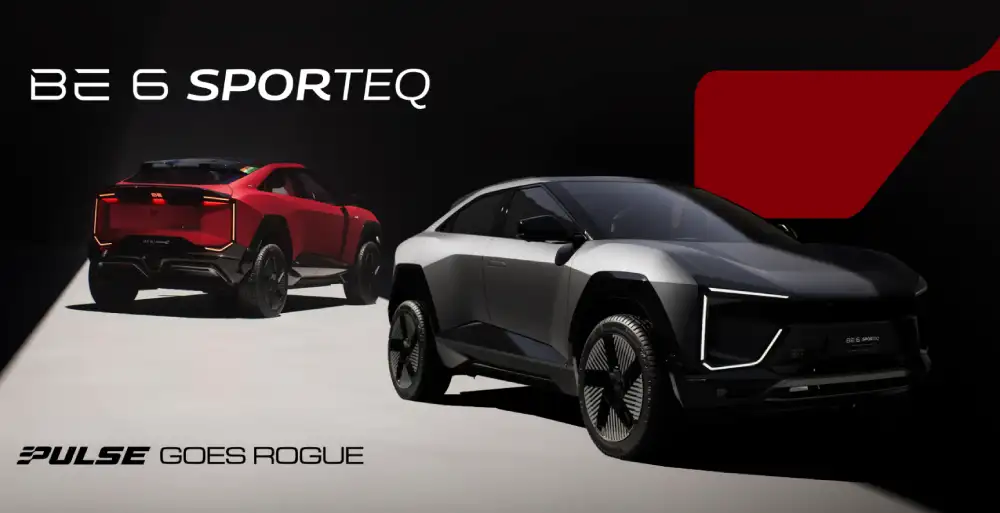
The Tata Sierra EV is available in 63 kWh and 75 kWh battery options, and the Mahindra BE 6, with 59 kWh and 79 kWh battery packs, was designed specifically to deliver lower energy consumption on Indian roads over outright performance like faster acceleration. Even with relatively smaller battery packs, these EVs achieve impressive certified ranges: the Sierra EV achieves up to 413 miles on certain terrains while the BE 6 achieves up to 424 miles, which is phenomenal because it is proof of the efficiency dividend: you don’t need a big battery to go far, just have an extremely efficient one that uses energy wisely.
This is not to say that our EVs are the best in everything. We still trail global competition in things like ultra-fast charging. In that aspect, all our models are at the bottom of the table, way behind Western and Chinese models. And if you look at the overall ICCT ranking, including factors like driving range, charging speed, EV sales share, model availability, investment levels and battery recycling, Tata still sits 15th overall with a score of just 33 and Mahindra is tied for 17th with a score of 30. Tesla tops the ranking with a score of 83, and BYD came second at 72.
What This Means for the Future
India’s EV market is still very tiny, with Electric vehicles currently being less than 5 per cent of new passenger vehicle sales here, compared with about 25 per cent globally. The government has set a target of 30 per cent by 2030, which seems extremely ambitious. Hence, the ICCT ranking comes as good news for the industry and the nation because if Indian manufacturers can translate their efficiency advantage into affordable, accessible EVs, we’ll not only have met the needs of Indian buyers but might become the vehicles of choice for the Global South, who’d prefer an efficient, much cheaper alternative to the expensive Western and Chinese models.
India’s EV push also has another imperative: as the fourth-largest consumer of petroleum in the world, every kilowatt-hour we save means that much less oil imported from abroad. That is, every efficient EV on our roads strengthens our energy security while supporting domestic manufacturing.
Indian automakers didn’t win the ICCT ranking by accident. They won it by building vehicles that match the reality of their environment, and not an idealised version of what an EV should be. That is engineering and innovation that understands context. And in a world where efficiency is a luxury not easily afforded, that understanding might just be the most valuable asset of all.
In case you missed:
- Indians Using AI For Faster, Better Work: But Psst.. Don’t Tell The Boss
- Indian AI’s Power Problem: We Woke Up Late to AI, We’re Still Half-Asleep
- The AI Peace Race: Why India’s Real Opportunity Starts Where the Arms Race Ends
- NVIDIA’s Strategic Pivot to Drive our Autonomous Future with Innovative Chips
- OpenAI, Google, Microsoft: Why are AI Giants Suddenly Giving India Free AI Subscriptions?
- How India Can Effectively Fight Trump’s Tariffs With AI
- With AI Set to Destroy Millions of Indian Jobs, Traditional Career Advice is a Death Trap
- How Can Indian AI Startups Access Global VC Funds?
- The 3-Hour Countdown: India‘s New AI and Deepfake Rules Spark a Free Speech Firestorm
- Reviving Old Research With AI: How It Can Transform The World