





In mid-February 2026, Sify Digital Services and HCL Software shook hands on rolling out a fully managed sovereign AI (artificial intelligence) stack for Indian enterprises
These efforts to localise AI infrastructure came on the heels of India unveiling three new, indigenous, and sovereign AI models from BharatGen, Gnani.ai, and Sarvam at the India AI Impact Summit in early February 2026. This push for sovereign AI stems from the idea of an “Atmanirbhar Bharat,” which is the beginning of India’s journey towards designing and building self-reliant, homegrown alternatives to the AI systems world over that are dominated by Big Tech.
As AI adoption increases worldwide, AI sovereignty has evolved from the standpoint of concern for data residency into a more holistic strategy. In this article, we’ll examine the specifics of AI sovereignty, what it means for India, and how much control is institutionally and economically feasible.
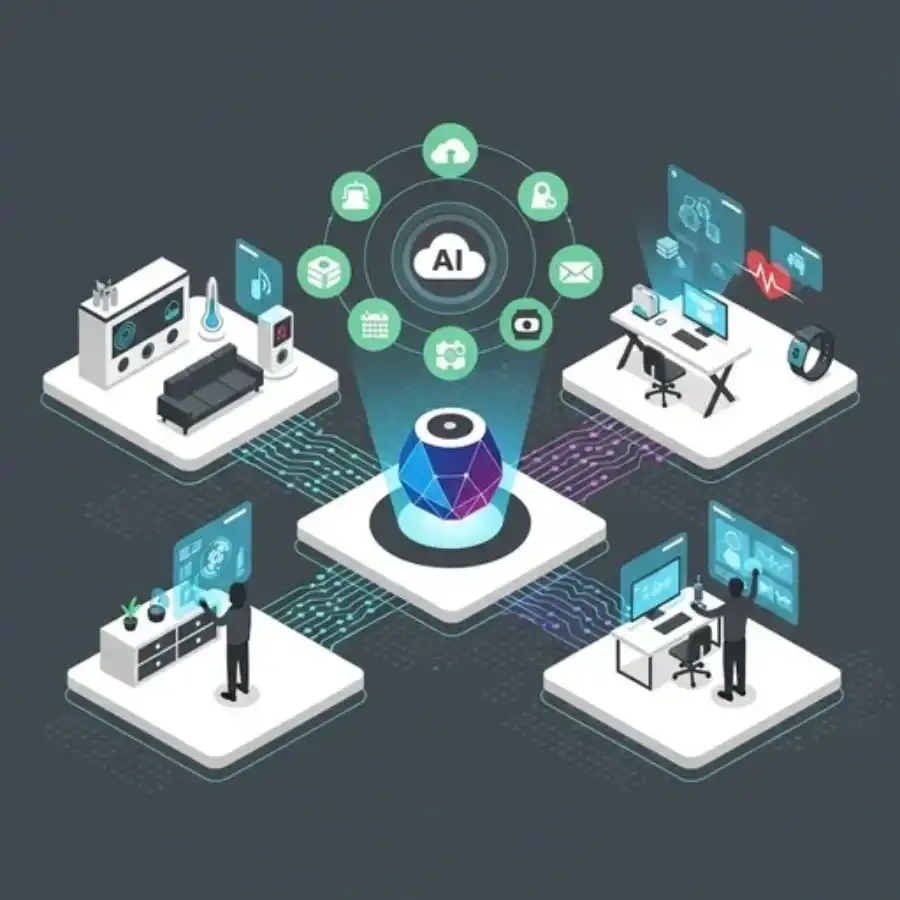
What Is AI Sovereignty?
AI sovereignty is the capacity or capability of an enterprise or a nation to control its AI technology stack, including related IT operations, AI models, data, and infrastructure. Since modern AI systems operate continuously, they are plagued by new challenges around data governance, auditability, and accountability.
Organisations now require authority over data residency and its usage, as well as AI-driven governance over whether regulatory requirements are enforced, how and where the models are deployed, and who operates AI platforms. Basically, AI sovereignty transcends the boundaries of typical data compliance regulations and data sovereignty. It entails preserving autonomy over data compliance and security, thus preserving competitiveness by ensuring complete operational resilience in the era of AI.
How Does AI Sovereignty Work?
AI sovereignty involves AI systems that operate continuously, moving away from the traditional data storage and data residency systems. The idea is processing sensitive data and information in real time, thus helping make independent decisions that require ongoing oversight and governance. AI sovereignty needs to be viewed as a holistic strategy involving the core components of AI infrastructure, digital sovereignty, operational sovereignty, and data sovereignty.
AI infrastructure includes APIs, networking infrastructure, data centres with sufficient storage and computing capacity, and GPU units for training large language models (LLMs) and inference. Next, digital sovereignty is all about enabling enterprises to understand how AI models work, specifically their decision-making abilities, and verifying that AI behaviour complies with regulatory mandates and internal rules.
Operational sovereignty, on the other hand, is having complete and continuous control over AI systems, ensuring that critical infrastructure is always on and accessible. This includes retaining authority over everything from automation capabilities, cyber recovery, and disaster recovery to performance management and system availability. It also includes the ability to ensure business continuity, even amidst regulatory changes and geopolitical disruptions.
Finally, there’s data sovereignty, which goes beyond storage locations: it’s where enterprises ensure that all data used in AI systems is in accordance with the laws of the region or the country where it was generated. It encompasses the entire AI data lifecycle, including how it’s protected, who can access it, and how data flows through AI pipelines.

Why Does AI Sovereignty Matter for India?
The global AI ecosystem has been rapidly shaping up to be a China-United States duopoly across important layers of the stack, whether it’s foundation models, hyper-scale compute, or advanced semiconductors, and focusing on both economic value and technological capability. China has a scale-driven approach and model innovation; think DeepSeek V-3, reportedly built at a cost of 6% of that of GPT-4, a move that has emboldened the Chinese market to the point that it’s all set to surpass USD 200 billion by 2029.
Additionally, it’s also developed a working prototype of the EUV (Extreme Ultraviolet) lithography machine, effectively dismantling Dutch company ASML’s monopoly of producing advanced semiconductor chips, and has invested in indigenous semiconductor capabilities via Huawei. This, combined with state-backed support, has increased China’s share of global private AI investment.
US, on the other hand, achieved AI dominance through a combination of frameworks, profound private capital investments, and proactive action to promote scale, efficiency, and speed, efficiency, and scale. Not only does it lead in the number of data centre facilities (40% of global capacity), but it also has multiple advantages across multiple layers of the AI stack, especially regarding integration with already established big tech networks.

To top that, it also controls around 50% of the global semiconductor market, allowing it to quickly become a provider of a full-stack ecosystem. In fact, the country’s deep tech R&D (research and development) investments exceeded USD 109 billion in 2024.
Compared to that, this number is USD 1.4 billion in which, despite accounting for around 17% of the global IT services market, captures only around 1% of high-value global technology value pools, including AI, hyper-scale infrastructure, and semiconductors. This structural imbalance basically means that while India does participate in AI deployment, it’s largely absent from the layers of value creation and retention.
AI sovereignty, thus, isn’t just about security, but also relates to economic strategy. Without domestic capabilities in data governance, foundational models, and computer infrastructure, India’s AI story runs the risk of simply exporting economic rents, capturing limited downstream gains.
Investing in domestic AI infrastructure in the form of these sovereign AI LLM models and strengthening data sovereignty will be imperative to ensuring that India’s market scale and data-generated value are retained domestically, while also allowing it to shape AI governance norms for the region and defend the broader digital ecosystem.
In case you missed:
- The Indian Indigenous AI Model Map
- All About India’s Indigenous AI LLM Models – Can They Help Tackle Bias?
- AI Infrastructure: Building Scalable Architecture For The Future
- Hiding In The Dark: Navigating The Threat Of Shadow AI
- Governing AI Agents In The Agentic Era: Are We Truly Ready?
- The Dawn Of Hedge Agents: How Agentic AI Is Transforming Hedge Fund Operations
- Is AI Changing The Rules For SaaS Pricing Models?
- AI Runtime Security: A Comprehensive Look
- How Blockchain and AI Are Revolutionizing Modern Finance
- The Rise Of Cloud WAN and SD-WAN: Network For The AI Era