


An AI cheating scandal involving a professor forces us to reconsider our entire education system, says Satyen K. Bordoloi.
Let me tell you about a professor I had in graduation. Prof M treated teaching like a data entry job: minimal effort, maximum disdain for us. You’ve seen those inspirational TED Talk speakers? Now imagine the exact opposite: his lack of enthusiasm competed with the charisma of sleepy backbencher. We joked that his passion for teaching had been buried so far that even Indiana Jones couldn’t find it. Did M remind you of a teacher from your own life? I bet it did. That’s because the world is filled with Prof Ms.
Now, what if you discovered that this screensaver-in-place-of-a-soul professor didn’t even write his intellect-crushing lectures himself; that his study material was the masterful work of ChatGPT?
This is precisely what Ella Stapleton, a Northeastern University, US, student, discovered to her horror when she found her professor had generated lecture notes on ChatGPT. How did she find out? Because the professor was so lazy, he didn’t even care to remove the commands to the chatbot, such as “expand on all areas. Be more detailed and specific.” Was that the reason every commencement speaker who spoke of AI in US universities this season, were booed?
The irony is that as far back as the education system goes, students have been scolded, shamed, and suspended for “cheating.” Was it only so that the 21st-century AI chickens as chatbots could come home to roost in the faculty lounge? Naturally, Ella was angry enough to demand her $8,000 tuition refund. And why not? ChatGPT could churn the same content at one thousandth of that price.

To me, the scandal isn’t as much about AI use by the professor as it is about an education system so devoid of effort and enthusiasm that it is as easy for teachers to outsource their labour to AI as it is for students to write their reports on it. And isn’t Ella right: what is she paying the college $8,000 for: to supervise a cursor?
Universities worldwide are paying AI to detect writing done by students using AI. Perhaps they should turn the spotlight inwards as well. But even if they did, how could we disregard the fact that there are AI programs that mimic human writing, give false positives, misjudge what is written by AI because they detect statistical patterns and not meanings, and to top it all, how will you detect AI writing if even a bit of change can render them undetectable?
So, is a blanket ban on AI for everyone, students, and teachers alike, a viable solution? I think it isn’t.
To understand this, let’s compare Professor M and his opposite, Professor W. Prof M, being lazy, has ChatGPT write his lectures. Not that it helps much because even his ChatGPT lectures put students to sleep. Prof W also uses AI, but to try and understand how best to teach. Doing so, he discovers an obscure method used by someone somewhere to teach the same thing he wants his students to learn. Prof W employs this method and has Claude write the lecture using that pattern. The result? Students are wide awake and having fun during Prof M’s electrifying lecture.
As this and countless examples can attest, AI’s simple role as an amplifier is to blow up the bad as much as it would give good a loudspeaker to reach out.
AI as a guide for professors and teachers can help them figure out gaps in the students’ understanding of concepts. Call it a GPS for calculus confusion as the professors mentor students. AI can help free them from rote teaching. Remember that professor who reads out the textbook in the name of teaching? That joker needs to be fired. But the one who hosts debates, workshops, and impromptu seminars in class, with the grading being done for curiosity, not compliance, is the teacher to reward.
But that won’t happen unless transparency is practiced with a capital T. Prof W should declare his use of AI and must inspire his students to do the same saying: “If you’re using it, let me know where so I can help you either use it better, or help you learn what you were trying to imbibe in a better way.” The goal of a school or college is not to ban AI, but rather to elevate the standard of the students. The trick is to judge any work not just on its humanness, but rigour, originality, and the insight it brings to the subject.
So, I’m sorry to refuse to be a Luddite even when it comes to education. What I regret losing from my education is not cursive handwriting or rote learning vomited into an answer sheet. What I miss is the kind of effort from those few professors, the opposites of M, who turned the class into a battleground of ideas, whose efforts are the reason I can claim a semblance of intellectuality and knowledge today.
So, uncomfortable as it may sound, I believe what is required is to redefine learning thoroughly. Ditch essays for podcasts, debates, or community projects if you have to. Instead of banning AI, let students use AI if they can defend their work in class like thesis candidates. One of the problems of our current education system is that we reward the final product, not the thinking, or the process that went into it.
So, if we reverse this, where teachers learn to reward drafts, revisions, and the brainstorming that has gone into projects, even if they used AI, that would prove revolutionary. And most importantly, if AI can replicate Prof M’s lectures, maybe he should replicate his career in some other field, i.e. fire the bad teacher with the same ruthlessness that we castigate bad students.
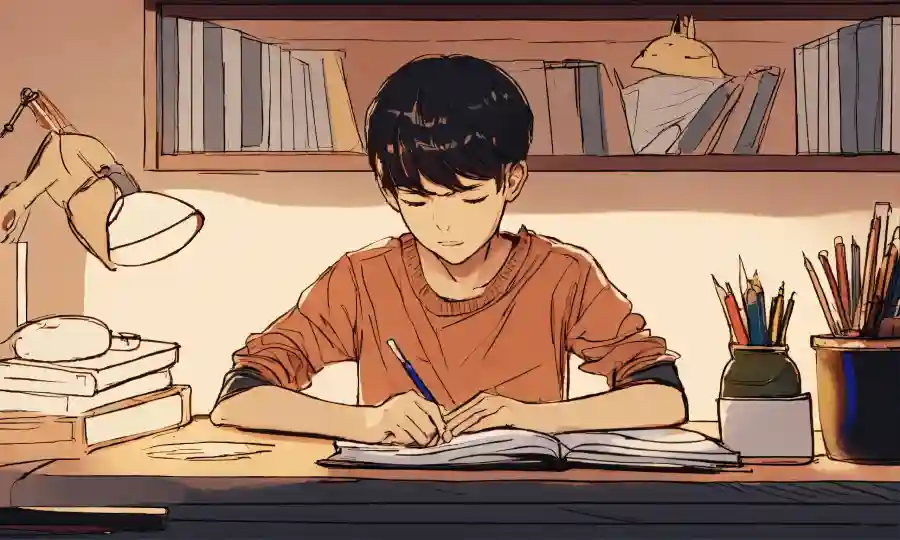
So, let me be blunt. AI isn’t corrupting education. It’s merely holding up a mirror to its decay. I know this is an unpopular opinion in this season of the first graduates to emerge entirely in the shadow of generative AI, booing any speaker who talked of AI positively in the US. But the truth is that for far too long, we’ve tolerated teachers who got into education because all other career options had failed, those who sleepwalk through class, and those who value obedience over intellect.
The future belongs to educators who see AI as a launchpad, not a crutch to hide their inadequacies; to the Prof Ws who use chatbots to generate discussion prompts, then spend hours refining them and debating them in class; to the students who cite AI in their bibliographies, yet manage to out-argue their professors; to institutions that prioritise mentoring over surveillance.
As for the Professor Ms of the world? I say pay them to retire or find another profession. It’ll be cheaper for the world if they sit home because they don’t just take undeserved salaries, they destroy children’s desire to learn. And I believe this, among all the crimes in the world, is only second to murder.
In case you missed:
- Google’s “Learn Your Way” is Set to Redefine Education and Challenge the AI “Dumbing Down” Narrative
- The Cheating Machine: How AI’s “Reward Hacking” Spirals into Sabotage and Deceit
- With AI Set to Destroy Millions of Indian Jobs, Traditional Career Advice is a Death Trap
- Would you want to chat with a sexy ChatGPT; OpenAI’s ‘Adult Mode’ threat to the world
- Use AI or Get Fired: The New Workplace Ultimatum Hanging Over Every Job
- A man almost cured his dog’s cancer with AI: Could you do the same for your loved ones?
- Reviving Old Research With AI: How It Can Transform The World
- The Default Bias: Why Women’s Underrepresentation in AI is Turning the World Crooked
- No, AI Didn’t Unleash a Virus on the World: It Might Have Done Something Far More Terrifying – Save It
- A Citrini research blows the AI-doomsday bugle, crashes the market, but is packed with glaring omissions & distractions