





The continuous consumption of content on TikTok and Instagram is taking a toll on our attention spans as well as our mental health…
The word ‘brainrot’ started as a joke. A quick google search describes it as “a state of being ‘addled’ by digital noise.” It was named Oxford word of the year in 2024.
But two years since then, it seems like it’s less of an internet slang and more of a diagnosis of how we consume content these days. Short-form content generation platforms like Instagram and TikTok have changed not just how we consume content but also how our brains behave. And the data is beginning to show a pattern.
71 studies were conducted on a whopping 98,299 participants and the patterns that have been revealed are consistent: heavy consumption of short form videos is linked to poorer cognitive function and mental health outcomes.

The Infinite Dopamine Loop
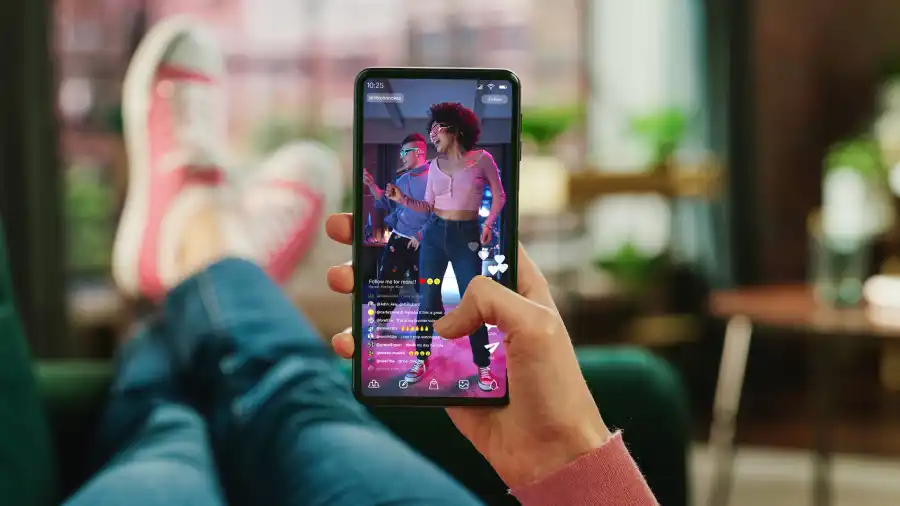
The one thing that short form videos got absolutely right is eliminating friction. There is no natural stopping point as you scroll from one clip to another. The videos autoplay and the algorithm learns fast. Each piece of content is short enough to feel harmless but long enough to keep you hooked.
According to the study, this creates a dopamine driven feedback loop. Each scroll delivers a quick reward and this reinforces the behaviour. Over time, our brain begins to crave the constant simulation. This also makes slower, less stimulating tasks feel disproportionately difficult as there is no reward.
The biggest problem here is the sheer volume of consumption. Videos typically last 15-60 seconds which means that one ends up consuming more than a hundred videos per session. Which in other words is hundred plus context switches in one sitting, which takes a toll on your processing as well as your emotional response.
Attention Is the First Casualty
The major finding in these studies is the decline in sustained attention. Frequent consumption of short form videos leads to weaker focus, reduced working memory and lower inhibitory control. In other words, consumption of short form content makes one lose the ability to resist distractions.
In simpler words, it is harder to stay focussed on something that does not immediately reward you. It results in attention fragmentation. Our brains get trained to switched rapidly between contexts and cannot stay focussed on one topic for too long. Which is why even watching a movie can seem boring as it takes a couple of hours to get to the climax.

From Entertainment to Anxiety
The cognitive impact is not the biggest concern. It is the emotional cost.
The same research has shown links between short form video consumption and increased levels of stress and anxiety.
A part of this is because of overstimulation. The constant reward seeking keeps the brain at a heightened state which results in fatigue but also doesn’t let the user relax or switch off. The other half comes the compulsive usage – knowing that you’ve wasted a lot of time but being unable to stop it.
Gen Z are the most affected by it. The study revealed that 12- to 17-year-olds in the US spent 1 hour 18 minutes on TikTok everyday while 18- to 24-year-olds were spending 1 hour 15 minutes daily on the app. It also comes as no surprise than 46% of Gen Z have been diagnosed with mental health problems, as per research by Harmony Healthcare IT.

The Last Word
Short form videos are not entirely harmful. They can also entertain and educate. They also lower the barrier for learning and creativity.
The problem however is that it is designed not just to become accessible, but also to become addictive. The infinite scroll coupled with an algorithm that learns your interests in real time are designed to keep the user in a loop.
Brainrot does not mean that your brain is decaying. It means that your brain is being gradually rewired, leading to a change in your attention, behaviour and expectations. The problem isn’t that we are consuming short form content, the problem is that we are becoming conditioned by it. And the sooner we counter it, the better for us.
In case you missed:
- Watching, Not Sharing: Why People aren’t posting on Social Media anymore
- Meta, YouTube declared Liable for Social Media Addiction
- Is AI marking the End of the Web Traffic Era?
- Grok’s ‘Spicy’ Feature lets you Generate Sexually Explicit Images
- Selling Yourself to AI: The Hidden Cost of Intelligence
- Governments move to rein in social media and AI for children
- AI Glasses are Here. So Is the Privacy Problem
- India’s 3-Hour Rule Signals a New Era for Social Media Platforms
- WhatsApp Group Chat finally solves the ‘What did I miss?’ Problem!
- Why You Should Never Reuse Passwords