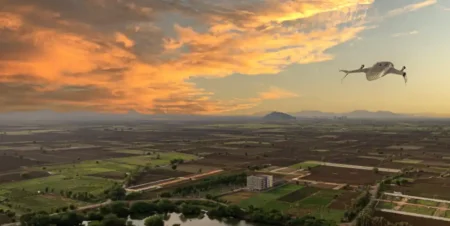




Two autonomous drones flew into clouds over Alaska carrying a tiny amount of silver iodide and came back with a claim that sounds straight out of a weather-control movie.
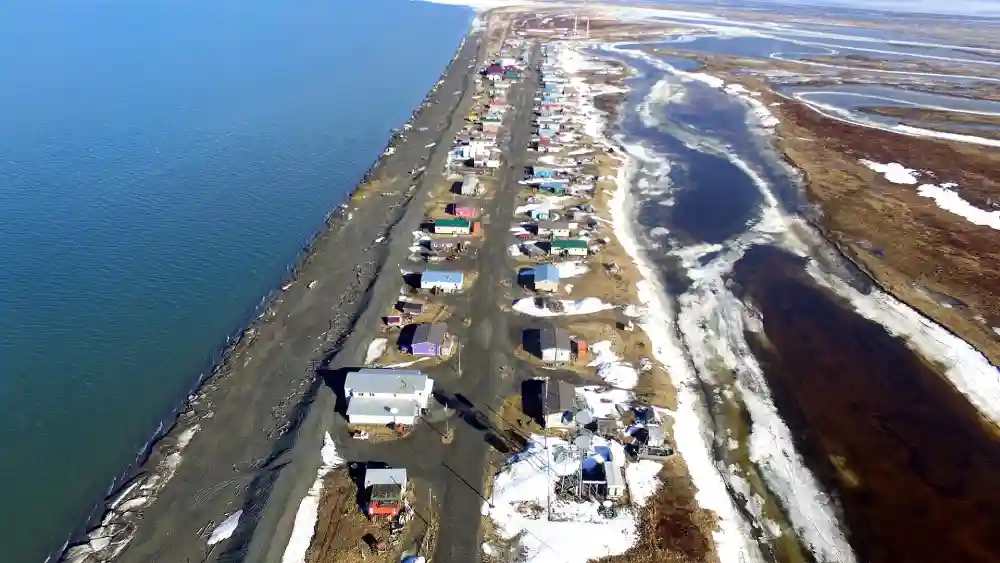
Two drones flew into clouds over Alaska, released a tiny amount of silver iodide and, according to the startup behind the experiment, helped produce enough additional precipitation to fill around 29 Olympic-sized swimming pools. Rainmaker Technology says its drones generated an estimated 19 million gallons of extra water over Alaska’s Kenai Peninsula during a three-hour operation on August 23.
The number sounds like something from a weather-control movie, but there is a catch: the 19 million gallons is the company’s estimate based on radar observations, not a figure independently measured by scientists. Still, the experiment is interesting because Rainmaker isn’t claiming it created rain from a clear sky. Instead, it is attempting to make existing clouds more efficient at turning their stored moisture into precipitation, using autonomous drones and a technology that has been around for decades.
The Drones Didn’t Create a Cloud
Rainmaker used two of its autonomous Elijah drones during the Alaska experiment, conducting multiple flights through clouds containing supercooled liquid water. These are clouds that contain tiny droplets of water that remain liquid even though temperatures are below freezing. That makes them useful targets for a process called glaciogenic cloud seeding.
The drones released 19 silver-iodide flares during the operation, dispersing roughly 374 grams of silver iodide. That’s less than a pound of material used to influence millions of gallons of precipitation. Silver iodide is useful because its crystalline structure can encourage supercooled water droplets to form ice crystals. Those crystals grow as they collect more moisture, eventually becoming heavy enough to fall from the cloud as snow or, after melting, rain.
The clever part is deciding where and when to seed. Rainmaker’s Elijah drones carry atmospheric sensors, while its Stratus software combines weather information, radar and satellite data to identify clouds that could respond to seeding. The company says the Alaska operation involved 10 drone flights and seven coordinated missions over roughly three hours.
Rather than dumping chemicals into every cloud in sight, the system is designed to find the right combination of temperature, moisture and cloud structure. That distinction matters. Cloud seeding cannot manufacture water from nothing. It is essentially trying to persuade water that is already sitting inside a suitable cloud to fall to Earth instead of remaining suspended or moving away.
So Where Did the 19 Million Gallons Come From?
This is where the story gets particularly interesting — and where the biggest caveat belongs. Rainmaker says radar detected precipitation signatures associated with the seeded clouds and used those observations to estimate how much additional precipitation was produced. Its analysis put the result at a mean of about 57 acre-feet, with an estimated range of 45 to 65 acre-feet.
The company translates the average into approximately 19 million gallons of additional water over the three-hour period. In other words, nobody stood underneath the clouds with a giant measuring cup. The figure is an estimate derived from atmospheric and radar data.
That doesn’t make the experiment meaningless, but it does mean the headline number should be treated carefully. Rainmaker is a company with an obvious commercial interest in demonstrating that its technology works, and the Alaska result has not yet received independent scientific verification. The startup itself describes the campaign as research and development aimed at improving its flight platform, weather targeting and validation techniques. It is also worth remembering that cloud seeding is not new.
Scientists have been experimenting with it since the 1940s. What Rainmaker is trying to change is the machinery around it: autonomous aircraft, better atmospheric sensing, software-controlled targeting and, perhaps most importantly, better ways of measuring whether the intervention actually produced extra precipitation.
Rainmaking Has Bigger Plans
If the Alaska experiment holds up under scrutiny, Rainmaker wants to take the idea far beyond Alaska. The California startup has pointed toward drought-stricken regions of the American West, including the Colorado River Basin and the Great Salt Lake. Its chief executive, Augustus Doricko, has even talked about eventually using the technology to produce snowfall to help restore glaciers. That is a considerably bigger ambition than making a patch of Alaskan clouds rain a little harder.
There is also a growing political argument around the technology. Alaska state Representative Sarah Vance has called for cloud-seeding activity to stop, questioning why the state was not informed about the operation beforehand. That raises a question that could become increasingly important if weather modification becomes cheaper and easier: who gets to decide when someone is allowed to alter the behavior of clouds above a region?
Rainmaker sees autonomous drones as a way to make cloud seeding more precise and scalable. Critics may see the same technology as making weather modification easier to conduct without sufficient public oversight.
The Weather Machine is Coming
For now, the most extraordinary part of the Alaska experiment isn’t that two drones somehow manufactured 19 million gallons of water. They didn’t. The more intriguing possibility is that a relatively small amount of material, delivered by autonomous aircraft into the right clouds at the right moment, may have nudged a natural weather system into producing substantially more precipitation.
Rainmaker’s central estimate was 57.6 acre-feet of additional precipitation, or roughly 19 million gallons, although the company’s own analysis included a wider uncertainty range. Independent scientists still need to determine how convincing those results really are. If the claim survives that scrutiny, however, the humble weather drone could become something far stranger than a flying camera: a machine for persuading clouds to give up more of the water they are already carrying.
In case you missed:
- Sea6 Energy: How India Is Turning Seaweed Into an Alternative to Crude Oil
- Japan just made Remote Quantum Computing a reality!
- Aatmanirbhar Push: India Becomes 7th Nation to Crack Gallium Nitride Chip Technology
- Moltbook: AI agents now have their own Reddit, and humans aren’t allowed to post!
- ISRO’s Next Big Plan: To Put Indian Data Centres in Space!
- Singapore Just Built a Data Center With 16 Million Living Human Neurons
- While Bezos Bets $100 Billion on Physical AI, His Top AI Picks Walk Away to Model the Universe
- AI vs Your Poker Face: The Battle Unfolding at ESPN’s World Series of Poker 2026
- The End of Hacking? India Successfully Tests ‘100% Uncrackable’ Quantum Laser Tech
- Goodbye Blackwell, Hello Rubin: Nvidia’s new AI platform is here!