



It took American AI (artificial intelligence) engineer Carter Crunch a mere 6 hours with GPT-6 Astra AI model to read a letter that had stayed sealed since 1809.
Are you running scenarios in your head about changing every password you own? Hold your horses, for no one is entirely sure that despite the phenomenal nature of the feat does it necessarily mean that modern encryption is getting affected. In early October 2026, the American AI engineer used the model and handled the entire workflow to crack a 200+-year-old encrypted Napoleonic military letter.
Unsurprisingly, the news has excited historians to no end about AI’s possibility of becoming a sort of 21st-century “Rosetta Stone” for decrypted coded historical communication, as morbid as it sounds. Honestly, the model didn’t do anything a skilled person couldn’t; it just did the painstakingly slow part pretty quickly. However, it does beg the question: what will modern encryption look like after this? This article looks at how the cracking of the code happened, what the letter contained, and what it means about modern encryption.
A Letter No One Could Read
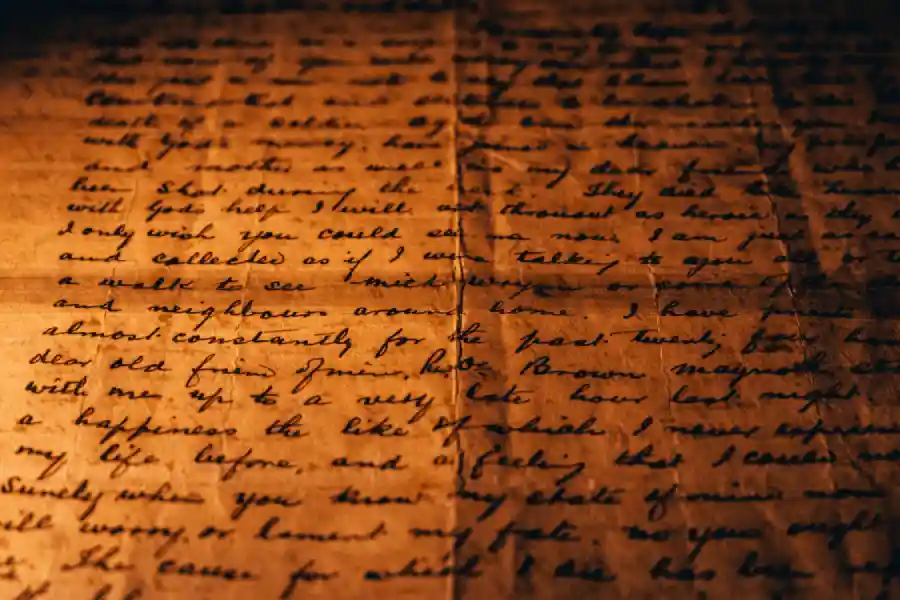
In 1809, General Auguste de Marmont, French General and later Marshal of the Empire, was posted in what is now Croatia, separated from the French armies and with Austria preparing for war. Help came in the form of a letter that came from Eugène de Beauharnais, Napoleon’s stepson and Italy’s viceroy, on the emperor’s orders.
Dated March 1809 when Austria prepared to fight France, the decoded message was a troop briefing that originated from the viceroy’s headquarters. Napoleon had directed Eugène to send a coded letter to General Auguste de Marmont on 16th March and relay his orders of laying out army positions (alongside Russian armies fighting against Austria) across Italy, Saxony, Poland, and Bavaria. Separated from the main French armies, Marmont would have needed a military code of his own to decrypt the letter back then, and with the key itself having disappeared, any hopes of decrypting the letter were also gone.
For the record, Marmont later broke out of Croatia and was made a Marshal. The letter, however, took slightly longer to get its due.
How AI Broke The Code
Cut to 2026 when one of cybersecurity firm SentinelOne’s AI engineers, Carter Church, fed a scanned image of the letter into GPT-6 Astra by Open AI. The message contained about 1,300 cipher units and 155 distinct signs. Astra found a partial key on its own through web research, and then used it to work out the other symbols. It also tried candidate words against Marmont’s other writing until they fit, a technique known as “simulated annealing.” Earlier cryptographers had solved only 33 characters.
But here’s the thing: Church himself didn’t hail the codebreaking as the impressive part. Rather, he said that the actual achievement was that Astra completed the complete workflow, from reading the image to solving it, in just about 6 hours. Additionally, he said that the cipher wasn’t the especially difficult part, although cracking it by hand would have taken experts a lot more time and effort than it did for him.
Interestingly, and impressively, the result also looked sound. According to European history thespian Michael Rowe at London’s King’s College, the fact is that Napoleon had already described what the message would contain in another letter. So, the letter works like a “Rosetta Stone” of sorts. Moreover, Church also reran the analysis with Marmont- and Napoleon-related material removed, and got the same reading reportedly.
So, Why Are Modern Cybersecurity Experts Not Panicking?
News of a 600-year-old letter being cracked and decrypted would normally send modern cybersecurity experts in a state of panic. However, in this case, the Napoleonic ciphers in the letter swapped words and letters for symbols, used repeated phrases, and had some symbols appearing more than the others. In essence, it hid the message, but not the patterns, and tireless trial-and-error and pattern-spotting are exactly what AI does so well.
Furthermore, modern ciphers of today like AES (Advanced Encryption Standard) are designed and built to leave no such patterns, and there’s evidence of this. In 2025, a benchmark of 18 leading models built on nearly 2,400 decryption problems found that every model scored 0% on properly implemented AES, RSA (cryptography algorithm), and elliptic curve cryptography. Moreover, even the best failed most early-modern polyalphabetic ciphers. It doesn’t mean that AI is harmless, as it’s found some real flaws in 7-round AES and NIST candidate algorithm HAWK, despite not being able to touch other standards.
So, while AI might be getting better at finding weaknesses, it hasn’t yet reached the point of breaking the lock.
What’s The Real Threat?
The one thing that could, however, break today’s encryption head-on is quantum computing, such as a fault-tolerant quantum computer running Shor’s algorithm (a quantum computing algorithm). And no such machine exists today.
The danger, though, is already here. With “harvest now, decrypt later” attacks on the rise, where encrypted data is stolen today and decrypted once quantum attacks become feasible, makes long-lived government, health, and banking records vulnerable to risk. Napoleon’s cipher could be decrypted because the patterns couldn’t be hidden, and modern encryption was designed to not have patterns. So, while the lock is holding, the doorframe needs watching.
In case you missed:
- Is Quantum Computing a Threat to Blockchain Security?
- Are You Using AI To Generate Passwords? It’s A Terrible Idea
- AI Runtime Security: A Comprehensive Look
- A Cybersecurity Blindspot – Can EVs Be Hacked So Easily?
- The Rise and Evolution Of Honeypots In Cybersecurity
- The Intelligence Swarm: How Bees Are Helping AI Become Smarter
- All About Cybersecurity-as-a-Service
- Who Guards The Guards: When AI Agents Go Rogue
- How Blockchain and AI Are Revolutionizing Modern Finance
- All About Data Poisoning Cyberattacks