


The most effective way to disarm the population in today’s day and age might not be to lie to it; it might be to let people keep scrolling until they’re too tired to check.
Picture a phone with a feed that never ends, with the population slowly losing the ability to tell what matters. It might sound like a story straight out of Black Mirror, but it’s already happening. This is exactly the premise of cognitive warfare, a term that defense researchers and NATO (North Atlantic Treaty Organization) use for methods and efforts that influence not only what people think, but how they think.
In this scenario, most of the attention goes to deepfakes and lies, and a quieter tactic takes over instead: flooding people with so much information that their judgement wears down on its own. While there isn’t a villain behind every notification that you get, it’s worth understanding how this works, because it works on all of us.
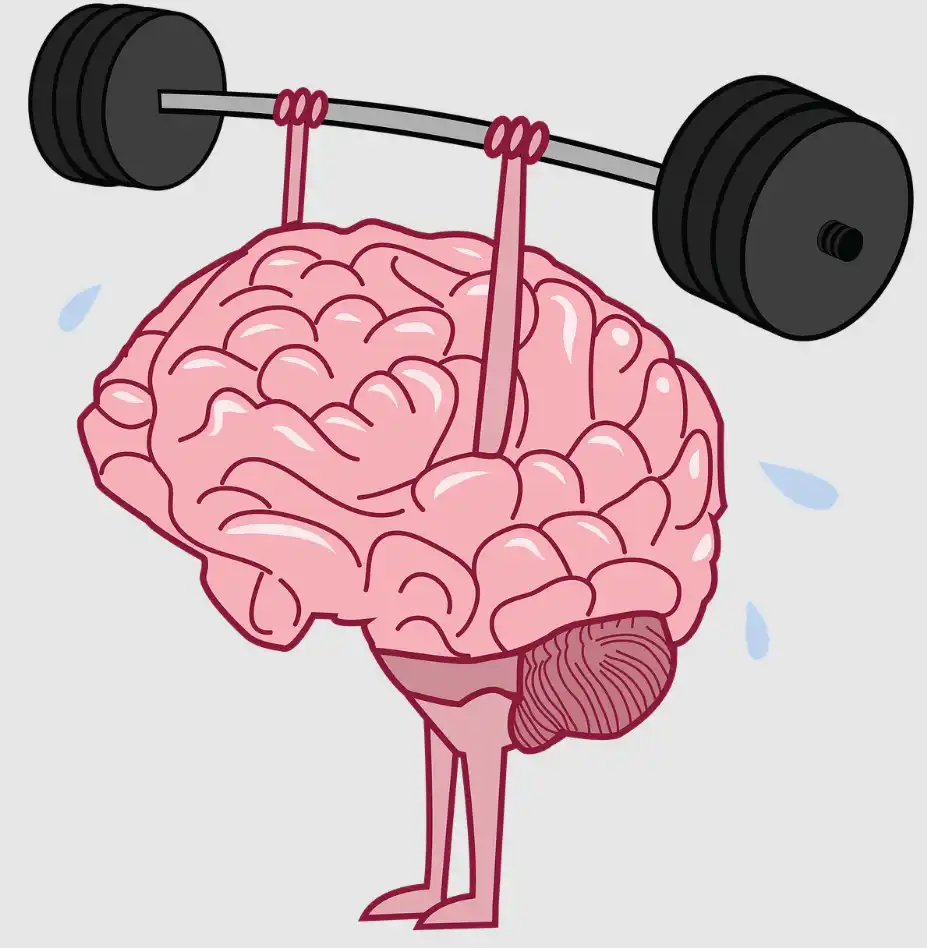
Of Individuals and Populations: What Is Cognitive Warfare?
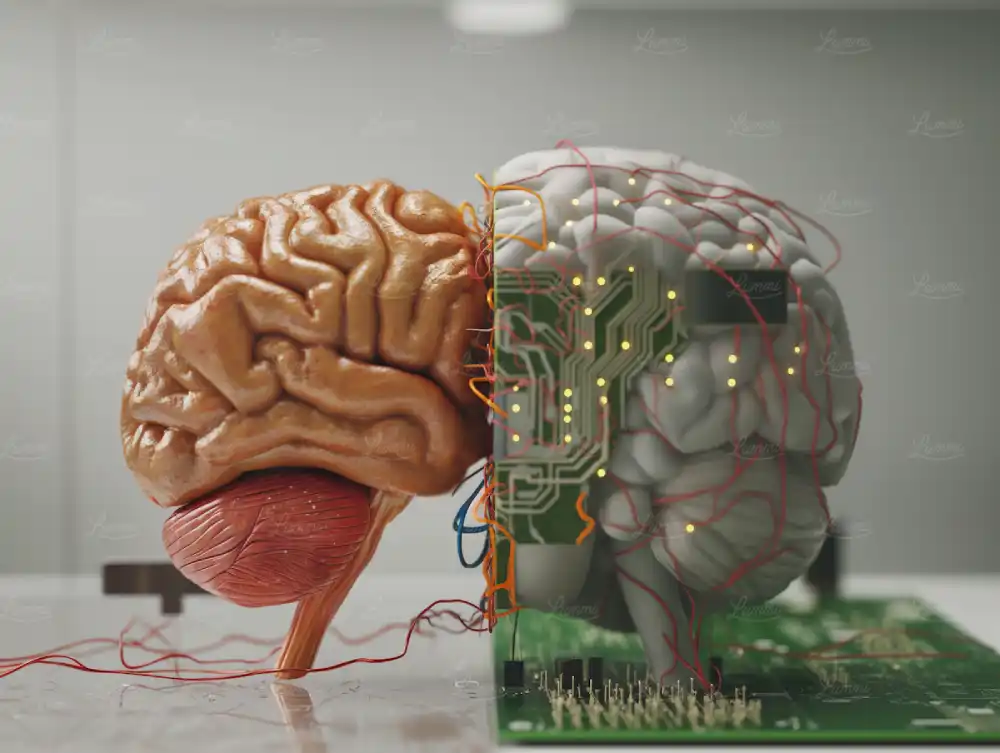
Cognitive warfare isn’t the way in which we fight; it’s the fight itself. In this scenario, the brain is both: the weapon and the target in this fight for cerebral superiority. Duelling in this environs sees synchronised and deliberate non-military and military activities taking place throughout in order to protect, maintain, and even gain cognitive advantage.
It focuses on attacking and stripping rationality, leading to possible systemic weakening and exploiting vulnerabilities. However, warfare becomes all the more complex with the involvement of non-military targets. For instance, Russian public information and social media operations attempted to accuse Ukraine as the one in the wrong in the international community.
Through a mixture of false news stories, communication technologies, and manipulating perceptions, Russia aimed to lessen public trust in open information sources and influence public opinion. These narratives not only have a wide-ranging reach, but even involve both defensive and offensive posturing.
Influence campaigns aren’t new. Propaganda, rumour and even Cold War psychological operations all aimed at the same target: the human mind. Only the cost and scale has changed over the years. In October 2026, political analyst Tarık Özcan wrote in Meer that the digital age has made the objective faster, cheaper, and far more scalable.
That being said, the concept does have its critics. Even Özcan’s article cautions against making mountains out of molehills, as not every misleading post counts. Plus, the term overlaps with information and hybrid warfare. In fact, NATO’s own concept architect, Tanna Krewson, wrote in the alliance’s Three Swords journal, that the aims are obscuring the truth, inducing decision paralysis, and shaping perceptions and behaviour. Today, the question has shifted away from what information is being circulated to what people are now doing with it.

Attention: From Overload To Fatigue
The thing about people’s attention is that the supply is fixed. According to the Digital 2026 Global Overview Report, more than 6 billion people are online. Furthermore, there are a whopping 5.7 billion social media user identities, which is around 69% of the world’s population. In fact, DataReportal even states that average social media use is roughly 2 hours and 39 minutes every single day.
The typical online adult spends 18 hours and 36 minutes a week on video and social feeds, which is around 16% of their waking hours. Since attention doesn’t stretch, a message that wants a share of the pie has to take it from something else.
Wealth economist Herbert Simon in 1971 said that a wealth of information creates a scarcity of attention in an essay for the Small Wars Journal, and it’s true. Before a message can change a mind, it needs to win a share of limited attention.
Overload isn’t just a distraction; it’s the first step towards cognitive fatigue. Fatigue comes more from how long the effort continues without recovery rather than from how hard a task is. A steady, low-grade demand tires minds, and tired minds take shortcuts. Thus, people become lean on heuristics (mental shortcuts) and simpler stories and become less and less willing to put effort into analytical thinking.
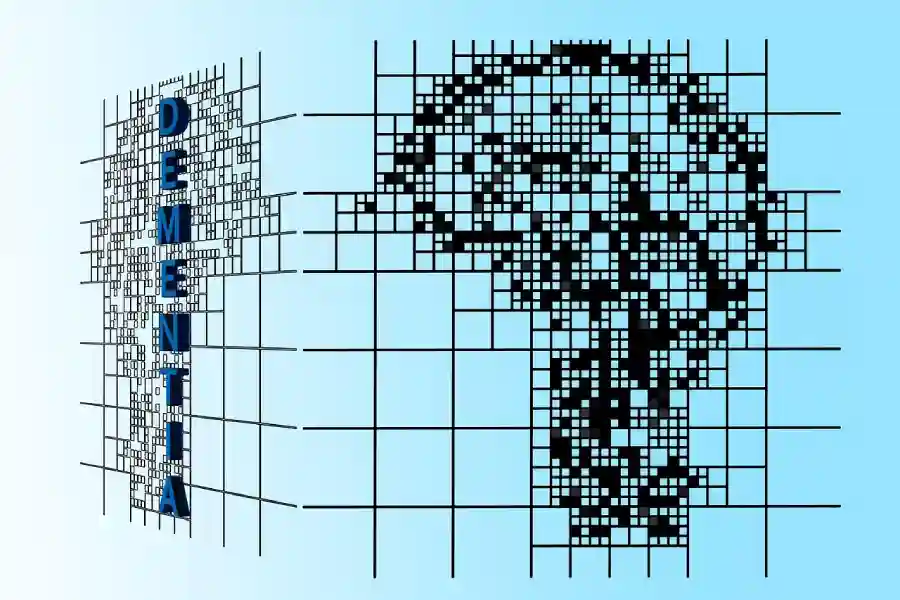
When Exhaustion Does The Work
We can see real-life examples of this. In 2013, Russian proxies and outlets pushed competing narratives until a clear-cut chemical attack dissolved into ambiguity. There’s even a NATO Innovation Hub report on COVID-19, where the sheer volume of information, combined with deliberately biased narratives, contributed to a growing desire for cognitive closure and falling trust, as well as the urge to settle on a firm answer and end the uncertainty. Here also people relied more on shortcuts and biases than on careful evaluation of evidence. There was no single big lie in either case. Rather, the damage came from strain, repetition, and volume.
Even India has its own evidence. A USI (United Service Institution of India) paper by Major General Jagatbir Singh (Retd) called May 2025’s Operation Sindoor as India’s first war of the digital era. According to the Chief of Defence Staff General Anil Chauhan, 15% of the Indian Army’s operational bandwidth went on countering fake narratives. Even the readers felt it, with Reuters Institute’s 2026 Digital News Report finding that 52% of Indian respondents avoided the news and 58% relied on YouTube.
What Do We Do?
There might be no way to switch this off, but there are ways to reduce the damage. One suggestion is “cognitive hygiene,” which involves reading reliable sources, periodic disconnection, limits on continuous streams, and healthier information habits. However, the issue is a wider one, and trust is now a security issue, and media literacy has to move beyond spotting fake news to cover repetition, bias, emotion, and attention. Then there’s also AI, which produces noise for a lot less and shifts the burden of verification onto us ordinary users.
In the end, the fact is that attention is finite, and judgement, like any other muscle, tires with use. The question for the coming decade might be less “Who controls the information?” and more “Who can still think clearly in the middle of it?” Switching off your feed the next time you want to doomscroll might be a small answer, but it’s also a start.
In case you missed:
- The Return of Retro Tech: Old Tech, New Tricks
- India’s DPDP Act: Data Privacy Or Data Surveillance?
- The Trust Deficit in AI – What You Need To Know
- Fighting AI With AI – The Future Of Cybersecurity
- @Grok, Is This True: Have We Outsourced Our Thinking To AI?
- AI Dashcams – The Silent Co-Pilots Transforming Road Safety
- The Intelligence Swarm: How Bees Are Helping AI Become Smarter
- The Ethical Paradox Of AI-Enabled Facial Recognition
- From Ranking to Relevance: The Rise Of Generative Engine Optimisation
- AI’s Black Box Problem: Mystery, Models, and Machines