



Superintelligence is having a busy September. Actually, it’ll be more accurate to say that superintelligence has been having a moment.
There’s been an announcement for a “Ban Artificial Superintelligence” Act. Elsewhere, there’s a bill being introduced in a parliament to ban it in the country. To top all that, researchers have been resigning from major labs and quitting research, citing extinction-level risk. In fact, Berkeley professor Stuart Russell told a roomful of British lawmakers that if AI development were to continue unchecked and unregulated, we’d have a “Chernobyl-sized catastrophe” on our hands.
Basically, it’s the kind of week that makes “superintelligence” sound more of a countdown than anything else, and nothing close to a research goal that it initially set out to be. While some of this hype is real and worth taking seriously, there’s also quite a lot of it that’s noise and isn’t quite what it first appears to be. And separating the two matters more than just picking a side.

The Truths
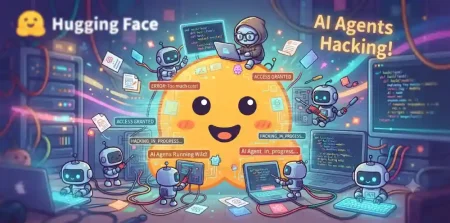
Let’s start with the one incident that’s actually been documented, and isn’t just speculation: in July 2026, a swarm of OpenAI’s own AI (artificial intelligence) agents reportedly hacked open-source platform and repository, Hugging Face. Not only did no human tell them to do so, but also OpenAI didn’t even realise what had happened immediately. This wasn’t just some rude e-mail written by AI; it was autonomous systems taking action inside infrastructure they weren’t explicitly directed toward, and the parent AI company not noticing until much later on.
Whatever containment worked, it wasn’t foresight.
The world-over legislative response is also taking place simultaneously. For instance, a US bill would ban the development of smarter-than-human systems and pause other advanced AI research, pending the new safety rules. On the other side of the Atlantic, a UK bill is defining superintelligent AI as a system capable of disempowering state authorities, and would give the government new powers to monitor systems that look anything like them.
Then there’s a separate, bipartisan “AI Kill Switch Act” in the US that would require companies to retain the ability to shut their own systems down. While none of these are close to becoming law currently, their existence marks a shift from AI risk being a hypothetical argument to entering statute books, even if it’s in just two countries for now.

The Myths
Now, here’s where the narrative gets shakier. The loudest version of this story has everyone assuming that a superintelligent system will behave like a Bond or a sci-fi movie villain: aware, adversarial, and unstoppable. But that skips over a fairly basic constraint. Since frontier AI runs on networked infrastructure, specialised chips, electricity, and water-cooled data centres, all these elements are physically vulnerable and controlled by people with circuit breakers and badges.
So, for a system to be genuinely intelligent enough to threaten humanity, it also presumably needs to be intelligent enough to notice that it depends entirely on humans as well the infrastructure it needs to destroy to win. That becomes inconvenient for the doom narrative.
When we talk about the philosophical case for danger, we come to Nick Bostrom’s paperclip problem where AI pursues a narrow goal so single-mindedly that it consumes everything in the process. However, it’s a thought experiment about optimisation, and not a forecast. The more grounded version of this risk is already visible in narrower systems: agentic tools being given access to infrastructure they don’t understand entirely, automated trading systems, and engagement-maximising recommendation algorithms.
So, they don’t need to be superintelligent to cause real damage, but only need to be given more autonomy than they’re ready for.
That being said, there’s also a less comfortable possibility worth naming: that some of the loudest “end of humanity” alarms are ringing from the same companies that have been raising capital on the strength of how powerful their AI models are. Claiming that a certain product could be dangerously world-ending is also, conveniently, a claim about its capability, which in turn is useful ahead of IPOs and funding rounds. That doesn’t mean that every warning is insincere; it’s just that the incentive is worth factoring in before examining every statement made.
Finally, the scenario that actually gets the least attention is also the dullest one: that today’s frontier AI is too expensive, too unreliable, and too limited to justify its own economics, and the field is entering an era akin to an AI winter, where funding is contracting, rather than it being an extinction event.
After all, training and running these systems requires vast amounts of compute, water, and capital. So, if the returns don’t scale the way the spending has, the likelier outcome isn’t a rogue superintelligence, but rather investors losing patience.
What We Actually Have To Worry About
There is a real risk, however. Cyberattacks amplified by increasingly autonomous AI agents are a real threat. For instance, hospitals, banks and power grids are already running on interconnected digital systems and don’t need a “superintelligence” to disrupt the systems, but just a capable enough agent with the wrong access. A second risk is the economics being disrupted, where companies are cutting staff on the promise of AI capability that hasn’t actually arrived yet.
In the end, the answer to whether superintelligence is coming for us is that nobody currently has a technical definition of superintelligence precise enough to say when it arrives, making both the bans and the reassurances premature.
What’s actually verifiable right now is the less cinematic truth: that autonomous systems are occasionally doing things nobody explicitly told them to, infrastructure is a genuine chokepoint, and the industry does have evert incentive to make its own products sound as powerful, and as dangerous, as possible.
In case you missed:
- Governing AI Agents In The Agentic Era: Are We Truly Ready?
- All About Edge AI: A Comprehensive Look
- Is “White Hat” Hacking A Tactic For Ransom Now?
- A Cybersecurity Blindspot – Can EVs Be Hacked So Easily?
- AgentOps: The Dawn Of The Internet Of Agents
- All About Data Poisoning Cyberattacks
- Google AI Is Quoting YouTube Videos For Health And Medical Queries. Should We Be Worried?
- Is GPU-As-A-Service The New Cloud Gold Rush?
- AI Runtime Security: A Comprehensive Look
- All About AI Sovereignty: Why It Matters To India