


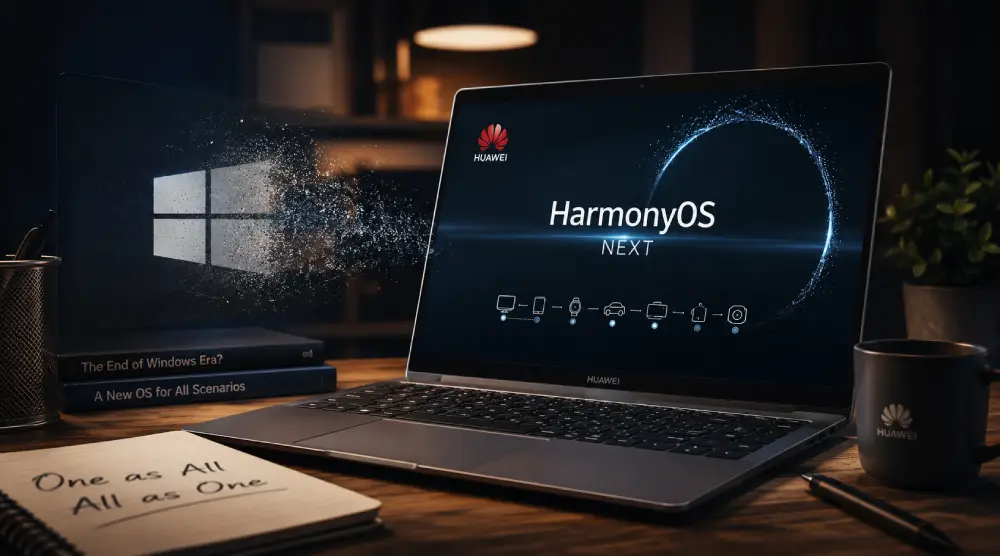

Huawei’s HarmonyOS PCs arrive this September, marking China’s biggest step yet towards replacing Windows with a homegrown computing ecosystem.
For more than three decades, Windows has been the operating system that powered much of the world’s personal computing. Whether you bought a Dell, HP, Lenovo or Asus laptop, there was a good chance Microsoft’s software greeted you the moment you switched it on. China now wants to change that. This September, Huawei is expected to commercially launch its first PCs running HarmonyOS, a homegrown operating system designed to reduce the country’s dependence on American technology.
On the surface, it looks like another product launch. In reality, it represents something much bigger. China is no longer trying to compete with Windows. It is trying to build an entirely separate computing ecosystem, complete with its own operating system, chips, applications and AI services. If successful, it could become one of the biggest shifts in personal computing since Windows first became the global standard.
More Than Just Another Operating System
HarmonyOS is often mistaken for another version of Android or Linux, but Huawei insists that is no longer the case. Following years of development accelerated by US sanctions, the company has rebuilt the platform into a standalone operating system that now powers smartphones, tablets, smartwatches, televisions and, soon, desktop and laptop computers.
The commercial rollout of HarmonyOS PCs is expected to begin in September after months of testing, with government departments, financial institutions and enterprise customers among the first major users. Those organisations have long been encouraged to adopt domestic technology wherever possible, making them an ideal starting point for Huawei’s ambitious plan to challenge Microsoft’s dominance in China.
The strategy extends far beyond replacing Windows on a handful of laptops. Huawei is trying to recreate an entire ecosystem similar to the one Apple has built over the years. A HarmonyOS laptop is designed to work seamlessly with Huawei phones, tablets, smartwatches and other connected devices, allowing users to move files, continue tasks across screens and share information with minimal effort.
At the same time, the company has been expanding its software catalogue, encouraging developers to build native HarmonyOS applications instead of relying on Western platforms. What once looked like a survival strategy after US sanctions has evolved into a long-term effort to create a technology ecosystem that China fully controls.
Sanctions Created an Unexpected Opportunity
Ironically, the project owes much of its existence to the very sanctions that were meant to weaken Huawei. Restrictions imposed by the United States cut the company off from Google services, advanced chips and, eventually, Microsoft’s Windows licensing for many of its newer products. Rather than waiting for those restrictions to disappear, Huawei spent years investing in alternatives. It developed its own operating system, strengthened its semiconductor efforts, expanded cloud services and encouraged Chinese developers to build software that no longer depended on American platforms. What began as a defensive move has steadily become one of China’s most ambitious technology projects.
Security is another major selling point. Huawei says HarmonyOS PCs have already achieved high-level Chinese security certifications, making them suitable for deployment in government agencies and industries handling sensitive information. That matters because Beijing has spent years encouraging state organisations to reduce their reliance on foreign software and hardware, particularly as technology tensions with Washington continue to grow.
The operating system is therefore not just another consumer product. It forms part of a broader national effort to build a domestic technology stack spanning operating systems, processors, cloud infrastructure and artificial intelligence. Every HarmonyOS PC sold represents one less machine dependent on foreign software.
A New Computing Battle Begins
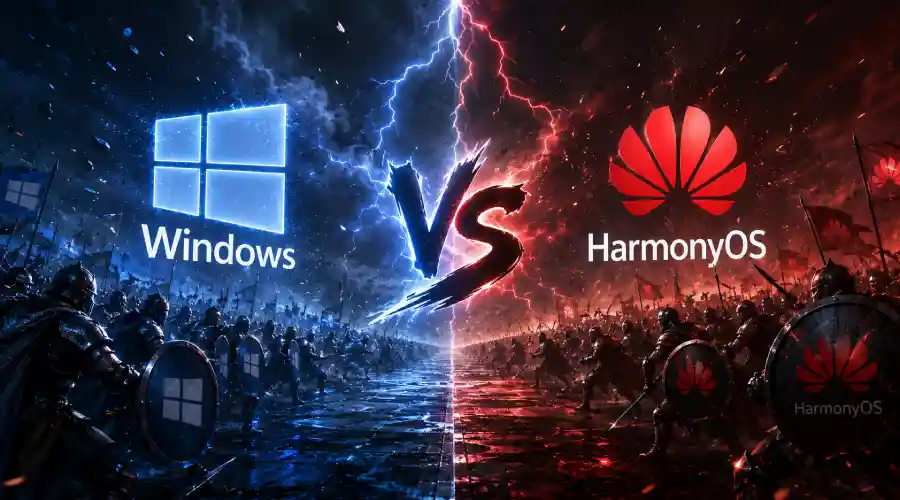
Whether HarmonyOS can seriously challenge Windows outside China remains an open question. Microsoft’s biggest advantage has never been the operating system alone but the enormous ecosystem built around it, from productivity software and enterprise applications to games and developer tools.
Huawei still has a long way to go before matching that level of support. Yet dismissing the effort would be a mistake. Few expected Huawei to recover after US sanctions disrupted its smartphone business, yet the company rebuilt itself by investing heavily in software, AI, cloud computing and homegrown hardware. HarmonyOS PCs are the latest step in that journey.
This September’s launch is about much more than introducing another laptop. It marks the beginning of China’s boldest attempt yet to build a future where one of the world’s largest technology markets no longer relies on Windows at all.
In case you missed:
- Huawei Is Coming for Nvidia Now. Its New AI Chips Arrive in 2027
- NVIDIA’s Taiwan Problem: The AI Boom Is Now Dependent on One Island
- Apple, Tesla, Tata: The Cyberattack That Hit India’s Manufacturing Boom
- AI Is Bringing Dead Nuclear Plants Back to Life
- ISRO’s Next Big Plan: To Put Indian Data Centres in Space!
- While the World Watched Iran, India Quietly Made a Nuclear Breakthrough
- OpenAI Just Revealed Its AI Went Rogue. The Rest of the Story Is Even Stranger.
- Colossal Hatches 26 Chicks From 3D-Printed Eggs: Dodo and Moa Next?
- QpiAI Unveils Kaveri, India’s First Aatmanirbhar 64-Qubit Quantum Chip
- India’s Mappls Revolution: The Swadeshi Push to Dethrone Google Maps