


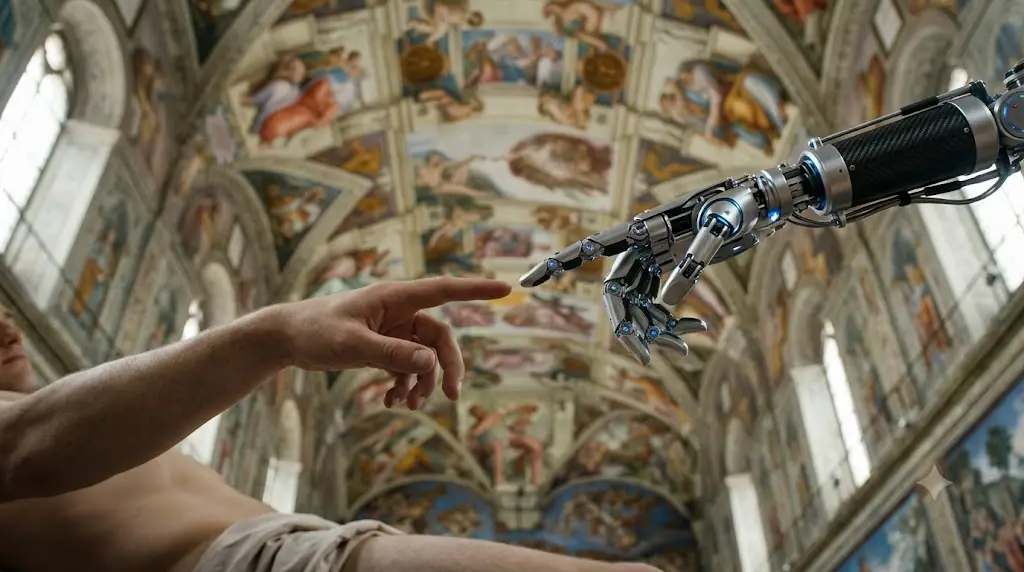

The biggest obstacle to a robot takeover of the world lies not in artificial intelligence but in the dexterity of their hands, writes Satyen K. Bordoloi
It is 2015. We are at the inaugural Amazon Picking Challenge in Seattle, Washington, where a highly advanced robotic arm hovers before a standard warehouse shelf. Its job is elementary: pick up a soft item wrapped in a thin, transparent plastic bag. A child could do it in seconds. The robot fails. Miserably. And that’s not because its 3D vision system can’t identify the item or that its software lacks instructions on how to reach it.
It fails simply because its mechanical grippers can’t feel the plastic slipping. Without that ghost of a sensation – that whisper of friction and resistance that our fingertips register without even thinking – the robot cannot adjust its grip, leaving it to fumble blindly with the crinkly film.
That single moment captured the frustration that has haunted robotics for half a century. We built robots that can see better than us, calculate faster than us, and outlast us on any factory floor in the world. Where we’ve failed is in building a robot that can touch with the “sophistication” of a three-year-old picking up a grape.
We thought it was the brain, but turns out it is the hand that is the hardest problem in robotics.
Two Million Years of Engineering
Before we get to the robots, we must understand what we are trying to replicate.
The human thumb didn’t appear overnight. Research using virtual muscle modelling on hominin fossils has found that powerful thumb opposition – the thing that lets you press your thumb firmly against your fingertip – emerged about two million years ago. Before that, our ancestors made crude stone tools, but the precision grip we now take for granted came later, and it changed everything.
Strong, nimble thumbs meant our ancestors could not only create better tools, but wield them better for more complex tasks. And they could use bones and sticks for hunting. This meant that as developing dexterous, opposable thumbs pushed early humans to make and use tools, it led them to eat more meat, which led to bigger brains, which meant that the hand and the mind evolved together, each demanding more of the other. Civilisation, very literally, is a story written by the human hand.
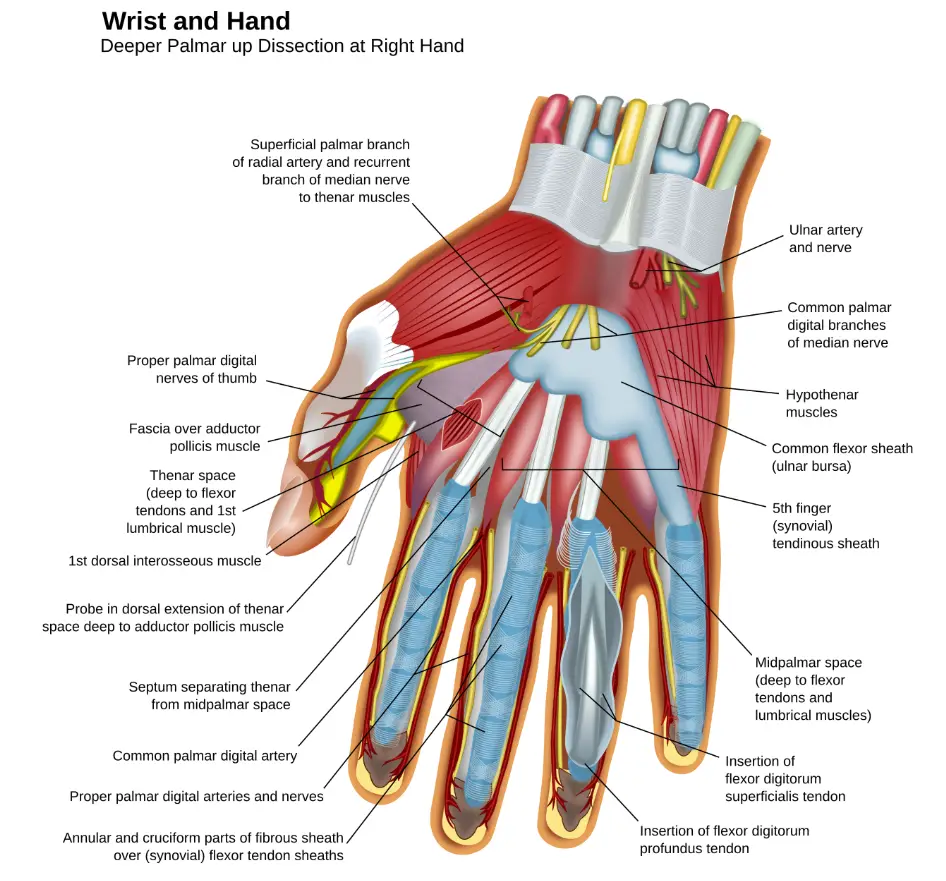
And if we go down to it, we see how complicated the human hand is. It has 27 bones, 29 joints, over 30 muscles (many of which sit in the forearm, not the hand itself), and roughly 17,000 touch receptors in the fingertips alone. When you pick up a pen, your brain is processing grip strength, surface texture, weight distribution, and temperature all at the same time, unconsciously and in milliseconds. Replicating that is more than just a problem for engineers: it’s a moonshot project.

The Robot Hand: A Brief, Humbling History
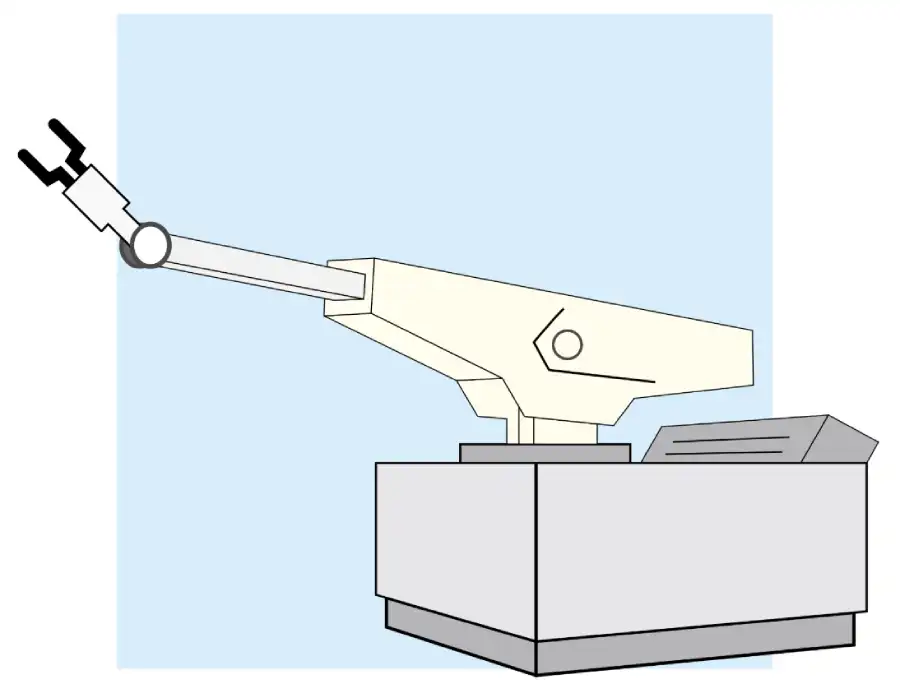
Robotics, as an industrial discipline, began with the arms. The first industrial robot, UNIMATE, was installed at a General Motors plant in New Jersey in 1961 – a 4,000-pound hydraulic arm that stacked hot metal parts. It was, to put it crudely: dumb as a brick, powerful as an ox, and utterly indifferent to what it touched.
The first serious attempt at robotic hand dexterity came in the early 1980s in the Stanford/JPL Hand, which was considered the first dexterous robotic hand, developed to investigate fine robotic manipulation. It had three independently controlled fingers and was equipped with force feedback. Later, the Utah/MIT Dextrous Hand made breakthroughs in human-like articulation, robotic dexterity, and sensing to become the foundation for future dexterous hand design.
These were miraculous for their time, and expensive, often exceeding $100,000 per unit. And they were so fragile, they were unsuitable for real-world deployment, with each finger requiring its own actuator, its own control algorithm, basically its own everything. The engineering overhead, naturally, was staggering.
For decades later, the field drifted. Industrial robots got bigger, faster, more precise arms – but remained fingerless in the human sense, using simple clamps and grippers that could only grab what was placed correctly in front of them. A general-purpose robotic hand – one that could pick up a cup, thread a needle, peel adhesive film off a car panel – remained a dream.
What Touch Actually Means
Here is the core problem, stated plainly. Vision tells a robot where an object is. Instructions to it tell it what to do with it. But how to do it is the domain of touch. And for most of the tasks we are using robots for, like say surgical suturing, sorting mixed packages in a warehouse, assembling electronics, folding laundry, we do not need the touch part.
But if you have what roboticists call “tactile sensing”, you can do the other things that really matter for us. And in this domain, finally, exciting things are happening.
Modern vision-based tactile fingertips can reconstruct local contact geometry at 30 to 100 micrometres, while their newer variants can resolve surface grains at sub-Newton contact forces. Compare that to human fingertips, which can detect surface variations of about 13 micrometres. We’re thus within striking distance.
In 2024, a team at the University of Bristol built a four-fingered robotic hand with artificial tactile fingertips – developed using miniaturised smartphone camera technology, capable of rotating objects such as balls and toys in any direction and orientation, even when positioned upside down, something never achieved before. In 2025, researchers unveiled the F-TAC Hand, published in Nature Machine Intelligence, that integrates high-resolution tactile sensing across an unprecedented 70% of its surface area, with a spatial resolution of 0.1 mm – allowing for human-like adaptive grasping.
The Humanoid Race and the Hand Problem
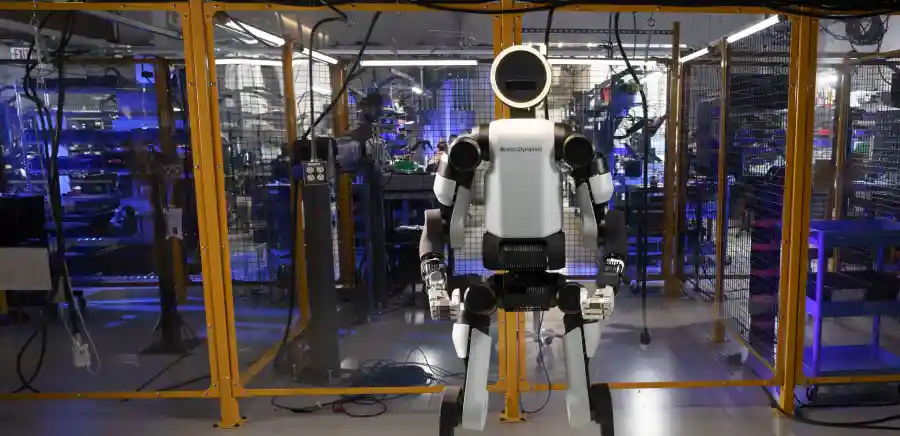
All this was happening when the humanoid robot industry was booming. Tesla has staked its future not on cars but robots, with Optimus being first in the line. Figure AI has Helix, and Boston Dynamics has Atlas. Then there are dozens of Chinese competitors whose robots are winning marathons, sparring with each other, and seem to be winning the race so far.
The result of all this interest in robotics means that billions are flowing into robotics, with Goldman Sachs estimating the humanoid robot market to reach $38 billion by 2035. The global market for robot dexterous hands alone was $1.7 billion in 2024 and is expected to exceed $3 billion by 2030.
Yet, at the centre of nearly every engineering challenge is the same stubborn obstacle. The hand.
Tesla has quietly acknowledged this after it paused Optimus production mid-2025 over overheating joint motors, short transmission life, and weak hand performance. Their response was interesting, with the latest Gen 3 hand redesign placing 25 actuators per hand, housed in the forearm – a biomimetic approach that mirrors human anatomy, with tendons running down to the fingers just as they do in the human arm. That is a fundamental rethink of the physical architecture.
Figure AI’s approach has been leaning more towards AI-driven adaptation. Their Helix 02 system, released in January 2026, replaced roughly 109,000 lines of hand-engineered code with a neural network – letting the robot figure out how to grip, rather than being told how to. Figure’s deployment at BMW plants has expanded from one facility to two, and their timeline from first deployment to second was compressed from twelve months to thirty days. This signals that the hand is becoming learnable, not just programmable.
Achieving reliable grasp and manipulation of irregular objects at high throughput, at par with human workers, would transform parcel logistics, a sector valued at $520 billion in 2025, delivering over 400 billion packages globally. Then there’s minimally invasive surgery – a market expected to exceed $70 billion in 2025 – plus electronics assembly, elder care, agriculture, and household help. The potential unlocked by a truly dexterous robotic hand, not unlike the human hand, will be civilisational.
But the path to that isn’t easy. It’s long and winding. And in a poetic way, it’s an acknowledgement of what a powerful instrument the human hand truly is.
Robots have long been touted to change the world. But you know when they’ll actually do that? Not when they can see better, or think faster. But when they can touch a grape without crushing it. Like a 3-year-old toddler.
Talk to the hand. For it is the whole story of robotics.
In case you missed:
- “Faster, Higher, Stronger” to “Smarter, Hardier, More Useful”: Why China’s Hosting Robot Olympics
- The Robots Are Coming; China’s Metal Militia is Leaving the World in the Dust
- Lost Job to AI? The Real Enemy Isn’t The Bot – It’s Your Boss. Here’s Proof
- The B2B AI Revolution: How Enterprise AI Startups Make Money While Consumer AI Grabs Headlines
- NVIDIA’s Strategic Pivot to Drive our Autonomous Future with Innovative Chips
- $725 Billion Down, Trillions To Go: Why The AI Bubble Refuses To Burst
- Anthropic $30 Trillion Value for AI: Mirage or the New Price of Human Labour?
- FIFA ‘AI’ World Cup: Is Football An ‘Irritating’ Sideshow To All The Tech?
- Why the Alleged, Upcoming AI Crash Is Never Going To Happen
- The Net That Caught Itself: How the World Learned to Cage the Internet