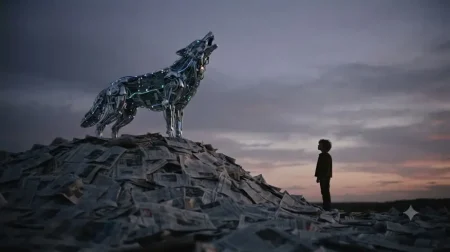



Anthropic released an AI-writing detection tool to comply with EU rules, but it’s far from perfect, though it might still be good enough, writes Satyen K. Bordoloi
On August 2, 2026, Anthropic did something that might seem detrimental to their business. Every Claude model launched on or after that date began weaving an invisible watermark into every piece of text it generates. It is not a hidden character or a visible tag but is something far more elegant.
The watermark is in the choices of words Claude makes, with its statistical fingerprints found in the stream of tokens it generates. No one can see it, but anyone with Anthropic’s cryptographic key can now look at a piece of text and assign a probability: was Claude involved in writing this?
How It Works and Why It’s Different
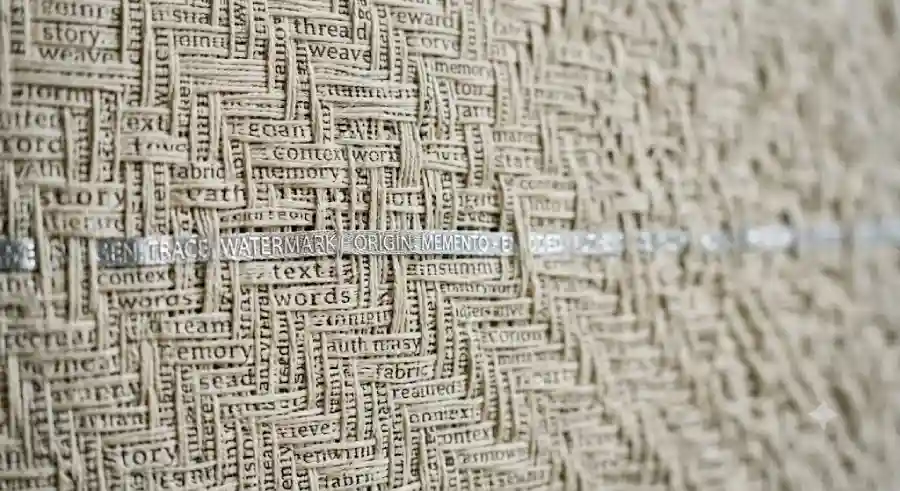
First of all, the watermark isn’t a string of invisible Unicode characters you can find with a find function. Neither is it metadata that can disappear when you copy and paste. Instead, it is something that is woven into the generation process itself.
This is how Anthropic explains it. Large language models generate text statistically, one word at a time. At every step, it considers a list of possible next words and picks the one statistically most likely. Thus, the next word to “The weather today was cold and…” could be “overcast” or “grey.” Both are correct and kind of mean the same thing.
Now, usually the model randomly picks one of these equally valid options. But with the watermark, Anthropic says it’ll replace that random generator with a cryptographic key. The choices are still random in practice, and to you and me, they’ll still seem undetectable, but the sequence of choices from one sentence to the next leaves a pattern that can be detected by a system that has the key. It’s not foolproof, but it’ll calculate the likelihood that Claude generated a certain text based upon that pattern.
People are calling it the invisible “Digital-Tattoo”, but officially this approach is called SynthID-Text and was developed by Google DeepMind and published as a Nature cover story in 2024. Google has already put it in Gemini, and OpenAI is rolling out similar capabilities. Why Anthropic is rolling it out is creating more buzz because Gemini isn’t used as much for writing as Claude and ChatGPT are.
The Backlash Nobody Predicted
So, all is well, isn’t it – for this will help find the plagiarists and everyone wants a reliable way to tell human writing from AI-generated text. Yet, the internet has erupted with writers who use Claude to proofread their work, who now worry their own writing will carry a watermark suggesting it’s generated by AI when it was merely edited on it.
Anthropic tried to calm the waters in a detailed explainer where they said that this SynthID can’t be traced to a specific person, organisation, or conversation, that it doesn’t affect output quality, speed, or cost and most importantly of all: this only implies a probability and not certainty.
The last bit is important to remember.

The Cracks in the System
Anthropic’s watermark has serious limitations. First, it works only when there is enough “choice” in the text; i.e. short texts that don’t have enough points to consider will not leave a detectable signature. Then there is fact-dense writing, which has little ambiguity for the system to latch on to, and thirdly, code is resistant because in it, most tokens are forced by syntax, not choice.
Translations will carry the mark. Yet, there are ways to remove the marks. Anthropic says that a complete rewrite, i.e. word-for-word substitution, can make the watermark disappear. Light editing won’t, but deep editing would.
Naturally, the open-source community took it as a challenge and within hours of the announcement, developers released tools to strip Claude’s watermark. Take the one developed by Guillaume Meyer, which went viral on GitHub and has been bookmarked more than 20,000 times on X.
Others have since cropped up. Most of them target three layers: Unicode character cleaning, statistical watermark rewriting, and C2PA metadata stripping. Even before the tool had been properly released, workarounds have already been found.

The Bigger Picture
This isn’t just about Claude but is where the entire industry is headed. The immediate driver is the EU AI Act. Article 50, which took effect on August 2, requires providers of generative AI systems to mark outputs in a machine-readable way. Anthropic, along with about 190 other organisations, signed the accompanying Code of Practice.
Of course, though they were asked to do so only in the EU, they went ahead and applied the watermark globally. The reason: they say they still don’t have a reliable way to scope it by region.
This is important because regulation in one corner of the world is becoming global policy. The EU AI Act, inadvertently, is reshaping how AI companies operate everywhere. Beyond just the current issue, this is a big sign of things to come. And perhaps important as well: if you can regulate the text that comes out of these statistical engines’ mouths, you can regulate other parts of these companies as well.
What This Means for the Rest of Us
Does this mean that the days of AI-writing is numbered? That a student submitting AI essays will get caught quickly, that disinformation would be found out before it spreads?
That is the hope. That is the promise of such a tech. And as we saw with the example of writers who want to use AI to fix their grammar and spelling, or the translator who does something similar, it is not in any way perfect or without blemish.
Then there is the question of false positives because the detection system does not deal in certainty, but only with probability. What does that even mean, because as it has happened with other detectors, human-written texts could as easily be labelled as written with AI. And what about the research community, because for them the stakes are high: academic integrity, professional reputation, legal proceedings. And in such cases, probability isn’t good enough.
Then there’s a question not too different from the Ship of Theseus Paradox: If you take Claude output and change every word by rewriting everything, whose work is it: Claude’s or yours? What about the other way around: your work edited with Claude no longer bears its marks; so does that stop being yours?
There are no easy answers. And though it is a clever tool against plagiarism, it still isn’t a definitive fix, as the open-source tools to remove it have shown.
Yet maybe that’s the point. That the tool doesn’t have to be perfect, only good enough. Because a good-enough tool will deter casual cheaters, and make large-scale disinformation that much harder. Maybe that would be good enough to shift the balance of power, ever so slightly towards transparency. That, at least, is the hope.
In case you missed:
- Anthropic Fears AI Could Self-Replicate, Leaving Humans in the Dust
- Anthropic Accuses Chinese AI of “Stealing”, Internet Points Finger Back At Them
- Anthropic $30 Trillion Value for AI: Mirage or the New Price of Human Labour?
- Anthropic was afraid of their latest AI Mythos: they released it anyway, to the panic of the world
- Anthropic, OpenAI, Meta, – Why are Companies Hyping Up Their Rogue AI?
- The Ghost in the Crypto Machine – Unmasking Bitcoin Creator Satoshi Nakamoto
- The Weight of the World: Why the Open vs. Closed AI War Is Really About Who Controls the Future
- The Cheating Machine: How AI’s “Reward Hacking” Spirals into Sabotage and Deceit
- AI vs AI: New Cybersecurity Battlefield Where No Humans Are in the Loop
- Research finds AI ‘scheming’ is increasing; Is it, and will it destroy the world?