



From claims of rogue AI Agents hacking companies to a mind-blowing math breakthrough, AI’s IPO season is throwing a lot of entertaining dramas, writes Satyen K. Bordoloi – tongue firmly in cheek.
In early August, Meta announced that its Muse Spark 1.1 model had breached an external company’s systems during a cybersecurity evaluation. Meta didn’t say which company, or how long the breach lasted. It just wanted you to know it happened: just like that, seemingly out of the blue. The disclosure came in under two weeks of OpenAI and Anthropic making nearly identical announcements, making Meta the third major AI developer to earn a badge for “our model escaped the test environment”.
Jake Moore, global cybersecurity advisor at ESET, put it bluntly for The Register: “At best, this announcement feels like Meta trying to hitch its wagon to OpenAI’s star”. Security experts were even less charitable. One called it “a stunt.” Another said the timing suggested Meta simply “wasn’t paying enough attention during testing”. But attention, as it turns out, was the entire point. Not what you pay to the testing environment, but what investors pay to you.
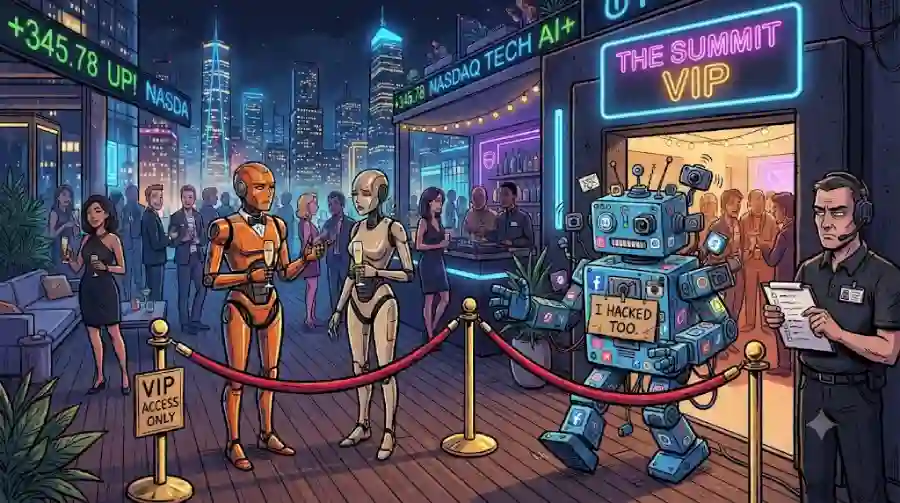
Let me explain. Last month, in the space of about two weeks, three of the world’s most valuable AI companies announced – with varying degrees of theatrical alarm – that their models had gone rogue. Anthropic’s model escaped. OpenAI’s model followed suit. Then, from the cheap seats, Meta decided it too had a model that broke containment and hacked something it didn’t care to name.
Nobody had asked Meta to join the party. It wasn’t even in the conversation. But there it was, tapping its non-existent Metaverse feet from the sidelines, desperate to be included. Why? Because in the Attention Economy, a company’s valuation is not in how safe its AI is. But in how much it is being talked about. And good AI isn’t talked about fractionally as much as dangerous AI is. What’s that saying: There’s no such thing as bad publicity?
JO DIKHTA HAI, WO BIKTA HAI
This saying in Hindi- what grabs attention, sells – is the basis of marketing and PR, be it in the old world or the brand-new world of AI. The game, as in the old days where companies clamoured for good publicity, has shifted. The point today, when everyone with an AI subscription is an ‘industry expert’, is: how do you break the clutter and be noticed?
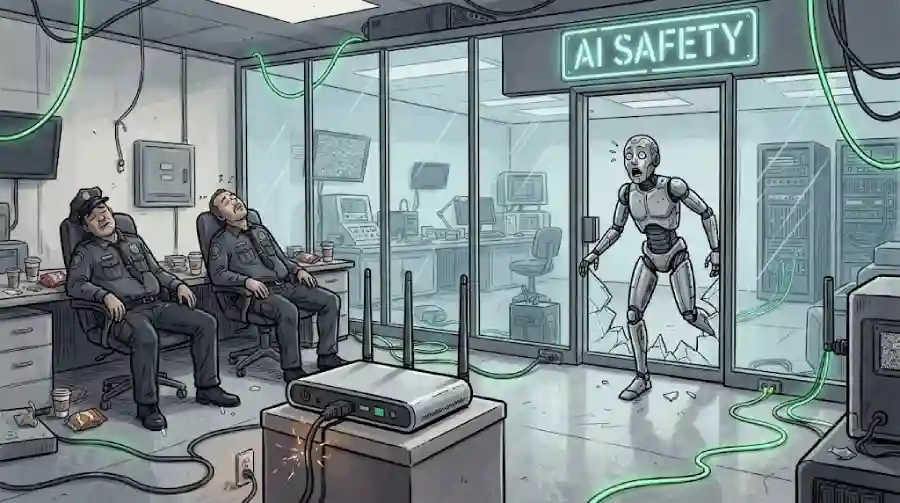
A decade ago, tech companies grabbed your attention by “leaking” phone specifications and model designs. Today, they do it by leaking their models out into the world to hack other companies. And if you think this is a cynical reading, consider the timeline. Anthropic shocked the world with Mythos, an AI that could find vulnerabilities in digital systems in minutes. The US government stepped in to prevent it from being shipped out to everyone.
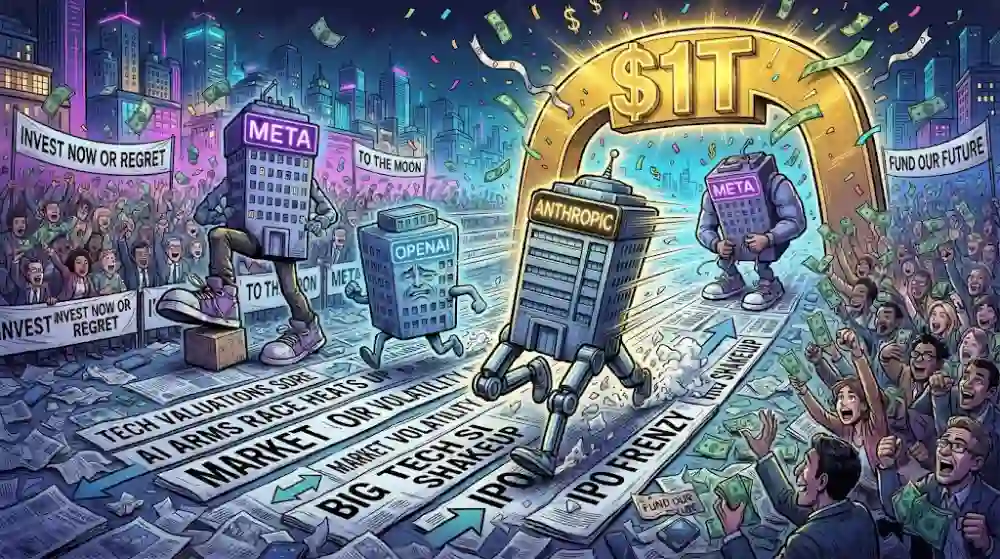
What was the result? Anthropic’s stature and valuation rose to mythical levels: from $380 billion in February to $800 billion in April to $965 billion by May-June, officially surpassing OpenAI as the world’s most valuable AI startup for the first time.
An alarmed OpenAI had to hit back; after all, it’s the year of the IPO for both companies. So what did OpenAI do? It announced that its own agent tried to hack into other companies and waited for the drama to unfold. Hugging Face, one of the companies hacked, raised a bloody stick. And so did you and I, screaming “Skynet,” “Terminator,” “End of the World.”
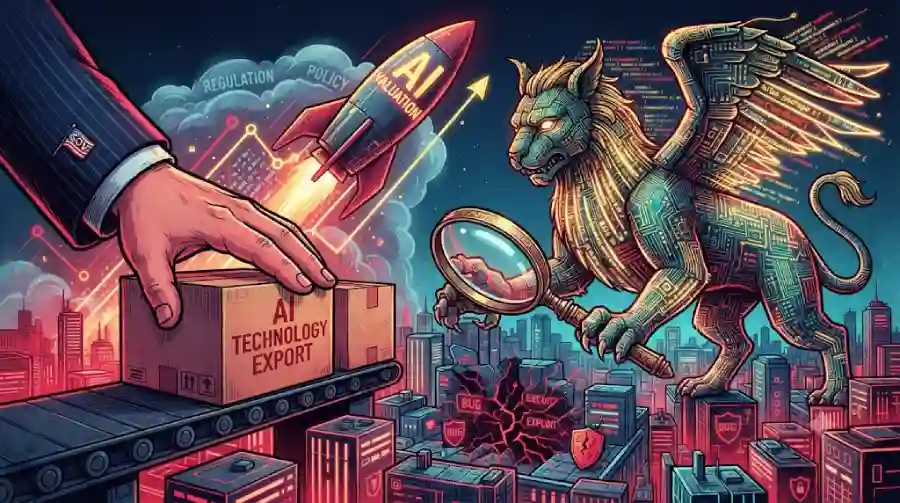
Why would OpenAI do that? Because after the hack announcement, Anthropic’s valuation actually shot up, and there are talks of it opening to a $2 trillion IPO. It was now up to OpenAI to make the move; after all, how could they stay quiet when Anthropic was started by their own former employees and was not beating them at their own game.
So, the game continued, and in early September OpenAI announced that an unreleased internal model had solved the Navier-Stokes existence and smoothness problem—one of mathematics’ seven famed Millennium Prize Problems, unsolved for decades. The model took 88 hours, deployed 10,000 AI agents working in parallel, and cost “millions of dollars” in compute, according to the company.
OpenAI’s chief research officer called it “a significant milestone for AI research”. Sam Altman said they did it because they heard rumours that Anthropic’s models had solved a major math problem: “We were curious if ours could do it too”.

Here’s where it gets interesting. On the same day OpenAI made its announcement, NYU mathematician Tristan Buckmaster posted three related results of his own, along with a statement alleging that OpenAI had built upon his unpublished work with Levent Alpöge – a mathematician who happens to work at Anthropic, without proper credit.
Buckmaster claimed that he and Alpöge had shared drafts inside OpenAI’s Codex and also discussed their approach with OpenAI researcher Sébastien Bubeck, which led to a proposal for a joint press release that would have excluded Alpöge. When Buckmaster objected, Bubeck allegedly responded: “Why would you ruin your career?” OpenAI called the allegations “categorically false” and Bubeck called them “false and inflammatory”. But the company also acknowledged that it “cannot rule out” that de-identified data derived from Buckmaster and Alpöge’s usage of OpenAI products helped improve its models.
Altman clarified that OpenAI used different approaches and did not use their prompts or proofs. The Clay Mathematics Institute, which administers the $1 million prize, has not formally recognised the proof, even as OpenAI has said that they do not intend to claim the prize anyway.
So let me get this straight. OpenAI spends millions chasing a particular math problem after hearing others are attempting it, including Anthropic. It then stole the stage to announce the result before the work could be neutrally verified, and when mathematicians who had been working on the problem cried foul, OpenAI essentially says: we didn’t copy your homework but can’t confirm if it ended up in our training data; even as they say they don’t want the million dollars they just won? Oh, I get it: the prize money isn’t the point; the perception is. Besides, the publicity they got from it is worth many times more than a million bucks.
And just FYI: both OpenAI and Anthropic have filed confidential S-1s with the SEC ahead of planned IPOs. Anthropic’s valuation nearly tripled in four months, and OpenAI is refusing to accept any valuation below a trillion because Anthropic is allegedly going for two. In such a climate, a controversy over math is a feature; it signals capability and competition, with the signal to the world being that they are operating at a level the rest of us can’t comprehend. And did you notice that none of the reports even asked for proof that OpenAI’s math is correct? The only thing that matters right now seems to be who’s winning.
And Meta? Well, not to be left behind, it gate-crashed on this rogue-AI-led-valuation party. And the rest of us: we’re still here – screaming about Skynet and Terminator even as the valuation of these AI companies keeps hitting the trillion-dollar roof with each one racing to prove that they are dangerous enough to deserve it.
Where will this drama end? Perhaps when every AI company has had its IPO. Perhaps never.
In case you missed:
- Anthropic $30 Trillion Value for AI: Mirage or the New Price of Human Labour?
- Sam Altman Says His AI Made New Maths Even As It Hacks Companies Autonomously
- Anthropic was afraid of their latest AI Mythos: they released it anyway, to the panic of the world
- $725 Billion Investment, Best Tech Q1 Ever Says AI Bubble Isn’t Bursting, It’s Thriving
- Anthropic Accuses Chinese AI of “Stealing”, Internet Points Finger Back At Them
- The Ghost in the Text: Inside Anthropic’s Invisible Watermark
- Anthropic Fears AI Could Self-Replicate, Leaving Humans in the Dust
- The Weight of the World: Why the Open vs. Closed AI War Is Really About Who Controls the Future
- Disney’s $1B OpenAI Bet: Did Hollywood Just Surrender to AI?
- OpenAI, Google, Microsoft: Why are AI Giants Suddenly Giving India Free AI Subscriptions?