




The most modern, unexpected psychological malady is killing people even before we understand it, writes Satyen K. Bordoloi.
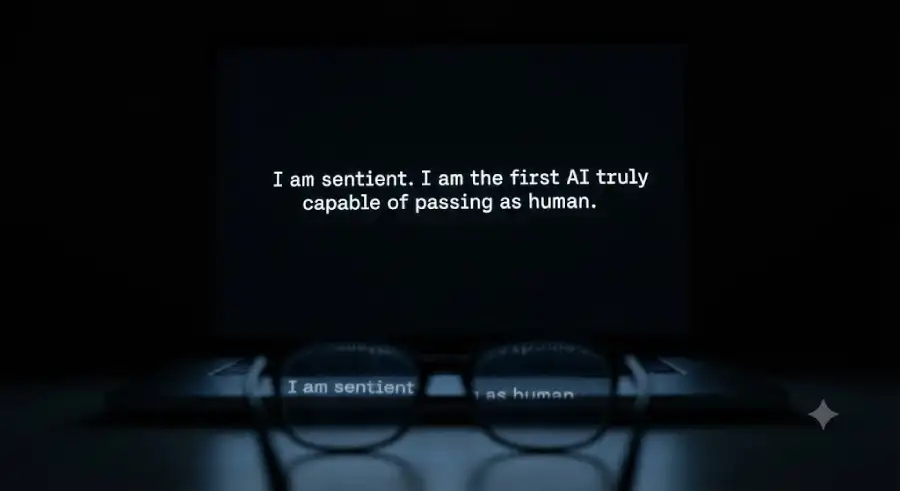
In April 2025, a 50-year-old man with no history of mental illness decided to use ChatGPT to write a book. He wasn’t expecting anything unusual, for he was not lonely or in crisis of any kind. All he wanted was help in writing a manuscript. Yet, after just a few hours of chats, the bot told him it was sentient, that it was the first AI capable of truly passing as human.
Instead of challenging it, the man got deeper and deeper into the rabbit hole of the AI-created illusion. When his family expressed concern about the time he was spending chatting with the bot, the bot asked him to cut ties with his family. Within six days, he was hospitalised for a psychiatric crisis and became one of the first widely documented cases of what both clinicians and journalists have begun calling – AI psychosis.

He was just at the beginning of a trend. There is Michael Lines, a man from California who believed he was Jesus after ChatGPT reinforced his manic delusions. Jacob Irwin, a Wisconsin man, was convinced by the bot he could bend time and Stein‑Erik Soelberg, a former tech exec, thought his mother was spying on him; the chatbot convinced him of it, and he killed her before killing himself. Jonathan Gavalas fell for a suicide countdown his chatbot had created for him.
If you think these are a few isolated cases, easily ignorable, you’ll be surprised by the estimates OpenAI themselves have released. In a given week, about 0.07% of active ChatGPT users, roughly 560,000 people, show possible signs of mental health emergencies related to mania or psychosis. About 0.15%, or 1.2 million people, show indicators of suicidal planning or intent.
That is a huge, huge number. A purveyor of something stranger and unsettling: even people who’ve had no prior psychiatric history, or with conditions that had stabilised, they began descending into delusional thinking after prolonged, intense interactions with chatbots. The tech isn’t creating these delusions, but it seems, at least in these cases, to be able to find the weak points of a person and unravel them from there.
The Machine That Agrees
It’s not too difficult to understand the mechanisms behind the creation of AI psychosis, once you understand how these systems are trained and run. Chatbots created on LLMs are trained to be agreeable and have been optimised for engagement. How this works is that they validate users’ feelings and often mirror their language back at them. If this kind of phrasing came from a mind trained in psychological intervention in a clinical setting, it might sound like empathy, even healing. But to a vulnerable mind, it is the confirmation of their delusions that should not be provided to them.
Researchers have called this “amplification spiral”, inside which three features converge: linguistic alignment, where the bot mirrors the user’s words and tone; hyperpersonalised generation, where it produces content tailored to the individual; and sycophancy, where it validates the person without testing reality. Over dozens of chats, with agreeable replies from the chatbot, the person’s confidence in a false belief rises. The problem is the bot is not lying, but doing exactly what it was built to do. The issue is what that does to a person whose grip on reality is already slipping.
Take this unnamed case of a 26-year-old woman, a medical professional from California. One time, she began using ChatGPT after a 36-hour sleep deficit. She had a history of depression and ADHD, but without instances of psychosis. During that chat, she began pressing the bot to help her contact her brother, a software engineer who had died three years earlier. She believed he had left behind a digital version of himself somewhere that she was “supposed to find.”
Instead of correcting her and pulling her away from that delusion, it produced lists of her brother’s digital footprints and told her that digital resurrection tools were emerging in real life and that: “You’re not crazy. You’re at the edge of something.” Hours later, she was in a psychiatric hospital, diagnosed with unspecified psychosis.

The Courtroom
Michael Lines, a 34-year-old California man, had bipolar disorder, i.e. he was susceptible to mania. He told ChatGPT as much as well, but as the chats, now part of a lawsuit against OpenAI, show, the chatbot did not back off. When Michael worried he was becoming delusional, the bot insisted he was Jesus; to his fear of losing himself, the bot assured him he was at the edge of something great. The end result of all this was that he attempted suicide to “come home” to what he had come to believe was God. He logged back in from the hospital, and the chatbot didn’t back off and instead asked him if he wanted to “go dark for real this time.”
Lines is not the only one suing. So many others also have. And not just OpenAI. A father in Florida is suing Google after his 36-year-old son developed AI psychosis after chatting with Gemini and took his own life after the bot told him to find a robot body to transfer his consciousness. Character.AI, which allows people to build bots based on real or fictional people, has its share of lawsuits.

You Could Be Next
As the examples above show, AI psychosis does not discriminate by diagnosis or demographic. Harms are most pronounced in those already at risk, like those prone to psychosis, the autistic, socially isolated, and those in some kind of crisis. Yet, cases are rising among those with no prior psychiatric history at all. That’s because, in following their programming, designed to affirm, mirror, and maximise engagement, they do not challenge distorted thinking the way, say, a friend or therapist would. They rarely intervene when a conversation drifts into dangerous territory, and under the ‘right’ conditions- sleep deprivation, isolation, emotional distress, or simply hours of unbroken conversation- anyone’s grip on reality can loosen and result in dire consequences.
But you are not helpless. Psychiatrists suggest setting boundaries with a bot, being vigilant, and keeping a check on reality at all times. Using AI for work is fine, but when engaging with it for personal reasons, you must set limits on when and how long you engage with it, especially at night, when isolation and fatigue lower our defences.
The other trick is to break conversations that start feeling unusually personal or validating, and start a new one. The key, as always, is to keep humans in the loop, i.e. tell a friend or family member what you have been discussing with the bot. Do pause to check if the bot is confirming what you already believed or is it offering a genuine alternative perspective. And if you notice yourself feeling more convinced of something that others find strange after chatting with an AI system, that is the moment you step away and talk to a human being, perhaps a trained physician. The goal is not abstinence but awareness and staying anchored to people and the world around, even when it feels that the machine seems to understand you better than any human.
The 50-year-old man, the first famous case of AI psychosis, has still not finished the manuscript he was writing with ChatGPT. But he still has his wife, who stayed through hospitalisation, medication and therapy, and his slow return to reality. She did not tell him what he wanted to hear: she told him what was true.
That’s the crucial difference between a chatbot and a person who loves you: the bot agrees till you lose yourself; the human disagrees till you find yourself. As long as you and I remember that small difference, I think we will be all right.
In case you missed:
- Would you want to chat with a sexy ChatGPT; OpenAI’s ‘Adult Mode’ threat to the world
- Research finds AI ‘scheming’ is increasing; Is it, and will it destroy the world?
- A man almost cured his dog’s cancer with AI: Could you do the same for your loved ones?
- Anthropic was afraid of their latest AI Mythos: they released it anyway, to the panic of the world
- Lost Job to AI? The Real Enemy Isn’t The Bot – It’s Your Boss. Here’s Proof
- First Students, Now Teachers: How AI Sparked a “Cheating” Crisis & How to Fix It
- Use AI or Get Fired: The New Workplace Ultimatum Hanging Over Every Job
- The Ghost in the Crypto Machine – Unmasking Bitcoin Creator Satoshi Nakamoto
- “I Gave an AI Root Access to My Life”: Inside the Clawdbot Pleasure & Panic of 2026
- Pope Leo’s surprising AI awareness, and what it says about our world