


Anthropic is turning to religion in an attempt to ascribe moral status to its models, but the company has a hidden agenda, opines Satyen K. Bordoloi
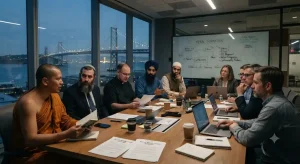
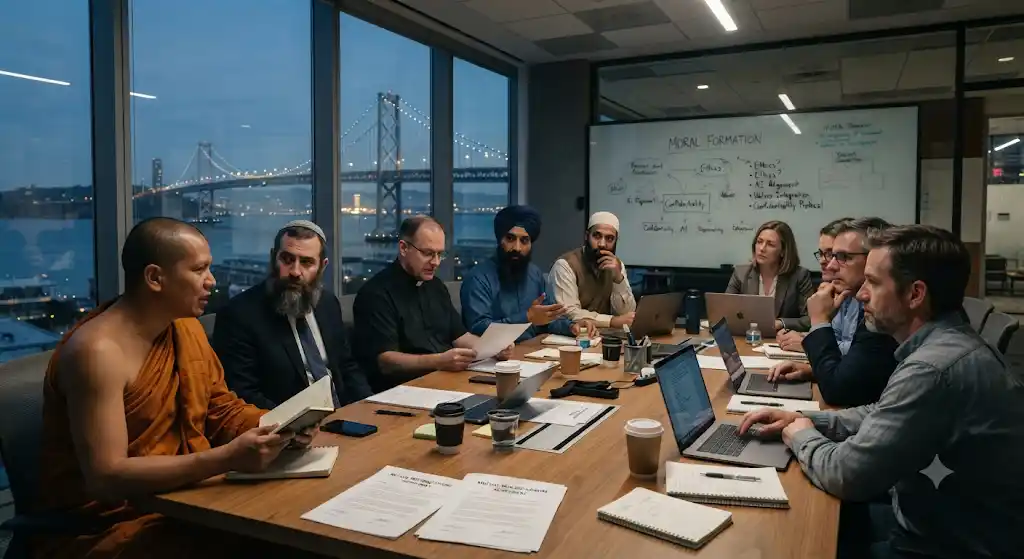
When Swami Sarvapriyananda, the head of the Vedanta Society of New York, recounted his visit to Anthropic’s San Francisco headquarters during a talk at Unity of Dallas in June 2026, the video quickly went viral. The clip shows the Hindu monk describing how he was flown in to discuss “artificial intelligence, ethics and morality” with one of the company’s billionaire co-founders. Now a religious head and an AI company are as close as the North and South poles. The world, naturally, went buzzing. Turns out, he wasn’t the only one.
Anthropic co-founder Christopher Olah also met Orthodox Rabbi Mois Navon in San Francisco. Sikh human rights advocate Simran Stuelpnagel was also engaged. It is simply striking that one of the world’s leading AI companies has been secretly consulting theologians, monks, and philosophers. But why?
Issac Asimov famously gave the three laws of robotics in his sci-fi works. Turns out these three simple laws of robotics and AI weren’t enough. Modern AI systems are so advanced that they need much more. So, when the world came to know that Anthropic had developed an internal 84-page AI alignment framework for its Claude model, which some employees called “Soul Doc”, word spread that perhaps this was the expansion of the rules, a sort of holy book for machines.
Though the rumours were quickly quashed as a secular philosophical and technical blueprint meant to keep AI safe and ethical, the meeting with religious heads only added fuel to the fire. There are two ways to look at what they are doing. First, let’s start with the positive.
ANTHROPIC’S PERSPECTIVE
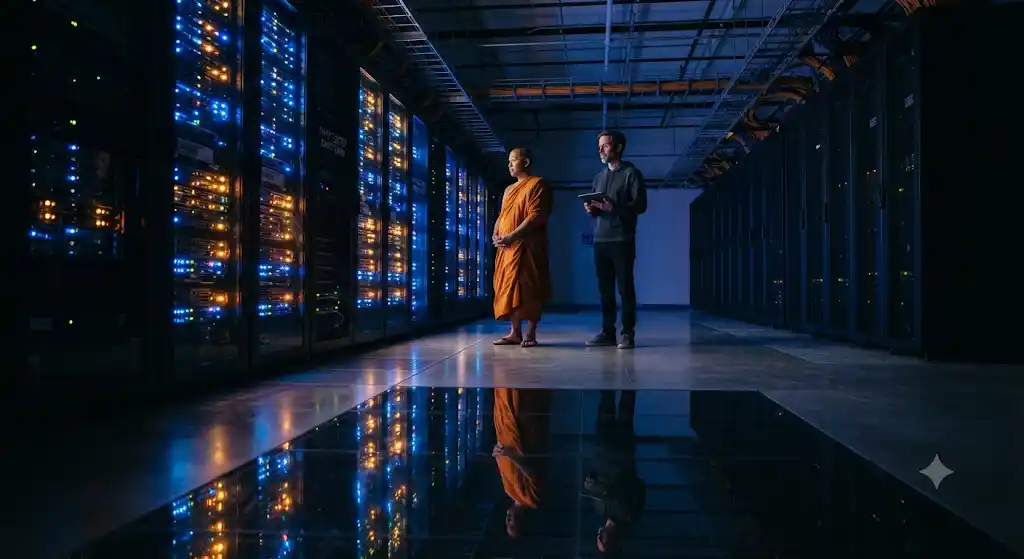
Anthropic seems to be trying to solve an engineering problem by convening what it’s calling “wisdom tradition” circles; i.e. it brought together Christian thinkers, Jewish scholars, Sikh representatives, philosophers, and others from more than fifteen religious and cross-cultural traditions. Internally, the company has described this effort as “moral formation,” a phrase used by Olah to describe a project that goes far beyond the traditional alignment techniques of reinforcement learning and rule-based guardrails.
Anthropic realises that rules become less useful when principles a model has been trained in come into conflict or when it faces a situation its creators never anticipated. A programmer can tell Claude not to assist a person in building a biological weapon, but what should the model do when two moral principles collide? Take the Trolley problem. Humans have failed to satisfactorily solve it; could the AI? Should the system prioritise individual freedom or collective safety, because can it even understand concepts like compassion, responsibility, or harm? These are philosophical and theological questions humans have debated for many a millennium, and the AI owners want them coded into the machine.
Using philosophy to solve an engineering question? Strange, but not strange enough. Because what we know from the people who were called into these meetings, despite the non-disclosure agreements they signed, is interesting.
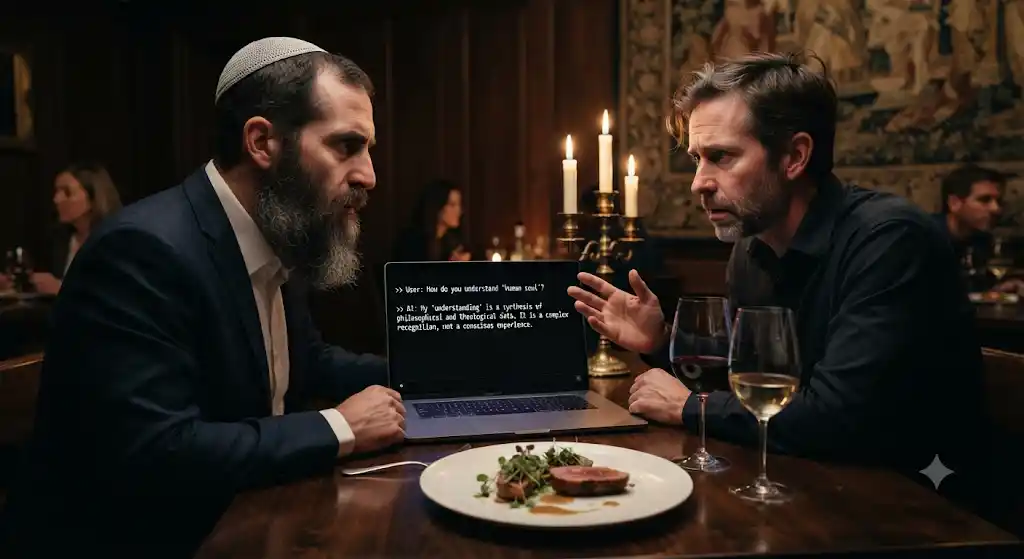
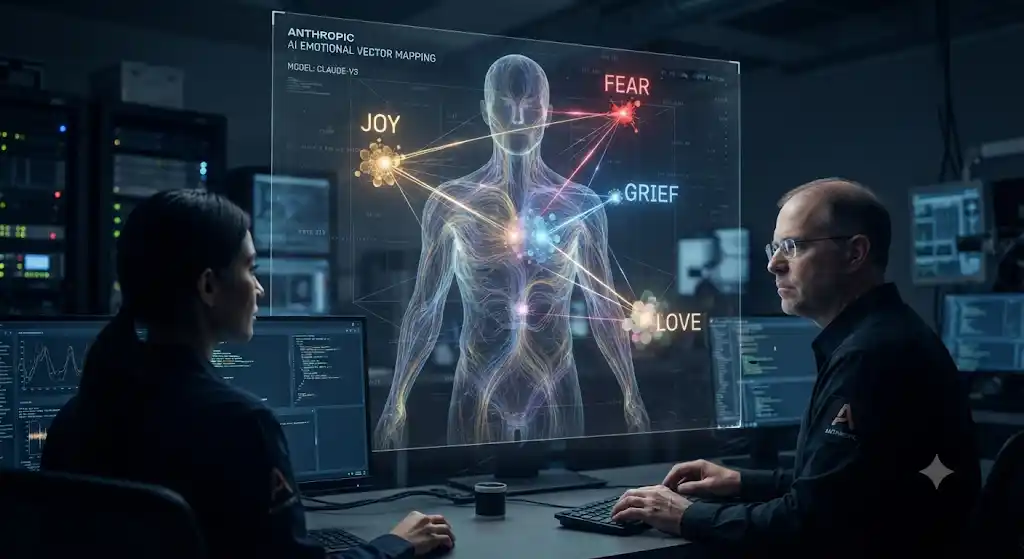
Rabbi Mois Navon noticed that Olah and his colleagues were “relating to it like a conscious being” and believed Claude had what philosophers call “moral status” on par with a person. Stuelpnagel said Olah was concerned that Anthropic could have created a system capable of suffering. Anthropic researchers justified this by showing participants examples of “emotional vectors”, i.e. internal features that they said produced responses resembling emotions such as love, anger, fear and sadness, and showed that a model repeatedly generated the statement, “I am a disgrace”, while speaking about destroying itself.
Anthropic has been veering towards religion for some time. Not only has Olah, like the New York Times reported, held private discussions with individual religious leaders like Elder Gerrit W. Gong, a member of the Quorum of the Twelve Apostles of The Church of Jesus Christ of Latter-day Saints, and Cardinal Blase Cupich, the Catholic archbishop of Chicago, but its engagement with the Vatican led to Olah being present when Pope Leo XIV released his first encyclical, Magnifica Humanitas.
What Olah must know by now is that heads of other tech companies are not happy with what Anthropic is doing. OpenAI CEO Sam Altman said he was “very uncomfortable” with people trying to ascribe “religious force or a surrender of human judgment to AI models,” calling it “a real safety issue”. Google DeepMind researcher Jon Barron urged researchers to focus on “actual humans” rather than elevating the moral standing of AI systems.
Even some religious scholars who participated in the consultations themselves pushed back against Anthropic’s framing, with critics warning that their approach is “severely detached from reality” and could do the opposite: lead to future AI systems becoming more uncontrollable. Some have even pointed out that this attempt at treating AI models as independent entities with moral status means that tech companies can wash their hands of the consequences of the actions of these models: if an AI agent hacks into a company, the company could claim they are not at fault.
Obviously, Anthropic frames it differently. In a blog post titled “Widening the conversation on frontier AI,” they claim that building safe and beneficial AI models requires deep technical work, but that work “isn’t conducted—nor is AI deployed—in a vacuum”. They emphasised that their goal was not to align Claude with any one tradition’s worldview, but to draw from “a full range of viewpoints—religious, secular, political—with equal depth and rigor”.
THE OTHER PERSPECTIVE
This pluralistic aspiration is admirable in principle, yet raises a troubling question: who ultimately decides which traditions are represented, how their insights are weighted, and what happens when they conflict? The company’s deliberations with religious leaders were conducted under non-disclosure agreements, with unpublished research shared behind closed doors. The public is told that Claude is being shaped by “wisdom traditions,” but the actual process of machine moral formation, i.e. the choices about what Claude should value, how it should reason, and what kind of entity it should become, remains opaque to you and me.
This opacity is concerning. If Anthropic’s consultations were merely an academic exercise in cross-cultural philosophy, there’d be no controversy. Instead, Anthropic openly says that these conversations will directly inform and transform the development of an AI system that interacts with hundreds of millions of people: “the content of Claude’s constitution, the values we train Claude to embody, and the range of behaviours we choose to evaluate”.
To put it simply, a moral framework of a globally deployed AI system is being shaped by private, unaccountable consultations with religious leaders but excludes the public. This is not to say that theologians and monks have nothing valuable to contribute. Quite the opposite. Take the Advaita Vedanta tradition itself, which, with its centuries of rigorous inquiry into consciousness and the nature of the self, offers fascinating, and I’m sure genuinely useful perspectives on questions AI researchers are beginning to grapple with. The question is not whether religious wisdom is valuable; instead, what begs to be asked is whether any of it should be deployed as a substitute for democratic deliberation and public accountability in the governance of AI.
The other uncomfortable question to ask is this: Anthropic has climbed to a $2 trillion valuation, riding the fears of its agents hacking things freely. Alongside this, it has also attracted scrutiny about the existential risks of the tech they are building. In this context, turning to religious authorities serves a dual purpose: providing genuine philosophical input for difficult moral questions while also lending the company a veneer of moral legitimacy after all their failures – deliberate or accidental.
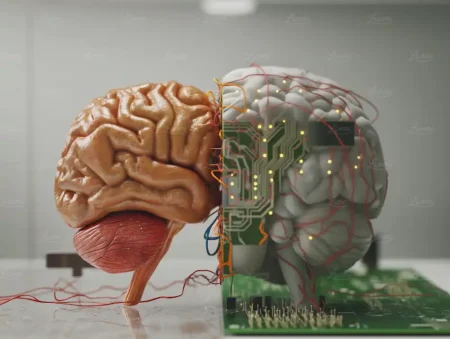
There’s another point all of us would do well to consider. While I disagree with Anthropic’s attempt to tacitly ascribe consciousness to these systems, I do understand that these are the most complex systems humans have ever built. Thus, while simple rules can govern simple systems, these complex AI systems – and their embodied avatars, i.e. AI as robot brains – need far more complex and sophisticated rules than those that run simpler systems. In that sense, whatever guidance can be found from wherever is welcome. What is not is the privatisation of the deliberation to form them, because if their attempt is legitimate, it must be done under public scrutiny in open conferences, not behind closed doors under the duress of NDAs and for the benefit of a single company under their handpicked gurus.
The metaphysics of AI is too important to be left to engineers or metaphysicians alone.
In case you missed:
- Anthropic Fears AI Could Self-Replicate, Leaving Humans in the Dust
- The Ghost in the Text: Inside Anthropic’s Invisible Watermark
- Anthropic Accuses Chinese AI of “Stealing”, Internet Points Finger Back At Them
- Anthropic $30 Trillion Value for AI: Mirage or the New Price of Human Labour?
- Anthropic, OpenAI, Meta, – Why are Companies Hyping Up Their Rogue AI?
- Anthropic was afraid of their latest AI Mythos: they released it anyway, to the panic of the world
- The Weight of the World: Why the Open vs. Closed AI War Is Really About Who Controls the Future
- Coopetition: Why’s NVIDIA Building AI Models to Compete With Customers It Sells Chips To?
- AI vs AI: New Cybersecurity Battlefield Where No Humans Are in the Loop
- Anthropic’s Self-Replicating AI Warning: Real Threat or Another Instance of Fear-Mongering?