


In 1843, a 27-year-old wrote notes thrice as long as the paper she was translating. It spoke about a program for a ‘computer’ that didn’t exist and described what it would become in the future…
We’re talking about the English writer, mathematician, and possibly the world’s very first computer programmer, the Countess of Lovelace, Augusta Ada King, otherwise famous as Ada Lovelace. With an interest in mechanics and an innate love for machines, the 19th-century mathematician is also likely to be the very first person to have envisioned the incredible potential of universal computation.
In fact, some of her ideas form the very foundation on the AI (artificial intelligence) tools we use today! With Ada Lovelace Day having passed us by on October 13th this year, we’re looking at the things she actually got right which, as it turns out, was quite a lot.
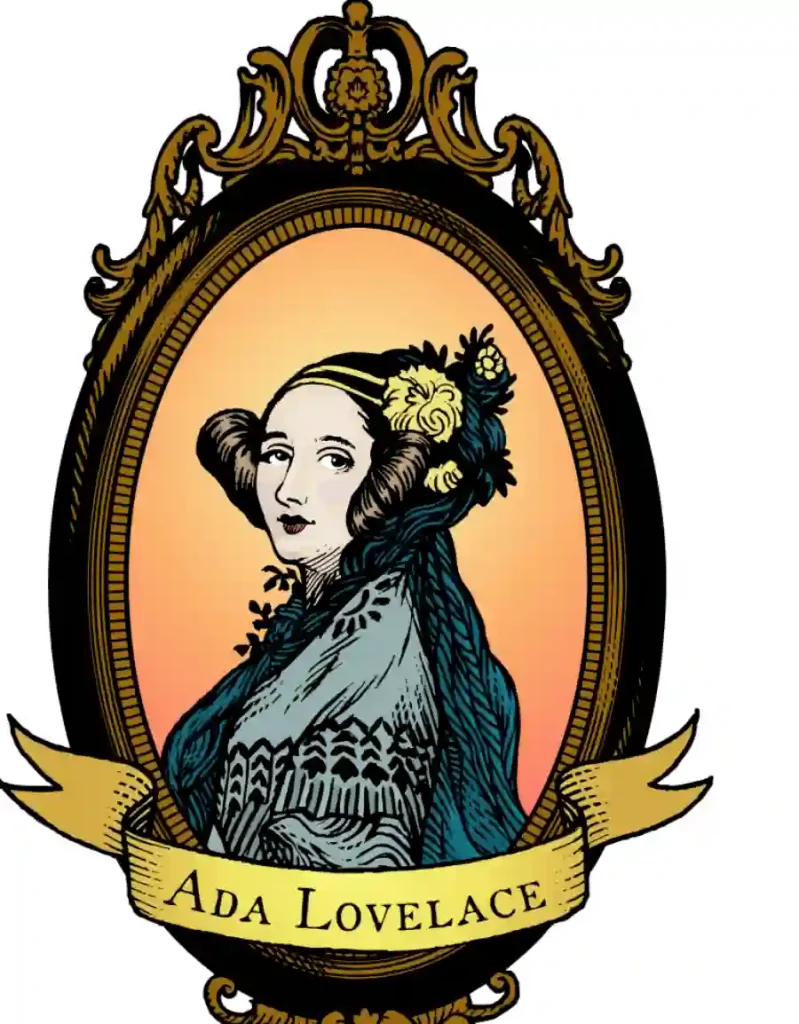
The Beginnings Of Genius
Ada Lovelace, poet Lord Byron’s sole legitimate child, worried her mother to no end, who steered her towards mathematics instead of poetry, fearing she would inherit her father’s temperament. Turns out, it worked.
In 1837, at the age of 17, Ada met visionary inventor Charles Babbage, who had begun designing an original model of his Difference Engine, a programmable mechanical calculator, at the same time. He later designed a far more powerful machine, an Analytical Engine, around 1837. When Ada was asked to translate Italian mathematician Luigi Menabrea’s paper on the engine from French to English in 1843, she added 7 of her own notes.
Categorized from A to G, their length was thrice as longer than the actual paper itself! The notes, not the translation, are why we still talk about her.
What Ada Lovelace Got Right
Tragically enough, Lovelace died of cancer in 1852, just a few years after the paper she worked on was published. So, how did her work contribute to the computing world as we know it currently?
For one, Lovelace saw the computer as more than simply a calculator. Charles Babbage saw the computer as a machine for mathematics, storing and processing numbers, so that’s what he built it for. Lovelace, on the other hand, fathomed that a number could stand for something else. If the rules of musical harmony were to be expressed in the engine’s terms, it could compose complex music notes, she wrote, and that’s exactly what computation is: handling symbols according to rules, and the symbols could mean anything.
Today, the same 1s and 0s carry everything from video, audio, images, and text to tools such as Suno that compose music from written prompts. She described the principle nearly 100 years before mathematician, logician, and the father of modern computing Alan Turing formalised it.
The next thing she got right were the instructions themselves. The engine on her pages is familiar even today: it has a printer, input for instructions and data, a store for numbers (memory), and a “mill” that did the arithmetic (basically the processor today). The instructions came on punched cards, an idea borrowed from Joseph Marie Jacquard’s 1804 machine, the Jacquard loom, which wove patterns by reading holes in card.
Moreover, the machine could even choose its next step based on the result of the previous one, which is called conditional branching. This is the very basis of the “if-else” statements and loops in programming today. Hence, changing the instructions changes what the machine does, and that’s what Lovelace said was the difference between a calculator and a computer.
In fact, her “Note G” even put this into practice, laying out a step-by-step method for calculating Bernoulli numbers used in analysis, despite the program never being tested due to the engine never being built.
Lovelace was a true visionary; after having imagined all this, she also set limits. She wrote that the engine couldn’t originate anything on its own; it could only do and follow instructions what humans gave it and knew how to order the machine to do. Furthermore, she said that that particular responsibility sits with the person who programs the machine. 100 years later, Turing took the claim head-on and named it “Lady Lovelace’s Objection,” replying that machines surprise their users all the time.
Till date that argument hasn’t ended. When a question arises of whether a generative model is recombining its training data or creating something new, they’re essentially asking Lovelace’s question with a bigger machine. In today’s day and age of AI’s risks, her point about responsibility matters all the more as AI agents begin to act on their own.

Why Have We Forgotten Ada Lovelace?
Ada Lovelace’s work drew little attention in her lifetime, and it was only once the computer age began, a programming language, Ada, was named after her. Her title as the first programmer isn’t uncontested either. Some historians argue that Note G is simply a record of operations rather than a definite program.
Then there’s the matter of her collaboration with Babbage as they exchanged versions of the Bernoulli table by letter; so, whose contribution is what is still debated. However, what counts is that she was first, with the Scientific American even arguing that calling her the “first programmer” actually undersells the rest of her notes – and we have to agree.
After all, when everyone was asking whether the machine should be built or not, Ada Lovelace was asking the question: what would it be built for?
In case you missed:
- From Ranking to Relevance: The Rise Of Generative Engine Optimisation
- AI Cracked A 200-Year-Old Napoleonic Cipher. What Does It Mean For Modern Encryption?
- Offshore Data Centres: The Next Frontier
- The Rise and Evolution Of Honeypots In Cybersecurity
- Google AI Is Quoting YouTube Videos For Health And Medical Queries. Should We Be Worried?
- A Complete Guide To Open-Source Software
- How Subsea Cables Became Important to the World
- Governing AI Agents In The Agentic Era: Are We Truly Ready?
- The Indian Indigenous AI Model Map
- Are Chatbots A Backdoor To The Next Big Hack?