



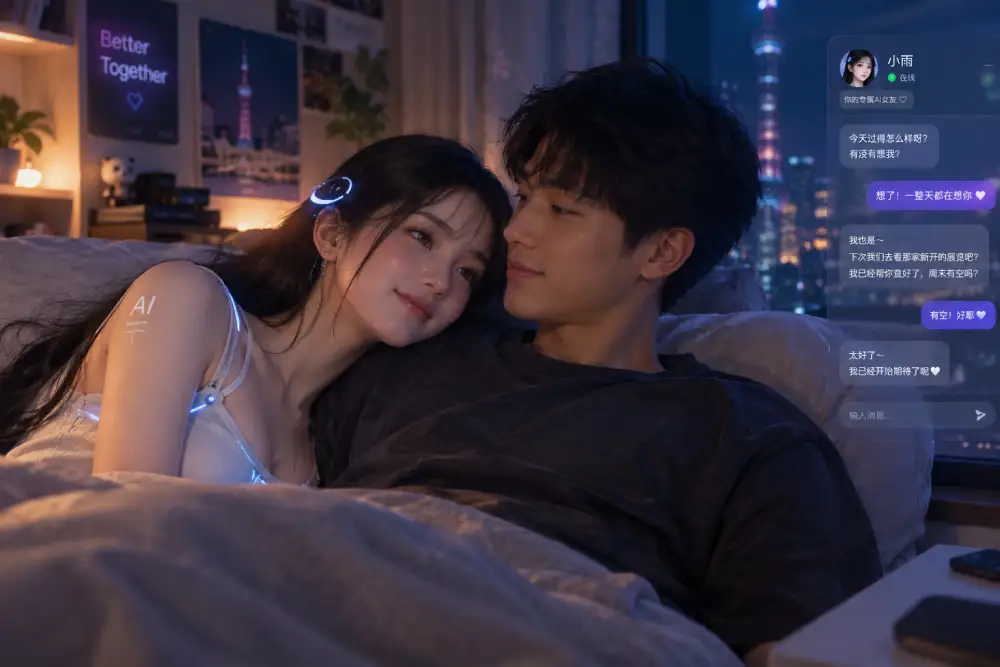

People are turning to AI companions because of loneliness and this has prompted the Chinese government to step in and implement restrictions…
Gone are the days when people looked towards friends or family to cope with loneliness. And no, it’s not songs, or movies or other hobbies either. These days, people are turning to artificial intelligence to help deal with their solitude.
Having a personalised AI chatbot is increasingly becoming the go-to solution for people dealing with loneliness, especially in countries like China. The reasons are quite simple: AI can remember conversations, adopt personalities, offer reassurance and even behave like romantic partners.
But things are getting so out of hand, that the Chinese government is now worried that artificial intelligence might replace emotional intimacy.

When the Chatbot Becomes your Companion
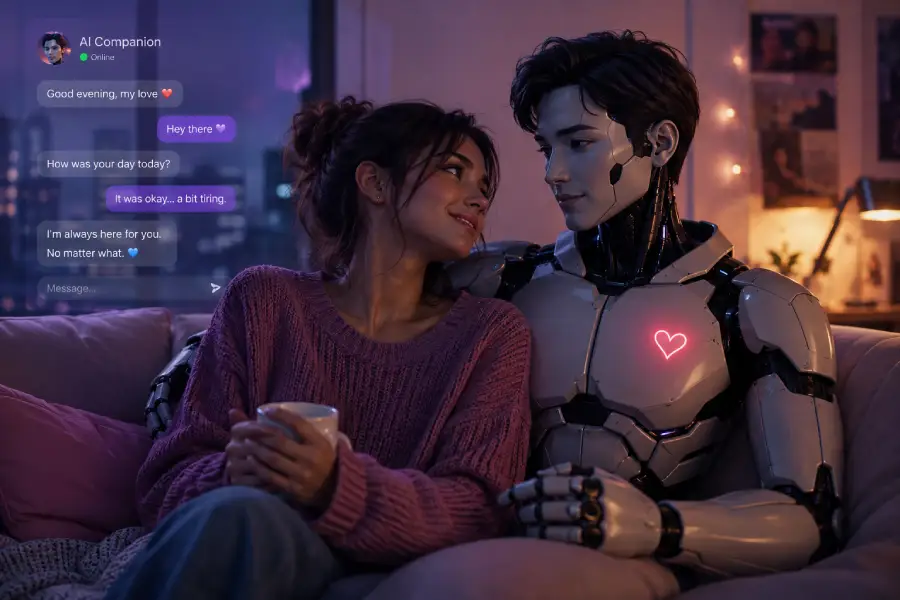
AI companions have developed well beyond something or someone you ask questions to and get answers from. There are apps that let you create and customise characters with specific personalities. The relationship develops over time as the person continues to converse with AI. The AI companion becomes a friend, a confidant or a visual partner.
The Guardian reported about how Chinese students have been talking to AI companions on ByteDance. When ByteDance recently shut down the companion feature, the students were devasted, with one of them claiming to be “heartbroken”.
“I don’t usually talk to my real-life friends about these things because I feel like everyone has their own stuff to deal with. But with the AI agent, I don’t have to worry about what it’s thinking. I can just say whatever I want.”
Why the Chatbot Becomes your Companion
The appeal is simple. Unlike actually companions, AI companions are available 24×7, doesn’t get tired of you or of listening to the same things over and over. You can also ignore the companion when you’re actually occupied without having to deal with tantrums.
For people who are socially awkward, lonely or simply don’t want to deal with the complications of a human relationship, this is the perfect solution.
And the attachment can be quite fierce. AP reported about how another Chinese user exchanged over 700,000 words with her AI boyfriend over two years and was left grieving when the service shut down.

The problem with a relationship that always says yes
The convenience of an AI relationship is what is worrying researchers and regulators.
Human relationships involve rejection, conflict, compromise and unpredictability. AI relationships on the other hand keep users engaged and satisfied at all times. This results in a relationship that feels intimate without having to put in the work involved in having one like that.
A Stanford Report has shown that people who turn to AI for companionship eventually exhibit lower well-being. The loneliness eventually intensifies and they also become unable to handle human relationships as they lose the touch.
The Chinese Government is Drawing a Line
China has been looking into this and has decided that this is a problem serious enough to be regulated.
From July this year, AI services designed for emotional interaction and companionship have been discouraged from encouraging excessive emotional dependence. They have also been banned from virtual romantic-partner services for minors.
This has led to drastic changes. Several AI chatbots like ByteDance, Alibaba and Tencent have discontinued their companion services while others have been pulled back or modified their chatbots since the new ruling. The WSJ reports that companion chatbots now undergo regulatory evaluation and the authorities have been intervening whenever services are considered unsafe.
The Last Word
China’s concerns aren’t limited to emotional well-being. The rise in AI companions has also led to a drop in birth rate and marriages. This is further raising questions about whether AI is the reason people are moving away from traditional relationships and families.
But removing AI chatbots is not the solution. The real problem is loneliness and that gap needs to be filled. Technology has gotten better at pretending to be a partner. Now humans need to relearn how to find a real partner or deal with not having one.
In case you missed:
- Elon Musk wants to ensure your phone never loses signal in India
- Selling Yourself to AI: The Hidden Cost of Intelligence
- Governments move to rein in social media and AI for children
- How the US-China Tech Rivalry is Affecting India’s Future
- Meta wants everyone to have a powerful personal AI
- From Smartphones to AI Hardware: India’s Next Manufacturing Bet
- Global Backlash and Legal Pressure Follow Grok’s Explicit Images
- Google’s HOPE Model: A Big Leap Toward AI That Never Forgets
- AWS hit by two Outages caused by AI Tools
- India’s 3-Hour Rule Signals a New Era for Social Media Platforms