



Worse than being late to the AI-party is being late to what’ll power it writes Satyen K. Bordoloi
Remember that uneasy, private humiliation you feel when you see someone do, and shine at something that you could not just have done, but excelled at? That is the fate of India in the AI race. For most of the last decade, we watched it unfold not as a participant, but as a spectator. We were the back office of the world, and we were confident that whatever came out of this race would again land in our lap.
Turns out AI is great at doing what our outsourcing companies did. Which meant that India, as a back office of the world, is on its last leg. So is our software outsourcing industry, which we’ve developed over the last quarter century.
Then came January 2025, DeepSeek-R1 – a powerful reasoning model built by a Chinese startup under open-source norms- shocked the world with both its training and tokenisation costs. It didn’t just rattle Silicon Valley; it shattered the assumptions holding India back. In March 2024, the Government of India had approved over ₹10,300 crore (about $1.25 billion) spread across five years for the IndiaAI Mission.
But after DeepSeek’s breakthrough model wiped $1 trillion off US tech stocks, IT Minister Ashwini Vaishnaw announced aggressive compute subsidies, startup funding, and other measures to help India catch up in the artificial intelligence race. A sleeping giant had stirred.
But stirring is not the same as standing up for the race.
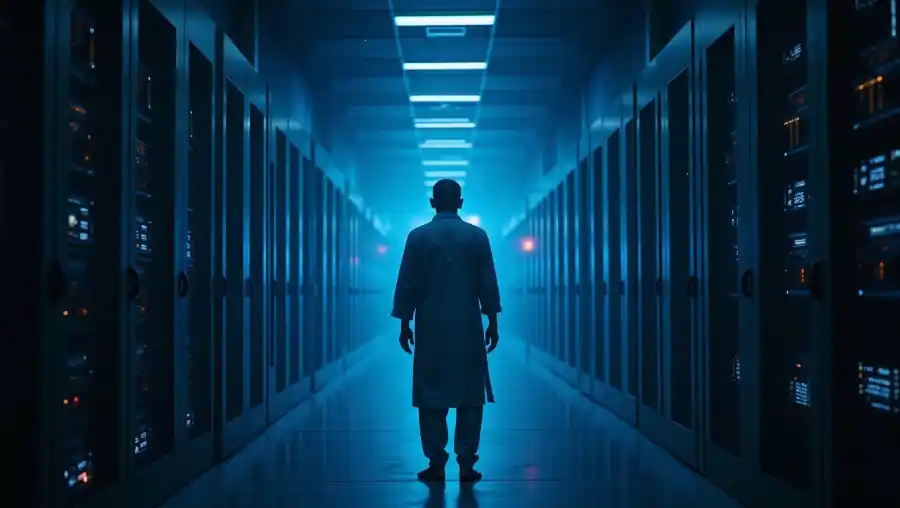
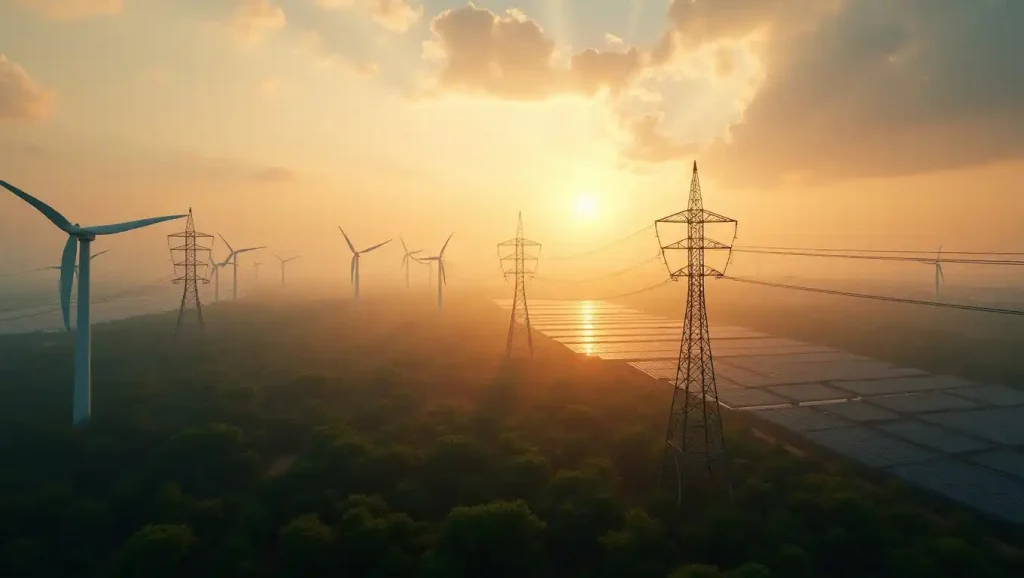
The national conversation following DeepSeek has centred almost entirely on chips – GPUs, compute clusters, homegrown LLMs. These are, of course, legitimate concerns. But there is a larger, quieter crisis that barely registers in our policy conversations: electricity. You cannot run a GPU farm without sufficient power. And right now, the world is engaged in a parallel race – not just for chips, but for the electrons to feed them. And India is dangerously behind on both.
The Electron Gap Nobody Is Talking About
India’s data centre capacity is expected to grow from 1.4 gigawatts last year to 9 GW by 2030, consuming about 3% of India’s electricity by then – up from less than 1% currently. This means, Deloitte India estimates, we’ll need 40 to 50 terawatt-hours of additional electricity to meet the projected demand for AI-driven data centres by 2030. This is a humongous, structural demand that requires an entirely new layer of power infrastructure, built at a pace India has never attempted before.

The global picture is even more disturbing. The IMF has cautioned that by 2030, global data centres could consume as much electricity as all of India does today. Can you imagine that our entire nation’s current power consumption will be gobbled up just by all the server farms in the world in the next five years? Which means that if we want a meaningful share of that global AI infrastructure, we need to produce the electrons to run it. If chips are the brains of the AI revolution, electricity is its blood. And right now, India’s circulatory system cannot sustain the AI ambitions our politicians are promising.
Two Approaches. One Clear Winner.
As in most other things tech, we have no option but to look at how the two AI superpowers are handling this problem.
The United States, in a sense, is under greater stress right now than India’s power grid ever has been. That’s because the technology developed there is brand new, and the power for that is running on a power grid that is ancient, and worst of all, was never meant to service this need. S&P Global and Financial Times reporting have stressed that US data centres could face a 44-gigawatt electricity shortfall in the next three years alone. OpenAI – the creator behind the world’s most popular LLM ChatGPT – has been so alarmed that it drew the White House’s attention to China, adding 429 gigawatts of new power capacity in 2024, while the US added only 51.
The Trump administration has sadly downplayed green energy options even as China pushes for them. It is instead fast-tracking fossil fuels and nuclear approvals. Along with it, the US has seen some aggressive private‑sector investment, especially in nuclear power, while hyperscalers like Google, Oracle, AWS, and Switch are signing long‑term deals with small modular reactor (SMR) developers, including restarting decommissioned reactors.

China, meanwhile, stands more comfortably because it took the opposite path: treat electricity as a strategic national asset, build it well ahead of demand, and not just in one corner, but in different corners of the nation. Then, it lets data centres follow the power. The results are staggering.
China’s total installed power capacity reached 3,431 GW by March 2025, with wind and solar rising from 530 GW in 2020 to 1,680 GW by mid‑2025. To put this in perspective, just this five-year growth is larger than the entire installed capacity of most nations, including India (538 GW).
By 2030, China is projected to have 300- 400 gigawatts of spare power capacity – about triple the expected power demand of the global data centre fleet at that time. This means that data centres in China can pay less than half the electricity rates that American data centres and projects can move from planning to operation in months, compared to years in the US. This isn’t luck but the compounding dividend of decisions made in five-year plans stretching back to the late 1980s.
India’s Real Progress And Where We Fall Short
It’s not that India has not done anything on the energy front. We have added a record 44 gigawatts of renewable energy in 2025, with solar contributing about 35 GW, pushing the total installed solar capacity to 133 GW – surpassing the United States and trailing only the EU and China. Our total installed renewable energy capacity reached 254 GW by November 2025 – an increase of over 23% in a single year- and India now ranks third globally in renewable energy capacity. Beyond that, the PM Surya Ghar scheme has brought rooftop solar to over 25-40 lakh households with indigenous solar module manufacturing capacity reaching around 50-60 GW per annum by 2025.
These – 3rd globally in solar capacity, 4th in wind, and 4th in total renewable capacity – are real achievements, as is the fact that we no longer merely deploy solar panels but have built the supply chain to manufacture them at scale. Atop it all is the government’s ambition to hit 100 GW of nuclear capacity by 2047, formalised in the Nuclear Energy Mission for Viksit Bharat. So what’s the problem, then?

The Ground Reality and What AI Actually Needs
India’s data centre capacity is projected to rise from nearly 1.5 GW today to about 10.5 GW by 2031: a six-fold increase in half a decade. Yet in comparison to the global data centre power demand, which is expected to touch 1,600 terawatt-hours by 2035, it is nowhere. Now, do you want to hear something absurd: OpenAI plans to build 250 gigawatts of compute capacity by 2033, which would consume electricity equal to powering the entirety of India and our 1.5 billion people. So one corporation’s power consumption would equal our entire national grid.
So, it’s clear that our 500 GW renewable target by 2030 is ambitious only by our own historical standards. In comparison to what that AI infrastructure actually needs, it falls absurdly short. The solution is not to copy China, but to absorb its fundamental notion, which understands that electricity is the foundation upon which everything is built. China began understanding it in the 1980s. The US is playing catch-up now. But India, we need to move fast before the next wake-up call arrives, cause it isn’t ‘deep’ to ‘seek’ to build a well when the house is on fire.
We’ve recently woken up to the AI chips problem. But the power problem: it’s still waiting for its moment of reckoning.
In case you missed:
- $725 Billion Down, Trillions To Go: Why The AI Bubble Refuses To Burst
- Sustainable Data Centre Solutions to Protestors’ Demands In India & Abroad
- Inside Elon Musk’s Plan to Move the Internet into Space
- Not Fastest, but Frugalest: Why Indian EVs Are Suddenly World-Class
- The AI Peace Race: Why India’s Real Opportunity Starts Where the Arms Race Ends
- Coopetition: Why’s NVIDIA Building AI Models to Compete With Customers It Sells Chips To?
- OpenAI, Google, Microsoft: Why are AI Giants Suddenly Giving India Free AI Subscriptions?
- 5.6 Cr Pending Cases: How India Is Letting AI Slip Through Even As World Courts Revolution
- Great quantum poker: Who’s bluffing, and who is holding the aces?
- “Faster, Higher, Stronger” to “Smarter, Hardier, More Useful”: Why China’s Hosting Robot Olympics