


Every great technology wave in history destroyed jobs and then created them multiple times over, and AI will be no different, writes Satyen K. Bordoloi
“Any customer can have a car painted any colour that he wants so long as it is black.” With this line and assembly line, Henry Ford ushered in the age of the automobile. Sadly, it led to job losses the likes of which the world had not seen. Millions in America who worked in making horse carriages, worked in stables, farmed the land to grow food for horses – were left jobless. There were protests on the streets, editorials written about this new technology and how it’s upended the order of society.
Sounds familiar? This is what’s happening today with the widespread adoption of artificial intelligence and AI agents, and the automation of most white-collar tasks using them. Millions are losing their jobs to the quick adoption of AI. Terrible it surely is. But do you know where the automobile industry story from over a century ago finally rested: it birthed millions more jobs in manufacturing, road construction, logistics, transportation, etc.
Could the age of AI, eventually, lead to the same increase in jobs rather than the decrease that we’re seeing right now?
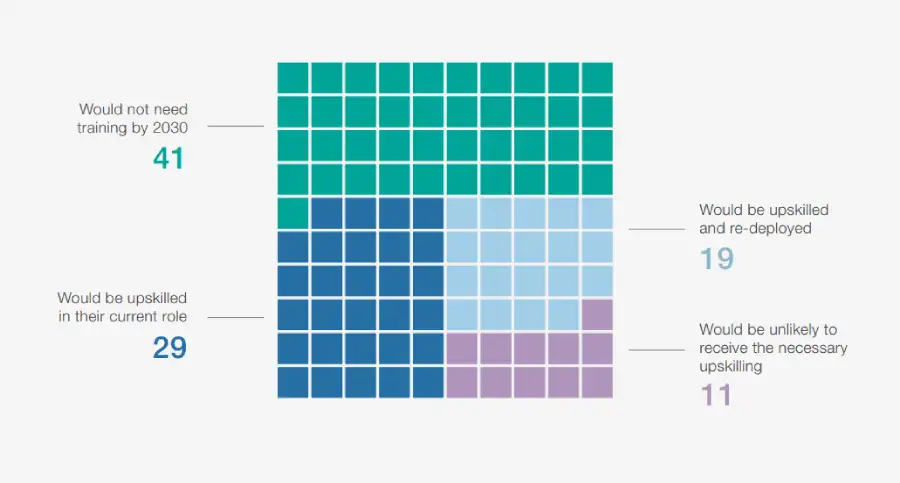
A 2025 report from the World Economic Forum estimates that by 2030, emerging technologies could displace about 92 million jobs worldwide. We know this cause we are seeing this happening around us. However, it also states that the same technologies could create 170 million new jobs, i.e. a net gain of 78 million jobs globally. Now this 170-million figure. This sounds absurd to you right now? Well, wait till you hear where these jobs are being created.
How AI Creates Jobs
Just as the internet created roles no one in 1990 could have imagined, the shift toward agentic AI is giving birth to entirely new sectors. The jobs being created generally fall into a few categories. First is, of course, in AI infrastructure, where there’s a massive, growing demand for AI model trainers, prompt engineers, and human-AI workflow designers who build and maintain these systems. We’re already seeing this happen.
The second rung of employment will be in another form of AI that is only just coming up – embodied AI, aka robotics with AI. You must have seen videos of robots, mostly in China, doing incredible things. The industry is just starting, and already the demand is so high that it is running out of people to make and maintain these robots.
And let’s not forget that many jobs will emerge, which we have no idea about today. Take the hundreds of billions of dollars worth influencer economy. Till the early 2010s, there was nothing like that. Then AI gets into social media in the form of recommendations, and suddenly the photos and videos only your friends and family enjoyed began going viral, and if you leveraged it, you became an influencer.
More such jobs will emerge, not just at an individual level, but also for businesses because as the cost of intelligence drops, innovations grow at a rapid clip, which often leads to new products, services and entire new industries.
Transformation, Not Elimination
Optimism also leads to a valid counter-argument that this time is different from the past, when only physical labour was replaced by automation: this time we are replacing intellectual labour – from writing code to analysing and drafting documents and even handling customer service. Companies are adopting AI because it is cheaper, hence more lucrative.
Yet, the truth is that the most likely scenario for the next decade isn’t a dystopian loss of all work, but a radical transformation of it.
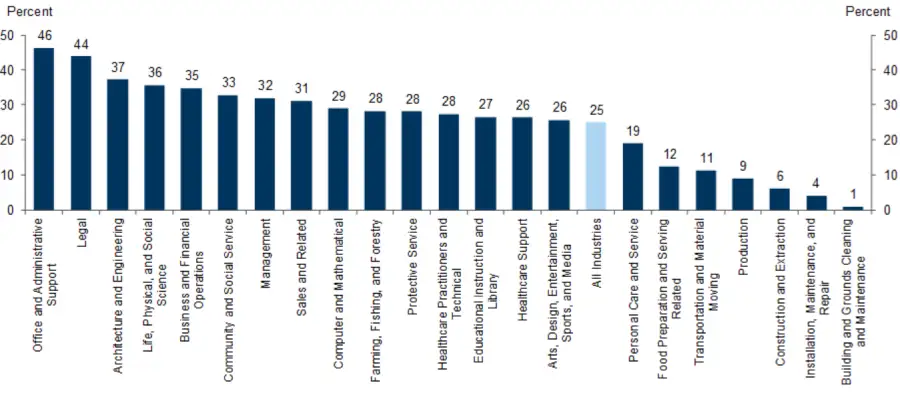
Most jobs consist of a bundle of tasks. AI excels at the predictable, repetitive ones like sorting information, drafting basic content, and data entry, but struggles with the human ones such as decision-making, emotional intelligence, leadership, and complex reasoning.
So, jobs won’t disappear so much as splinter. A writer or filmmaker, for instance, might offload routine tasks like transcribing interviews or basic formatting to an agentic system, freeing up time to focus on the complex human elements of storytelling, emotional resonance, and visual metaphors the very areas in which AI falls flat because it has no emotion or context of anything.
The History That Nobody Remembers
The thing about disruption is that we only ever remember the wreckage, and forget the rebuilding.
When the automobile killed the horse carriage industry, millions of jobs vanished. But automobiles went on to generate millions more and gave rise to entire new industries and jobs like highway gas stations and motels, auto dealerships, insurance agents, long-haul truckers, etc. Entire new categories of human work, none of which existed before, and none of which anyone in 1900 could even imagine, were born.
The telegraph industry is another one. For a century, from 1871 to 1971, the number of telegraph and telephone operators in the UK alone multiplied forty-fold. Then automated switchboards came, and that profession shrank to almost nothing. But what replaced it? An entire telecom and digital communications sector, orders of magnitude larger. The internet handed us mobile apps, and with it 12 million mobile app developers, a profession that simply did not exist twenty years ago.
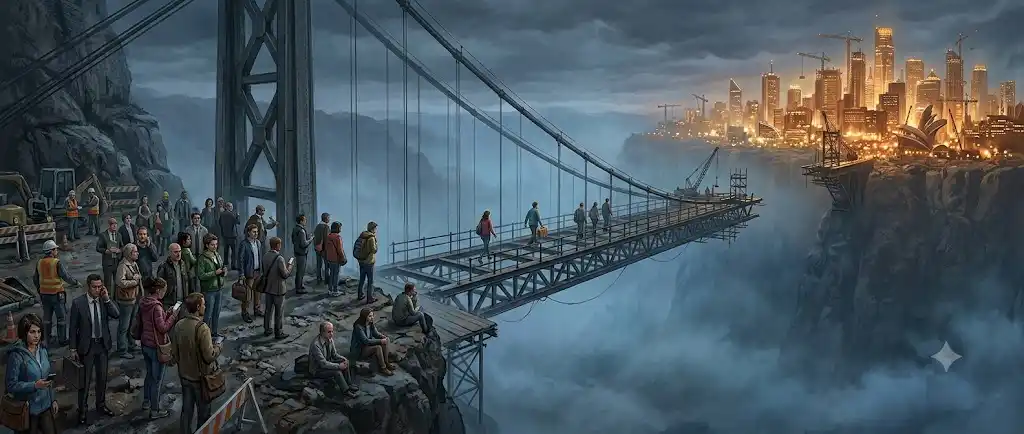
The pattern is consistent enough that the anxiety feels embarrassing in hindsight. Yet, one has to remember that the people losing jobs right now are not living in hindsight but in the gut-punch of the present job losses. And even if we consider hindsight, we have to acknowledge that the gap between disruption and recovery is real, painful, and long.

The Numbers That Should Matter Right Now
So where exactly are the new jobs showing up?
McKinsey’s research puts generative AI’s potential contribution to the global economy at between $2.6 trillion and $4.4 trillion annually. Goldman Sachs says AI could boost U.S. productivity by 1.5% annually over the next decade, with GDP impact becoming measurable from 2027 onward. Penn Wharton’s Budget Model puts it even longer-term that AI will increase global GDP by 1.5% by 2035, and climb to nearly 3% by 2055.
These are not job numbers yet, but mere productivity and output numbers. But historically, GDP growth and employment growth travel together, so jobs are expected to grow as well.

Now AI-related job postings are growing everywhere, especially in the U.S where it grew 25.2% year-over-year in just the first quarter of 2025. Annual AI job creation globally rose to 5 million roles in 2025, climbing to 6 million in 2026, 9 million by 2028, and hitting 13 million new positions per year by 2030. The Asia-Pacific region alone added close to 1.1 million new AI-related positions in 2025 — nearly half of global AI job growth for that year.
India is no different. In 2025, over 290,000 AI-linked roles were posted across the country, with a 32% jump expected in 2026, pushing that number toward 380,000. The demand for generative AI and large language model skills rose nearly 60% year-on-year. By 2027, India’s AI workforce is projected to exceed 1.25 million professionals. The catch: a 2025 study also projects India could face a shortfall of more than one million skilled AI workers by that same year, as demand races past the available talent pool.
And that’s not all. Those with AI skills are currently earning a 62% wage premium over peers in identical roles without those skills, according to PwC’s 2026 Global AI Jobs Barometer, which analysed over a billion job advertisements across 27 countries. Indian market studies show a narrower, but still substantial premium at 25-40% depending on role and experience.
Of course, none of these happens automatically. Even the historical examples I gave miss out the decades of real suffering and pain to real people in between. That’s also happening now, especially because of skill mismatch, geographic disparities and the rapid speed of AI growth. All of these create a retraining burden on governments, companies, and educational institutions.
Ford’s assembly line did not automatically create millions of new jobs overnight. Roads had to be built. Cities had to be redesigned. Education systems had to be reengineered. Policy had to move.
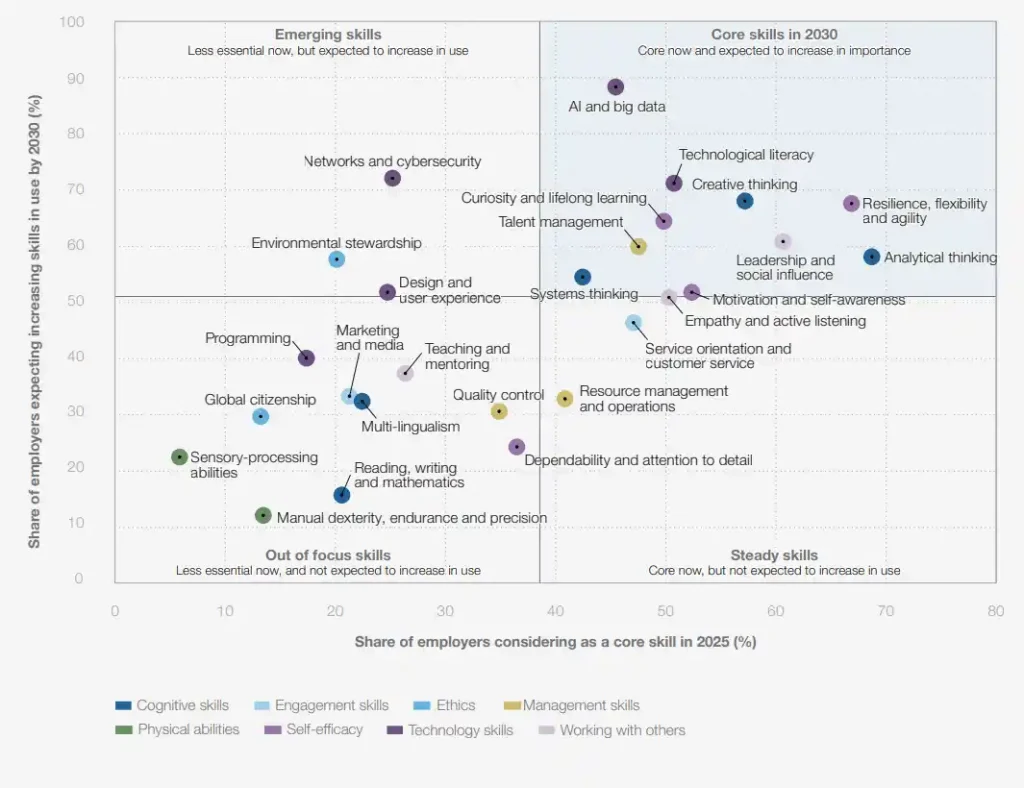
The same is true now. The 170 million jobs the WEF is projecting by 2030 will not appear on their own but will require governments that retrain instead of just compensate, companies that upskill instead of just automate, and individuals who treat AI literacy as the baseline skill it is rapidly becoming – not optional, not niche, but as fundamental as knowing how to type was thirty years ago.
Those who made horse carriages did not become Henry Ford’s automobile factory workers overnight. Some never made the leap. But the generation after did. The need today, hence, is to ensure onboarding to the next tech in one generation itself.
Beyond it all, I want to leave you with one point to ponder: if every physical labour-saving innovation revolution created double or more times the number of jobs it took, shouldn’t an intellectual labour-saving innovation revolution create exponentially more?
In case you missed:
- Lost Job to AI? The Real Enemy Isn’t The Bot – It’s Your Boss. Here’s Proof
- With AI Set to Destroy Millions of Indian Jobs, Traditional Career Advice is a Death Trap
- The AI Peace Race: Why India’s Real Opportunity Starts Where the Arms Race Ends
- Anthropic $30 Trillion Value for AI: Mirage or the New Price of Human Labour?
- After Years of Job Slashes, Companies Use AI to Boost People, Not Replace Them
- Greatest irony of the AI age: Humans being increasingly hired to clean AI slop
- OpenAI, Google, Microsoft: Why are AI Giants Suddenly Giving India Free AI Subscriptions?
- Use AI or Get Fired: The New Workplace Ultimatum Hanging Over Every Job
- How India Can Effectively Fight Trump’s Tariffs With AI
- A Citrini research blows the AI-doomsday bugle, crashes the market, but is packed with glaring omissions & distractions