


Eleven days, and after almost a trillion wiped out in valuation, Jensen Huang is reinstated as CEO, saying more about the global tech ecosystem than any analysis ever has, writes Satyen K. Bordoloi
Apple faltering after Steve Jobs was ousted, then reaching dizzying heights after he was brought back, became the origin story for the tech founder who is indispensable to the company he founded. Others like Michael Dell, Jack Dorsey, Bob Iger and, a few years ago, Sam Altman followed. This week, history repeated itself over 11 days with Jensen Huang, CEO, then ex-CEO and now CEO again, of NVIDIA.
For a fleeting moment, it would seem the man called the architect of the AI revolution has been toppled. The result created such an immediate and violent vacuum, with the stock market losing a trillion dollars, political deals going sideways, and the entire tech sector seeming to hold its breath, that the president of the most powerful country in the world had to intervene to bring him back. So, what happened in those 11 days that made his return not just advisable, but critical?
Here are five reasons, woven out from the tangled web that is technology, business, and geopolitics.
- The Trump Factor:
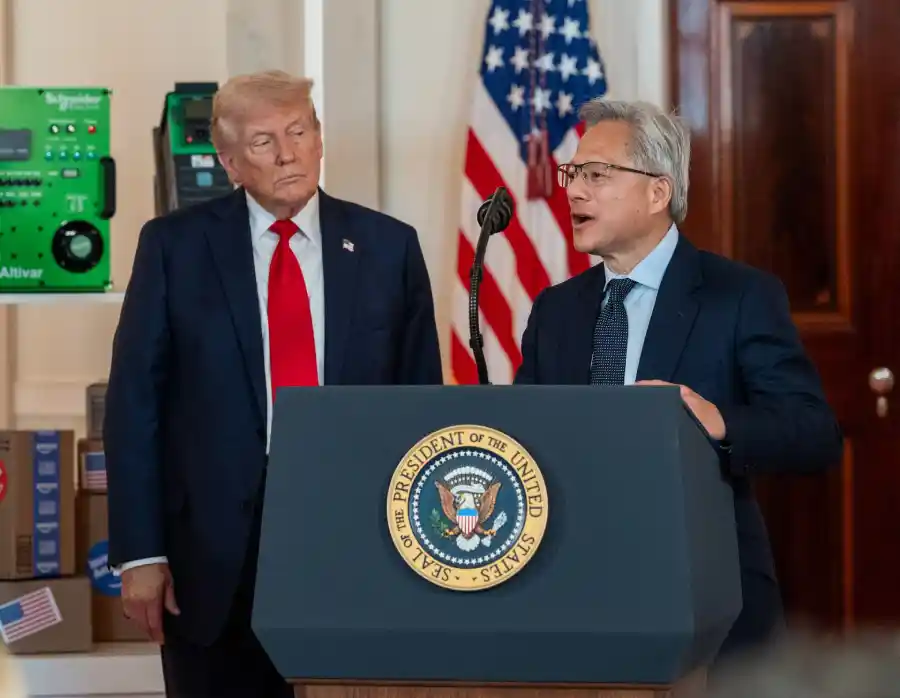
Be it politics or business – personal relationships are indispensable. When President Donald Trump returned to the White House early last year, he not only had the biggest tech CEOs right next to him; they managed to convince him to announce the greatest infrastructure buildout the world has ever seen. And the one leading that $500 billion injection into American AI infrastructure into the grandiose-sounding Stargate Project was Jensen Huang. He even ditched his emblematic leather jacket for a blazer during its press conference.
Huang was its architect because the one who’ll benefit the most is also NVIDIA, with their GPUs being the foundational bedrock upon which it was pegged. But there was a catch: Huang, with his unique and amicable relationship with Trump, was the accelerator of everything AI in the White House administration. Without him to navigate the relationship with a volatile and flippant Trump, NVIDIA could falter. The board likely realised that accepting Huang’s resignation was a political misstep that had already cost them a trillion in market capitalisation and could lose them hundreds of billions more.
- The Stock Market Signals:
The reaction of the markets to Huang’s ouster was not just a brutal quake wiping out over a trillion dollars from the market, but the aftershocks caused a cascade of sliding shares across the world, creating a “Sliding Doors” kind of moment where one got a glimpse into an alternate universe where the visionary founder was no longer at the helm of his company.
Global markets did not like this view, and his return made the world breathe a collective sigh of relief to recoup all the losses in a day. The lesson was not hard to spot: NVIDIA’s valuation is married to its founder’s presence, with Huang not just seen as CEO, but as a stabilising force and a symbol of the AI future. And Trump, being a big acolyte of a good stock market, was keen to have him back.
- The Rising Political Tide:
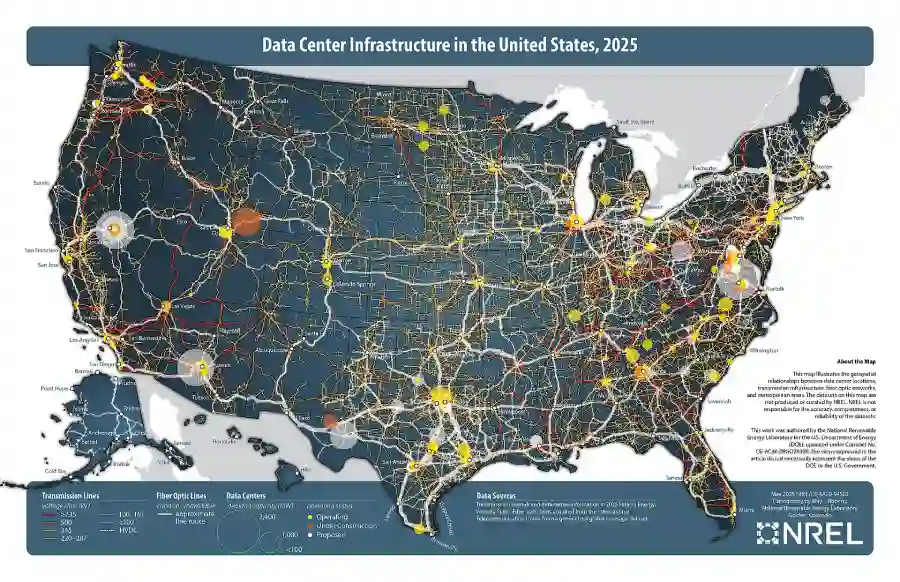
The rise of the Democrats in the US elections, creating a blue wave, and winning a majority in both houses, was another factor that spooked those investing in AI. That’s because the Dems actively rode the wave of scepticism against AI and data centres that power them. Tighter regulations, stricter oversight, and potential legal headwinds are all but certain. A storm is brewing, and it is these turbulent times that require a seasoned captain. As the undisputed leader of the AI race, NVIDIA is on the front lines, and Jensen Huang is a man who has weathered countless headwinds – both personal and professional. He, to many, is the only one capable of steering the ship through this impending regulatory tempest.
- The ‘Circular Financing’ Bogeyman
The world has been hooked on the idea of “circular financing” for over a year now, pointing to the complex web of investments NVIDIA has made in the many startups it is funding. This is looked at as the main cause of the “Impending AI Bubble”. But to accuse NVIDIA and Huang of creating this bubble is to fundamentally misunderstand finance. The world is built on a similar circle of trust. Let’s say A owes B a hundred rupees, who then owes C, who in turn owes A the same amount.
Now, if A were to pay the 100 to B, who pays it to C, who pays it back to A, then no one is a paisa richer, but a huge debt is magically gone. Finance, in essence, is circular finance if looked at cynically. But if looked at with the vision it was built on, one will see a system that functions on trust and confidence in the value of the number that a currency note carries, or the numbers that signify money in a bank’s computer.
Now, even if the circular financing allegations are well placed and lead to the AI bubble bursting, what we will be left with is the physical pipeline for the AI world built with the bricks of NVIDIA chips. Hundreds of millions of these chips are building the global AI infrastructure, and yes, the financing is complex, but what is being laid is a tangible foundation of silicon. And in this high-stakes financial game, no one is more skilled at managing trust and resources than Jensen Huang.
- The Looming Tech War
The biggest threat to American tech domination is twofold: first, its self-defeating immigration policies and the changing tech landscape. Export restrictions are purportedly to protect America’s tech superiority, but no nation ever remains on top for long. China is pursuing its own superiority, throwing everything – from espionage to steal tech secrets to trillions of dollars on R&D.
The chilling effect of Trump’s crackdown on immigration is that while the greatest minds in the world once made a beeline for the US to build the next generation of tech, now they’ll scatter across the world, helping China – if it stays the course it is on right now – to ascend to the top of the tech summit within the next five to 10 years. Then there is the next tech evolution that’s coming in another two to three decades – quantum computing. At this rate, China will lead that race.
NVIDIA chips that are cutting-edge now will be obsolete in a few years. And the future of tech is not guaranteed to be American. And if America is to maintain their lead in the next decade and the one after that, it is via strategic visionaries like Huang at the helm. Whatever else Trump understands, this – I believe – he does, hence the push to reinstate him.
Along with the fragility of the AI buildup and tech dominance, the Jensen Huang saga will add to the mythos of the indispensability of a flawed, but brilliant tech-founder. Jobs, Altman, Dell, Dorsey, Huang, etc. add to the list of founder-messiahs. But what about artificial intelligence? The AI ship sails on, still in choppy waters, but hopefully – with a captain who can steer it through multiple headwinds, his own troubles now in the rearview mirror.
In case you missed:
- Coopetition: Why’s NVIDIA Building AI Models to Compete With Customers It Sells Chips To?
- The Weight of the World: Why the Open vs. Closed AI War Is Really About Who Controls the Future
- The AI Prophecies: How Page, Musk, Bezos, Pichai, Huang Predicted 2025 – But Didn’t See It Like AI Is Today
- NVIDIA’s Strategic Pivot to Drive our Autonomous Future with Innovative Chips
- $725 Billion Down, Trillions To Go: Why The AI Bubble Refuses To Burst
- Anthropic $30 Trillion Value for AI: Mirage or the New Price of Human Labour?
- Indian AI’s Power Problem: We Woke Up Late to AI, We’re Still Half-Asleep
- South Korea Made Generative AI a Citizen’s Right: Should the Rest of the World Follow?
- Makers of Toilets & Ajinomoto: The Unlikely Companies Getting Rich Off the AI Boom
- The AI Peace Race: Why India’s Real Opportunity Starts Where the Arms Race Ends