




The greatest mystery of the tech world – the identity of Satoshi Nakamoto might have been solved by an intrepid journalist or not, as the truth might take better GPUs to mine, writes Satyen K. Bordoloi
In Edgar Allan Poe’s 1844 short story The Purloined Letter, the Paris police tear apart a suspect’s apartment, hunting for a stolen letter they are sure is there. When they don’t find it, they call detective C. Auguste Dupin – the prototype from whom Sherlock Holmes would be liberally borrowed. Dupin finds the letter in minutes, sitting where no one looking for a ‘secret’ letter would care to look: on the man’s card rack in plain view, deliberately mislabelled, hiding among a clutter of other letters. The police had failed not because of a clever hiding place, but because it was so obvious they kept looking past it.
It’s a useful story to keep in mind when considering the biggest unsolved mystery of the technology world. For seventeen years, Satoshi Nakamoto – the pseudonymous creator of Bitcoin who “spawned a $2.4 trillion industry and amassed one of the world’s biggest fortunes in one stroke of staggering genius” – has been searched for, speculated about, and, occasionally, the wrong one has been harassed.
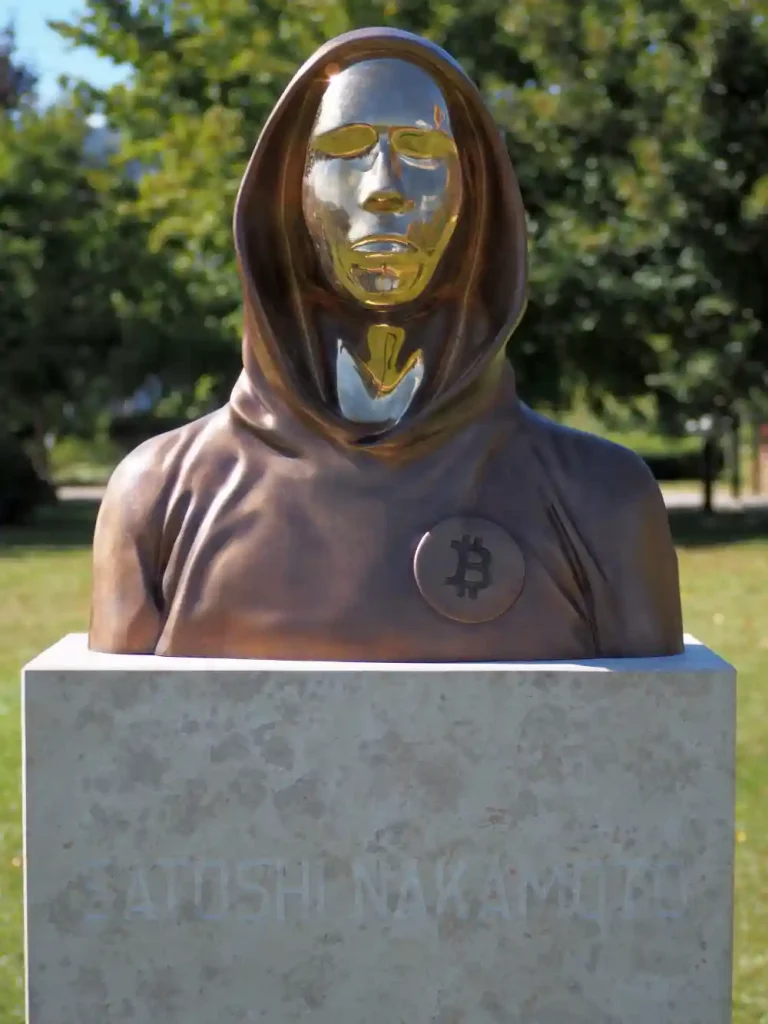
Recently, a New York Times investigation using AI-assisted writing analysis suggests that Satoshi, like the letter, may have been hiding in plain sight all along: among a clutter of other crypto enthusiasts, in full public view of forums, conferences and keynote stages of the very community Bitcoin helped build. The man, the enigma that is Nakamoto, The New York Times’ John Carreyrou believes, is Adam Back, 55, a British cryptographer, co-founder and CEO of Blockstream, and the inventor of Hashcash, which is sort of the proof-of-work mechanism that Bitcoin’s mining system adopted.
Back, like all those accused of being Nakamoto before, has denied it – categorically, repeatedly, and publicly – which, depending on your reading of Poe, is precisely what you would do if you indeed were Nakamoto.
What the AI actually did
The methodology is ingenious. Pulitzer Prize-winning reporter John Carreyrou, the one behind the dismantling of Theranos and Elizabeth Holmes, spent a year and a half working alongside the Times’ AI projects editor Dylan Freedman. They assembled email archives from three Cypherpunk mailing lists spanning 1992 to 2008, merging them into a single database of 134,308 posts. They then ran three separate writing analyses against that corpus, comparing Satoshi’s known writings: emails, forum posts, the white paper itself, and a large trove of private correspondence released by Finnish programmer Martti Malmi, to the writing of 620 contributors who had posted at least ten times before Bitcoin’s launch.
Each of the three analyses returned the same result: Adam Back.
Satoshi’s writing contained 325 instances of nonstandard hyphenation. Back matched 67 of them, almost double the next closest candidate. Both used double-spacing after full stops. Both used British spellings inconsistently, spliced with American idioms. Both toggled between “e-mail” and “email.” Both used the phrases “partial pre-image” and “burning the money” in ways that appeared nowhere else in the corpus.
When Carreyrou searched the archived social media posts of various suspects for Satoshi’s unique turns of phrase, only one consistently used the expression “a menace to the network.” That was Back. The circumstantial evidence list runs longer as Back largely went silent on the Cryptography mailing list during the precise years Satoshi was active, then reappeared publicly about six weeks after Satoshi went dark for good in April 2011.
At a conference in El Salvador this year, Carreyrou – after being snubbed – confronted Back, who agreed to a supervised interview. In that, Carreyrou heard Back unknowingly quote a Satoshi line – “I’m better with code than with words” with Back reportedly responding: “I did a lot of talking though for somebody, I mean … I mean, I’m not saying I’m good with words but I sure did a lot of yakking on these lists actually.”

Carreyrou heard it as a slip. Back says it was a point about confirmation bias, arguing his voluminous posting history would make any AI matching exercise more likely to flag him regardless of authorship. Which is a reasonable objection; yet also exactly the kind of thing a person might say if they wanted a reasonable objection ready.
Now, here’s something that I find extremely ironical to a meta level. The entire forensic case Carreyrou makes rests on the idiosyncrasies of Satoshi’s writings, like his hyphenation habits, his double spaces, his toggle between spellings, his pet phrases, etc. Now, all of this is possible only because Satoshi Nakamoto was a human who wrote like a human, a specific one at that, with specific tics. Had the Bitcoin white paper been drafted in 2026 instead of 2008, Satoshi might well have run the document through an AI assistant before posting. The prose would have been smoothed, the quirks ironed out, the double spaces corrected. There would be nothing left to match. In a small and somewhat cosmic way, the one thing we can thank for making this investigation possible at all is the fact that ChatGPT did not exist yet. Yet the meta irony is that it is AI text analysis that is actually making this detection possible.
The limits of the method
The Times‘ own linguist, Florian Cafiero, the one who had previously helped the paper identify the authors behind the QAnon movement, described his own stylometric results as inconclusive. In his analysis, Hal Finney, the early Bitcoin contributor who died in 2014, nearly tied Back for the top spot. He also noted that Satoshi may have deliberately styled his prose to defeat stylometric tools, something Back himself had expressed academic interest in as a privacy technique.
Then there’s cybersecurity researcher Robert Graham, who pointed out that the open-source code attributable to Back and to Satoshi “don’t look remotely similar.”
Jameson Lopp, co-founder of Bitcoin security company Casa, put it bluntly: “Satoshi can’t be caught with stylometric analysis”, while Bloomberg‘s Joe Weisenthal raised a structural objection, asking why would Back attach his name openly to foundational work like Hashcash and then operate under total anonymity for Bitcoin itself.
In essence, what a lot of these people are saying is that to unmask a cryptographic specialist like Nakamoto, the proof had to include cryptographic ones. There’s none. And there’s no private key signature, no verified movement of Satoshi’s wallets and no corroborating witness on the record. Without these, the investigation seems not like a verdict but a very well-resourced hypothesis.
The long history of wrong answers
This is not the first time someone has been certain because the history of Satoshi investigations is a graveyard of confident claims that were quickly debunked.
In 2014, Newsweek named Dorian Nakamoto, a Californian man of Japanese origin, as Satoshi. Along with other proofs, the incongruous fact of a man trying to hide his identity by keeping his surname ensured this claim collapsed quickly. Then came an Australian computer scientist in 2016 who claimed to be Satoshi but was proven to be a fraud by a London court. In 2020, a YouTube channel Barely Sociable made a circumstantial case in favour of Back being Nakamoto. Back had denied it then, too.
In 2024, an HBO documentary called Money Electric named Peter Todd. Carreyrou had seen this documentary, found it unconvincing, but a scene in it of Back fidgeting when asked if he was Nakamoto, launched him to start his own investigation.
Importance of AI as a tool for truth in Journalism
To me though, one of the best outcomes of this story, is that it once again highlights the various uses of AI which has been badmouthed enough in recent years thanks to the focus on what it does destroys; like jobs and our ability to tell a real writing or photograph from an AI generated one. This investigation and the Jeffrey Epstein files proved that artificial intelligence has become an indispensable tool in journalism if it is used properly.
The Epstein files so far have 3.5 million pages of documents that include 180,000 images and 2,000 videos. It would take years, if not decades, for a human to investigate them. Yet, journalists and researchers used AI tools to systematically process and cross-reference these documents and associations and patterns emerged in a matter of days, what would have taken months or years. It was a perfect collaboration with the AI just doing what it does best: organising information so humans could draw the conclusions.
The stylometric analysis in the Satoshi case was similar to 134,308 forum posts from a decade and a half being analysed by AI to identify a set of highly specific linguistic patterns and rank 620 candidates based on the patterns found in Nakamoto’s writing. The conclusion drawn by the human – that, like in Edgar Allan Poe’s story, Satoshi was hiding in plain sight – might have been inconclusive, but the method proved the importance of AI in journalism.
Many are asking people to lay off the Satoshi Nakamoto mystery because that is what he or she (why do people not consider that Satoshi could be a she) would have wanted. But that’s a hard wish to grant for us as a race, curious as we are for any mystery worth solving. So whether Adam Back is Satoshi or not might never be conclusively proven.
What we can guarantee is that others will be “back” to try and solve this mystery, with AI and other tools available at that future point. And that may not be such a bad thing either because it’ll only prove – without needing a cryptographer – that we’re all tragically, yet beautifully, human.
In case you missed:
- Killing Satoshi: The big movie with an AI pipeline that is Killing Hollywood
- The Ghost in the Text: Inside Anthropic’s Invisible Watermark
- Manufacturing Consent In The Age of AI: Simple Bots Play
- FIFA ‘AI’ World Cup: Is Football An ‘Irritating’ Sideshow To All The Tech?
- Companies Fired Staff for AI. Now AI Costs More Than Staff. Together It’s Still Half the Story
- Don’t Mind Your Language with AI: LLMs work best when mistreated?
- The AI Peace Race: Why India’s Real Opportunity Starts Where the Arms Race Ends
- Coopetition: Why’s NVIDIA Building AI Models to Compete With Customers It Sells Chips To?
- The Weight of the World: Why the Open vs. Closed AI War Is Really About Who Controls the Future
- Anthropic $30 Trillion Value for AI: Mirage or the New Price of Human Labour?