



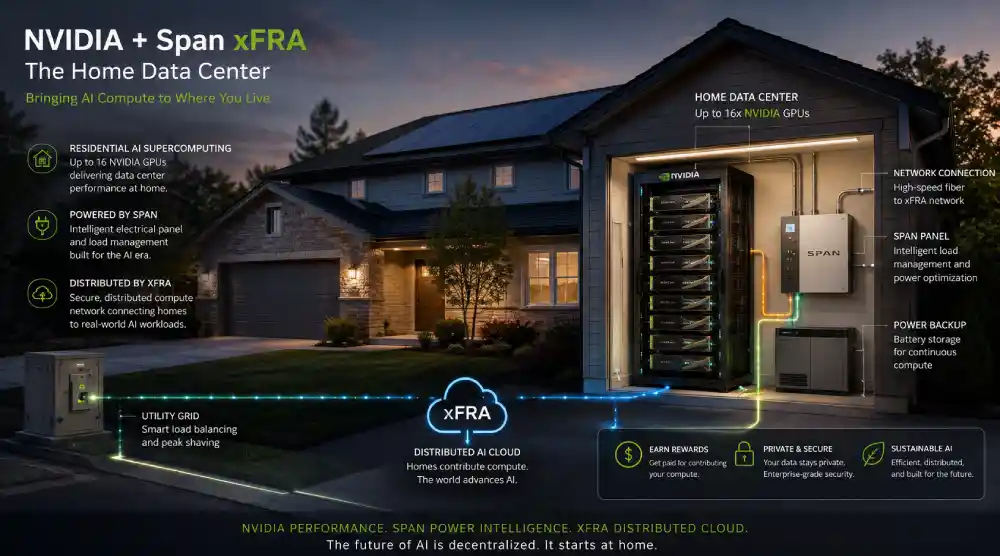

As Nvidia-backed startups push AI infrastructure into residential neighbourhoods, a growing number of people living near existing data centres say the industry’s constant hum is already affecting their sleep, health, and quality of life.
For years, the artificial intelligence boom felt strangely weightless. People chatted with AI systems, generated images, wrote code, and searched the internet without thinking much about where any of it actually happened. The servers remained hidden behind the comforting fiction of “the cloud,” tucked away in distant warehouses few people would ever see. That illusion is beginning to crack.
As demand for AI explodes, the physical infrastructure behind it is becoming impossible to ignore. New data centres are appearing across towns and industrial parks, consuming vast amounts of electricity and water while quietly reshaping local communities. Now, a startup backed by Nvidia is proposing something even more radical: moving pieces of that infrastructure directly into residential neighbourhoods.
The pitch sounds futuristic enough to attract technology enthusiasts. It also arrives at a moment when some people living near existing data centres say the industry is already making them sick.
The AI Boom Is Moving Into Homes
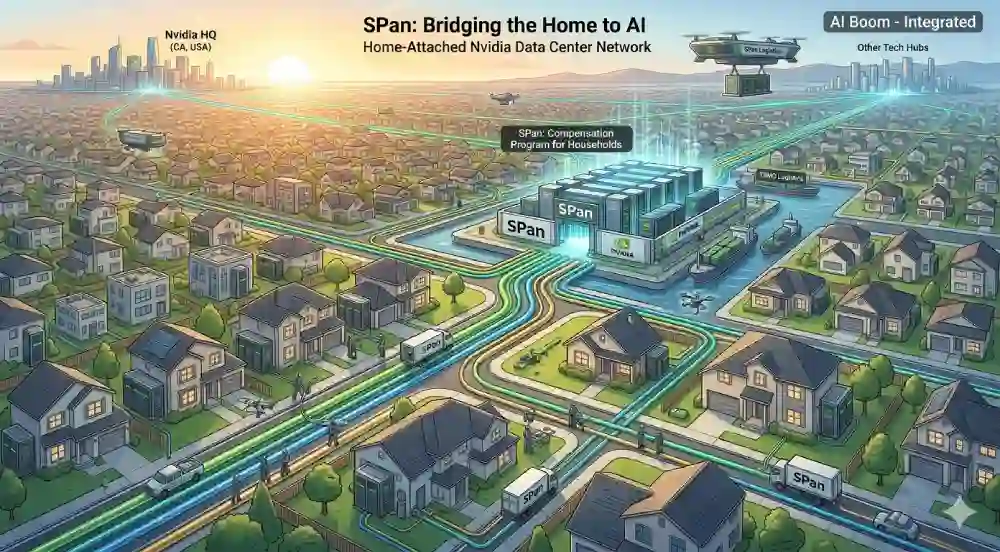
The proposal comes from Span, a company better known for smart electrical panels and home energy systems. Working with Nvidia, the company is developing what it calls XFRA, a distributed computing network that would place miniature AI data centres beside ordinary homes. These are not glorified gaming PCs.
Each unit is expected to contain 16 Nvidia Blackwell GPUs, the same family of chips currently powering some of the world’s most advanced artificial intelligence systems. The idea is to create a network of residential compute nodes capable of supporting AI workloads without waiting years for traditional hyperscale facilities to be built.
Span argues that large data centres can take between three and seven years to develop, while distributed infrastructure could be deployed much faster. The company reportedly plans an initial rollout involving around 100 homes, turning residential properties into pieces of the AI economy itself.
Exactly how much homeowners might earn remains unclear, but the pitch is straightforward enough. Host an AI node on your property and receive incentives that could include discounted electricity, internet services, or revenue-sharing arrangements. The proposal reflects a broader shift taking place across the industry.
AI companies are increasingly confronting a simple problem: demand for computing power is growing faster than infrastructure can be built. NVIDIA’s latest chips are so sought-after that access to them has become a strategic advantage. Distributed systems offer one possible solution. Instead of concentrating everything inside giant facilities, companies spread workloads across many smaller locations.
It sounds clever in theory. But it also raises an uncomfortable question. If communities are already pushing back against conventional data centres, what happens when similar infrastructure starts appearing beside people’s homes? That tension sits at the centre of a debate the industry is only beginning to confront.
The AI Hum

This fear is not entirely imaginary. Across several parts of the United States, residents living near data centres have begun reporting a strange and persistent problem: a low-frequency hum they claim never really goes away. In Brazoria County, Texas, residents near major data centre developments described hearing constant droning sounds and feeling vibrations throughout the day and night.
Similar complaints have surfaced elsewhere, with people reporting headaches, dizziness, nausea, vertigo, and severe sleep disruption. Some residents say the sensation feels less like hearing a sound and more like feeling pressure or vibration passing through walls and floors. What makes the issue particularly controversial is that standard noise measurements often fail to capture what people claim they are experiencing.
Data centre operators frequently point to tests showing facilities remain within permitted limits, while residents insist the problem continues regardless of what the instruments say.
Researchers and acoustics experts believe some of the complaints may involve low-frequency sound and infrasound, frequencies that can be difficult to measure using conventional methods and may travel long distances. The science remains unsettled. There is no broad consensus that data centres are directly causing the full range of health effects being reported.
Operators generally reject suggestions that their facilities pose health risks and note that many sites comply with regulatory requirements. Yet the complaints continue to emerge. In many reports, residents who were interviewed felt frustrated that their experiences did not match official findings. They insist something has changed since nearby facilities became operational.
Whether the culprit is infrasound, vibration, cooling equipment, or another factor entirely, the growing number of complaints reveals a problem that is increasingly difficult for the industry to dismiss as isolated anecdotes.
When The Cloud Is Too Close For Comfort
And this is what makes the Nvidia-backed residential model so intriguing. The proposal arrives at the exact moment people are starting to experience the physical consequences of the AI boom. For years, artificial intelligence was marketed as software. Today, it increasingly resembles infrastructure. It requires power stations, substations, cooling systems, fibre networks, and specialised buildings filled with expensive hardware.
A single XFRA unit containing 16 Blackwell GPUs represents an enormous concentration of computing power compared with what most households have ever hosted. The technology industry spent years convincing people that the cloud existed somewhere far away. Now some of the same companies are exploring ways to place pieces of that cloud directly beside homes.
Whether homeowners ultimately embrace the idea may depend on a question far simpler than computing architecture or AI models. How much compensation would it take to turn part of your property into a node on the future internet?
The answer could shape how the next phase of the AI race unfolds. Demand for AI infrastructure is rising so quickly that companies are already reopening nuclear reactors, competing for power generation, and scrambling to secure new sources of compute capacity. The challenge is no longer building smarter models. It is finding enough electricity, land, and hardware to run them.
Distributed residential data centres represent one possible answer. Community resistance represents another reality. The collision between those two forces may determine whether the future of artificial intelligence remains hidden inside distant industrial parks or arrives much closer to home than most people ever expected.
In case you missed:
- Not Just Oil Part 2: How the Iran War is Disrupting Helium, Chips, and the AI Boom
- ISRO’s Next Big Plan: To Put Indian Data Centres in Space!
- AI Is Bringing Dead Nuclear Plants Back to Life
- Goodbye Blackwell, Hello Rubin: Nvidia’s new AI platform is here!
- Tata Electronics to Manufacture Intel Chips & AI Laptops in India!
- No Internet, No Cloud: India’s ‘BharatGPT’ Is Taking a Different AI Path
- NVIDIA’s Taiwan Problem: The AI Boom Is Now Dependent on One Island
- Huawei Is Coming for Nvidia Now. Its New AI Chips Arrive in 2027
- Apple, Tesla, Tata: The Cyberattack That Hit India’s Manufacturing Boom
- Japan just made Remote Quantum Computing a reality!