



The digital device world as we know it – smartphones, laptops, apps – is being dismantled and rebuilt from scratch, all enveloped inside out by AI, writes Satyen K. Bordoloi
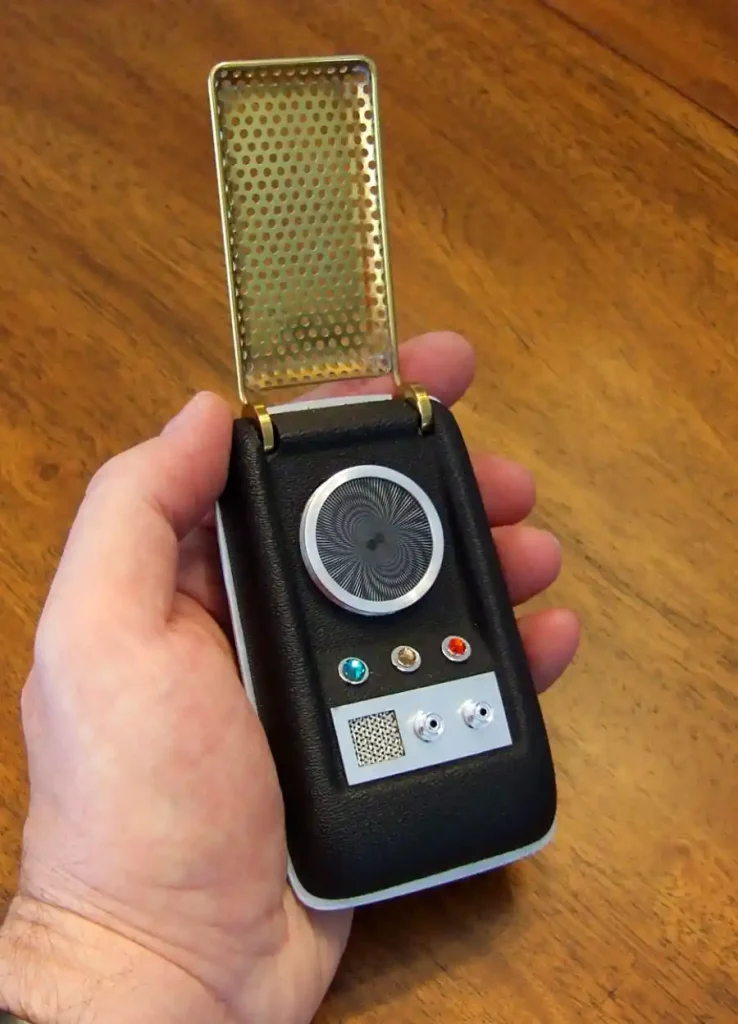
In Star Trek, Captain Kirk flips open a communicator smaller than his palm and just… tells it what he wants done and the “computer” does it. That’s it. The legend goes that in 1973, one of Motorola engineer Martin Cooper’s inspirations to build the world’s first handheld mobile phone came from the show.
Humanity has been chasing that Star Trek future ever since. Touchscreens came. Voice assistants came. Foldables came. And yet, if you are honest, your phone still makes you do everything yourself. Open this app. Tap that button. Remember that this function exists. You were the intelligence needed to run the dumb yet called ‘smart’ phone. Now, all that is flipping on its head.
THE DIFFERENCE BETWEEN AI ON A PHONE AND AN AI PHONE
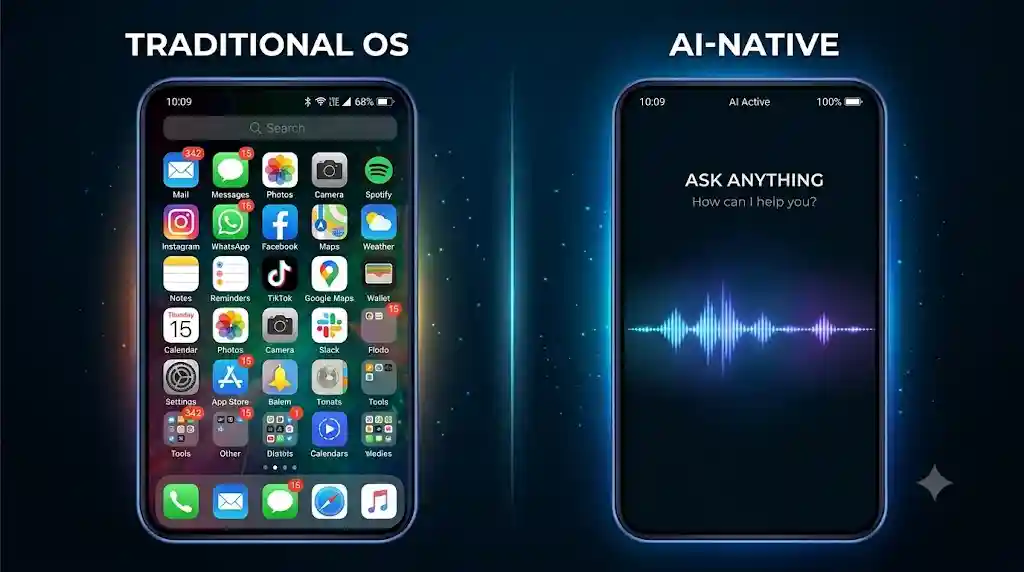
Every AI that you have used so far, be it on your phone or your laptop, whatever the branding for it be – Apple Intelligence, Gemini, Samsung’s AI suit, all of them are AI sitting inside existing apps, inside another OS built for Android, iOS, Windows, etc. This device architecture hasn’t changed fundamentally since 2007 for phones, and decades longer for laptops. Despite the hype, Apple Intelligence does not replace iOS, but merely decorates it. Same for Google’s Gemini – a very smart guest no doubt, but one that doesn’t own the house.
Now when you talk of an AI-native device, we’re talking of something structurally different. The intelligence in such a phone isn’t a feature, but it is the operating system. The AI itself is the interface.
Think of it this way. An app is nothing but an often clunky interface built because the device has no inherent intelligence of its own. Same with software and computers. On a phone, you need a clock app to set an alarm because your device doesn’t understand if you tell it to “wake me at 7”. You have to “open” a Maps app because your device can’t interpret “take me home.” Every app that exists is essentially a workaround for the absence of reasoning inside the system. Now that this reasoning is riding the coattails of AI, it means that apps – all of them – are quietly becoming redundant and the phones are actually becoming smart.
Speech-to-app is, in a way, already there. What AI-native devices do is take that one final step: remove the device architecture designed around the absence of intelligence, and build a new one designed around its presence.
THE FIRST AI-NATIVE PHONE IS ALREADY HERE
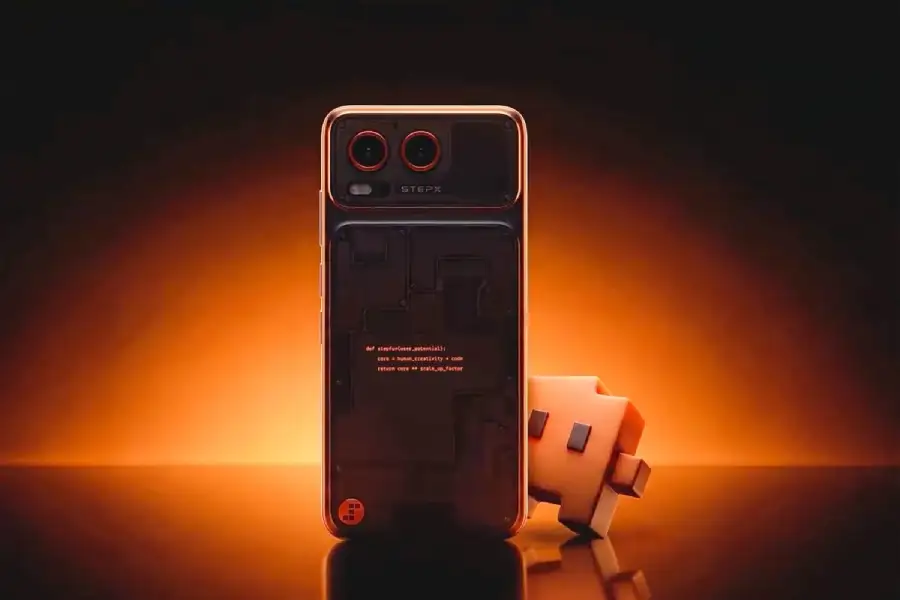
On July 13, 2026, a Shanghai-based AI company called StepFun – founded by former Microsoft executives in 2023 – unveiled what they are calling the world’s first mass-market agentic smartphone. They’re calling it the StepX Neo, and unlike every AI-enhanced phone currently on the market, it does not run Android with an AI layer on top.
At the core of the StepX Neo is an AI agent called Step Amoo that is baked directly into a custom operating system called Step AOS. The whole thing works fully offline for core tasks and does not need constant connectivity. The agentic nature of the OS means it takes a single natural language request from a user and strings together tasks across apps, web tools, and the device’s built-in functions to deliver finished results.
There’s also a secondary display at the rear – giving you quick access to notifications and AI functions without needing to wake the primary screen.
Samsung, Apple and Google are all adding AI layers on top of existing operating systems. StepFun rebuilt the OS itself around the agent. Whether that produces a meaningfully better experience or just a phone that confuses you in new ways – that is something we’ll know when the phone begins shipping out. So far, neither pricing nor a launch date has been confirmed.
But the structural point stands regardless.
APPS ARE THE PAST
Let’s be blunt about what apps actually are. They are menus. Elaborate, well-designed menus which exist because a device had no way to understand what you meant if you simply spoke it out. The app-store model is hence the consequence of the natural stupidity of your devices.
So with AI native devices, you don’t open any app to tap through these glorified menus. All you do is simply tell the built-in assistant what you want to do. Trip to another city? No need to open a browser and map – the AI assistant maps out the travel plan and does your hotel booking for you. You don’t do this after multiple clicks and app switches, but in one simple go.
The StepX Neo is said to be able to translate conversations, calls, messages, and camera-captured text live across 32 languages while also planning your next trip, without opening any apps or jumping between them. Just tell it what you need, and it does it. Simple.

WHAT THE DEVICE OF THE FUTURE ACTUALLY LOOKS LIKE
The answer to this question also lies in Star Trek, except it is Star Trek: The Next Generation that aired in the 1980s. This series introduced an iconic lapel device that was called “combadge” and became the standard communication tool worn by crew members across subsequent series.
The logical endpoint of AI-native design is something like the combadge. It might be a pendant around your neck, a lapel pin, something with one button or no button at all. What’ll be common across these different devices is that you speak to it and receive a voice answer directly or through the nearest screen, or perhaps on the glasses on your face – like the Meta Ray-Ban smart glasses, or a foldable screen in your pocket or maybe even a wall display in your room. The “device” becomes the intelligence while the screen becomes interchangeable. And the app, well, they become extinct.
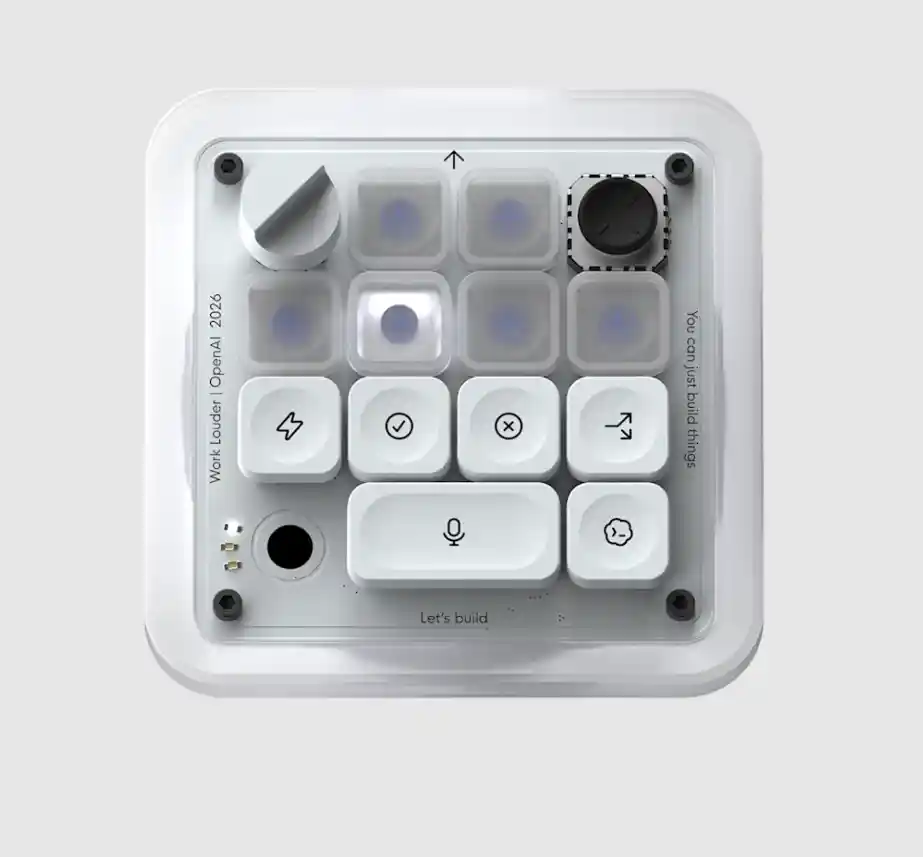
This is already happening. The Meta Ray-Bans are real and selling. The StepX Neo just launched. OpenAI’s AI hardware project being developed with former Apple design chief Jony Ive – isn’t expected to ship until early 2027 at the earliest, yet what we know of it (including a recent leaked version) is that it’s a minimalist device with a smart speaker and a camera, rather than a phone. The race for AI native devices has already begun, and though China has just fired the starting gun, the real winner will be when someone builds something like the first iPhone, one so good and effective, it becomes the fountainhead for all the rest.
THE SMARTPHONE’S IDENTITY CRISIS
The smartphone is the ultimate democratic device. Walk into any phone store today and look at all the phones lined up. Besides a few cosmetic changes, most of them look the same: identical slabs of glass and metal. The flagship and the budget model, photographed separately, would be indistinguishable to most people.
This has been so for more than half a decade, with device innovation having nowhere to go. Mobiles can’t get slimmer, lighter or smaller anymore. Thankfully, foldability emerged a few years earlier and added a sliver of distinction while camera systems and storage space became the new battleground. But those also have plateaued, and there’s barely a spec war possible now.
The smartphone has thus become the first device in history that erased the status distinctions it itself once created. Today everyone carries almost the same slab, and iPhone’s premium value that came from branding and ecosystem lock-in, not genuine architectural superiority, is also fading. Devices need a truly ‘paradigm’ shift, not the overuse of this word in PR speak and AI slop, but actual distinction beyond a better camera and folding screen.
This will come about by the elimination of the operating model entirely, to create a new class of devices than what we have seen so far.
This kind of shift will obviously destroy the app economy that’s worth hundreds of billions. This means that the entire business ecosystem will have to change to accommodate the new devices. The services individual apps gave will now have to tie up with the AI companies to provide ‘intelligent’ services through the intelligent phone.
The world we will enter with these intelligent phones is one we can’t entirely fathom right now. That shift is already underway. The emergence of a popular device will only mean the physical manifestation of the psychological shift underway ever since the advent of generative AI in 2022.
Yet, whatever happens, one thing is sure: the age of devices that pretended to be smart, but weren’t, is gone. The era that’s coming won’t just be of smart devices; they’ll finally also be intelligent.
In case you missed:
- Your Phone is About to Get a Brain Transplant: How Google’s Tiny, Silent Model Changes Everything
- “I Gave an AI Root Access to My Life”: Inside the Clawdbot Pleasure & Panic of 2026
- Anthropic was afraid of their latest AI Mythos: they released it anyway, to the panic of the world
- Have We Already Built AGI, Are Using It, But Just Don’t Call It That?
- Anthropic, OpenAI, Meta, – Why are Companies Hyping Up Their Rogue AI?
- Not Fastest, but Frugalest: Why Indian EVs Are Suddenly World-Class
- FIFA ‘AI’ World Cup: Is Football An ‘Irritating’ Sideshow To All The Tech?
- Makers of Toilets & Ajinomoto: The Unlikely Companies Getting Rich Off the AI Boom
- Sam Altman Says His AI Made New Maths Even As It Hacks Companies Autonomously
- What The First Fully AI Film To Enter A Major Festival Says About AI Filmmaking’s Future