



The solution to many of our global problems might lie in old research, and AI can help us revive it, writes Satyen K. Bordoloi
In the 1960s, the United States was researching a small thorium-based reactor to generate power. However, they left the project halfway to favour uranium-based systems. In 2010, Chinese scientists took up where the US had left off and, after 15 years, cracked the code for unlimited nuclear power by converting thorium into uranium. The chief scientist of the project, Xu Hongjie, was quoted by the newspaper South China Morning Post as saying, “US left its research publicly available, waiting for the right successor. We were that successor.”
Many think everything that had to be discovered has already been. But talk to anyone in the sciences, and they’ll tell you that the number of things the world has to solve, create or discover is humongous, and growing exponentially as new information and ideas add up to the old ones. Many of these, like the US’s thorium reactor project, have been started and left halfway, waiting for the right mind to revive them.
Most modern tech is based on old research. New technology emerges from a cycle of research that takes anywhere between some years to decades, and at times even centuries. So, solving some of the world’s most pressing problems might not necessarily need us to reinvent the wheel: we only have to find where it’s hidden, or recontextualise its uses.

OLDER THAN YOU THINK
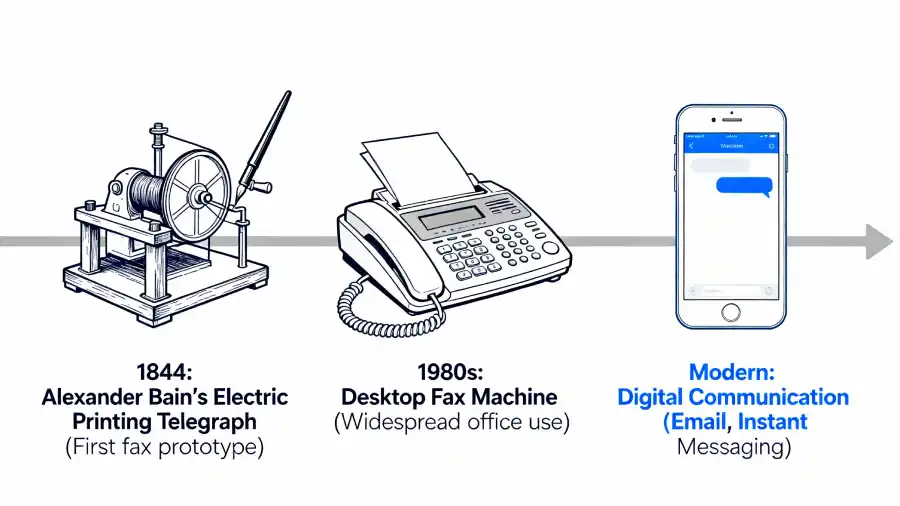
A couple of years ago, I had written a Sify article about things you thought were new, which were actually based on old research, like fax, which was invented 180 years ago, and the electric car, which has existed in some form for nearly two centuries. However, the most pertinent example of an old technology powering the world today is lithium-ion batteries. It’s based on fundamental concepts conceptualised by Volta over two centuries ago.
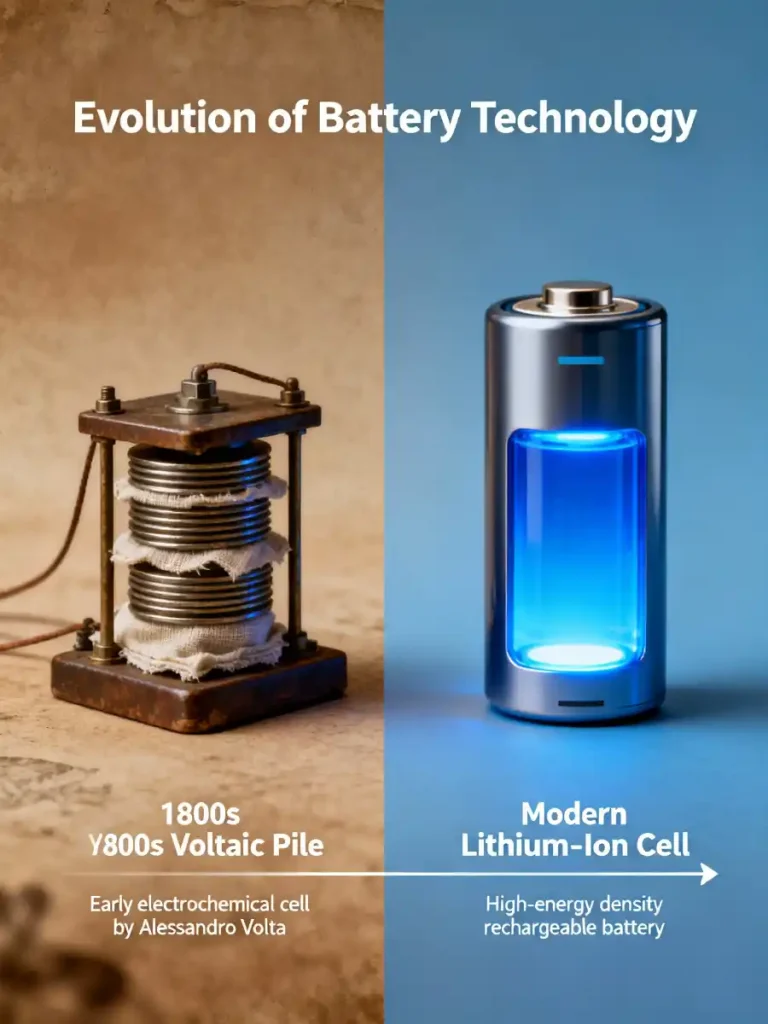
However, in 1912, American chemist Gilbert Newton Lewis began experimenting to develop a practical lithium battery. It didn’t go far till it was revived by M. Stanley Whittingham, in the 1970s, with John Goodenough expanding it in 1980, and Akira Yoshino in 1985, made the first working prototype for Sony. The trio won the 2019 Chemistry Nobel for a tech that today powers the world, with literally every household having multiple of these batteries in mobiles, laptops, torches, cameras, etc.
Among the millions of research papers written over the 250 years of our scientific world, many such concepts for technologies are locked, waiting to be re-examined. The only problem: how do you find the needle you’re looking for in a haystack? Thankfully, in the last decade and a half, we have built ourselves a solution: artificial intelligence.
SCIENTIFIC AI MODEL
Imagine an AI system trained on all the hundreds of millions of research papers that exist in the world. What you would get from this isn’t just a standard AI system, but a repository of all our scientific achievements and advancements of over two centuries. Now, suppose you turn this into a Large Language Model so a user can chat with it and make it available to researchers and scientists at nominal rates. What you’ll have in your hands is a system that’ll help researchers find specific points on any subject that would otherwise take months or years. This, as you’d expect, would revolutionise research and discovery and, over time, not immediately, but steadily, will change the world in ways we can’t even imagine.
What would it take to make such a system? Nothing. Because we already have them for all of us to use. And not one, or a dozen, but hundreds of them.

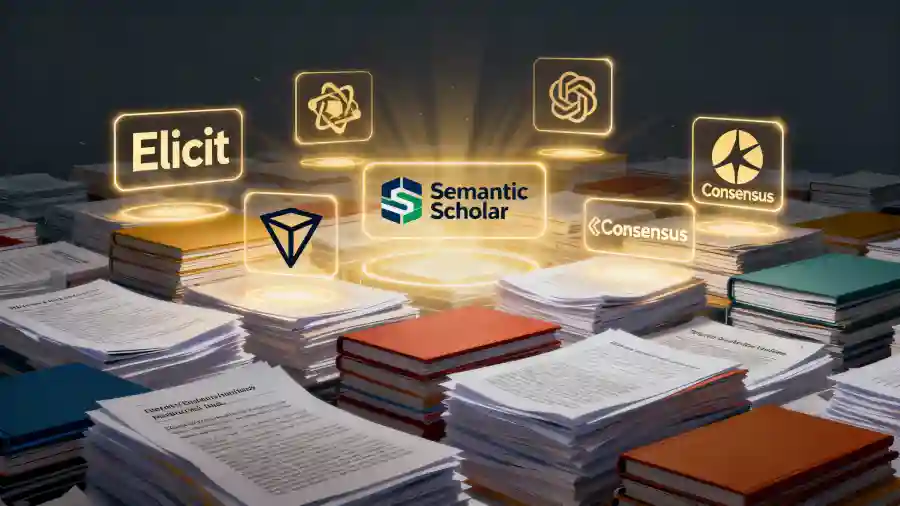
Take Elicit, which can search and analyse 125 million scholarly papers across curated academic databases, focusing on peer-reviewed literature and open-access content. Same with Semantic Scholar trained on millions of documents harvested from publishers, repositories, and the open web. Consensus.app has over 200 million academic papers and combines vector search with LLMs to retrieve and synthesise peer-reviewed literature. So are SciSpace, R Discovery, Paperguide, Connected Papers, and many others.
And in this list, we are not even considering the consumer-facing LLMs, Claude, Gemini, ChatGPT and others, who have their own separate research models, or the ability to trigger research mode in existing models, that have also been trained on a large number of papers.
The question now is: what can they do?
BENEFITS OF MODELS TRAINED ON PAPERS
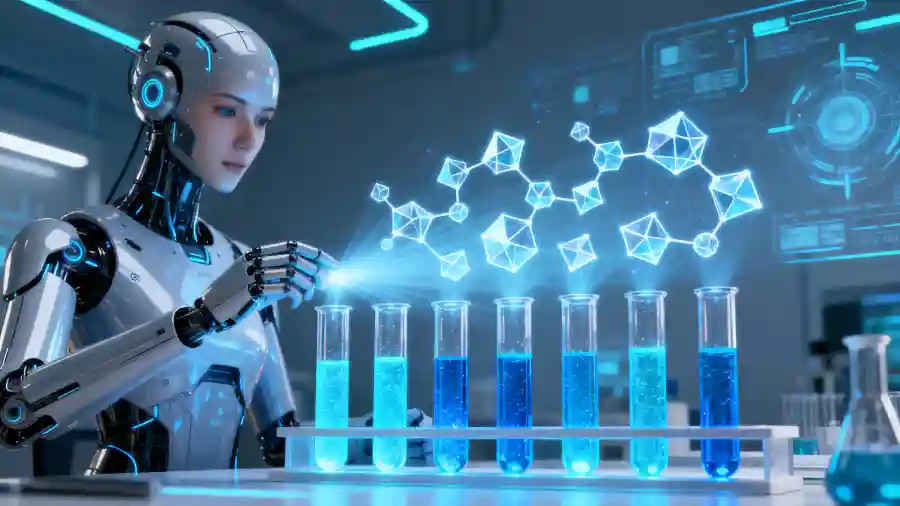
The most immediate, noticeable benefit is speed. Literature reviews used to take weeks and months, as researchers had to sift through thousands of papers on their subjects. But AI models like SciSpace or Consensus can now instantly scan millions of papers in their peer-reviewed article databases to highlight relevant findings and even summarise methodologies. This means that scientists can now spend less time gathering existing information and more time hypothesising, experimenting, and thus creating new ideas and information.
Creativity is nothing but the ability to connect disparate ideas to form new ones. In scientific research, this ability to connect information from seemingly opposing fields is the difference between failure and a Nobel Prize. AI, with its excellent pattern recognition, can propel this even further. E.g., a model trained on biomedical papers might, when prompted, find parallels between protein folding and material science.
Another could link economic models to ecological studies. Tools like Connected Papers and Google Scholar Labs visualise these relationships to help researchers see connections that humans might miss. This cross-pollination of ideas from diverse fields often sparks world-changing breakthroughs, such as how physics guided modern medical imaging and how AI itself borrowed from neuroscience.
Newer platforms are going further. Take ToolUniverse from Harvard, which goes beyond summarisation and can act as an AI agent capable of planning experiments by integrating simulations and reasoning over multiple tools. Thus, scientists can test their hypotheses digitally before committing costly lab resources. CAS SciFinder can predict viable synthesis pathways, accelerating drug discovery and materials engineering.
Yet, the most transformative effect these AI systems have on the world is in democratising access to science. Academic publishers like Elsevier charge exorbitantly for access, hindering access to researchers and thus science itself. But an AI-driven platform with affordable and even free tiers, as most of the platforms named in this article offer, opens up cutting-edge knowledge to independent researchers, students, and even citizen scientists. This democratisation ensures that discovery is no longer confined to the ivory towers of a few publishers, but becomes a more inclusive, global endeavour.
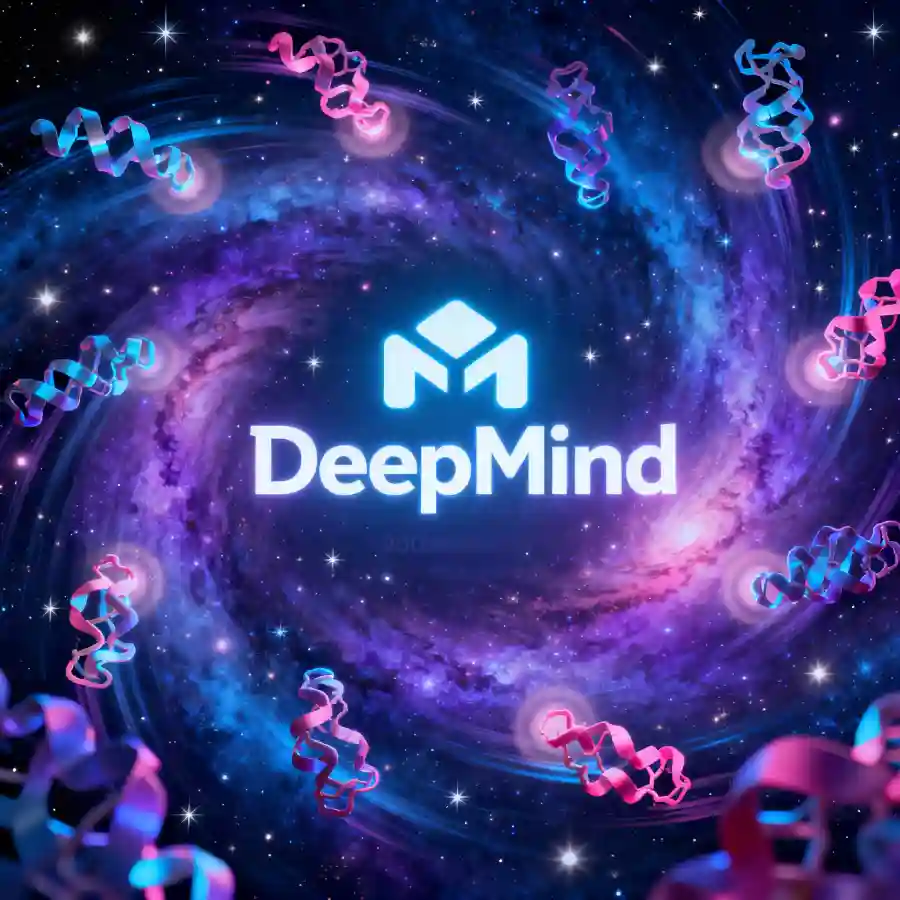
The 2024 Nobel Prize in Medicine went to the discovery of protein folding by the AI company DeepMind. They unravelled the folding of over 200 million proteins; almost all found on earth. The full value of this finding will be milked not in years or decades, but centuries. In the same vein, we can conclude that the same mindboggling array of discoveries that will change the world might already have been done, but await the touch of the next AI system to realise its importance and potential, or to connect the dots for us.
Science has always advanced through tools – from telescopes to particle accelerators. AI models trained on research papers are simply the latest, and perhaps most powerful, tool in that lineage. And the world will only get better for the same.
In case you missed:
- PhD Students, Pack Your Bags: AI Just Beat You at Your Own Game, & Without Needing Coffee
- Sci-Hub’s War To Keep Research Free Has Got A Free-AI Upgrade
- No, AI Didn’t Unleash a Virus on the World: It Might Have Done Something Far More Terrifying – Save It
- Don’t Mind Your Language with AI: LLMs work best when mistreated?
- A man almost cured his dog’s cancer with AI: Could you do the same for your loved ones?
- The B2B AI Revolution: How Enterprise AI Startups Make Money While Consumer AI Grabs Headlines
- The Cheating Machine: How AI’s “Reward Hacking” Spirals into Sabotage and Deceit
- The Airbound Story: While India’s Geniuses Flew Away, a 20-Year-Old Built Something That Flies Back
- Research finds AI ‘scheming’ is increasing; Is it, and will it destroy the world?
- 2025 – Year of Gene Therapy: Curing Lymphoma & Wiskott-Aldrich Syndrome, & Using AI